Do you know where you are going after this life? The vast majority of people believe that there is a life after this one, and most people do not believe we all go to the same place. The Old Testament talks about Sheol, the recesses of Sheol, Abaddon, and heaven, while the New Testament uses the terms like Hades, hell or Gehenna, the abyss or Tartarus, the lake of fire, Paradise, and heaven. This study will explain these biblical terms and what happens to Christians after they die.
Overview
The Bible reveals there are only two places the spirit of man will go in the life after death. In Psalm 139:7-8 King David is speaking to God when he said,
Where can I go from Your Spirit?
Or where can I flee from Your presence?
If I ascend to heaven, You are there;
If I make my bed in Sheol, behold, You are there.
Psalm 139:7-8 (NASB)
His message was that it does not matter if he goes to heaven or Sheol when he dies, the Holy Spirit will know where he went. But it also reveals that there are only two places the spirit of man can go. It is either heaven or Sheol. This suggests that Sheol is more than just the grave. Isaiah 7:10-11 states,
Then the LORD spoke again to Ahaz, saying, “Ask a sign for yourself from the LORD your God; make it deep as Sheol or high as heaven.” Isaiah 7:10-11 (NASB)
Once again we see that heaven and Sheol are contrasted. Other passages contrast heaven and Sheol (1 Samuel 2:6; Job 11:8; Proverbs 15:24; Amos 9:2). In the New Testament, heaven or paradise and hell, Hades, or the lake of fire are contrasted (Matthew 11:23; Luke 10:15). So, there are only two places the spirit of man will go after the physical body dies.
Destiny of the Wicked Dead
In the Old Testament the terms for the grave and life after death are vivid. Sheol, the pit, and Abaddon sound foreboding and dark. They are serious reminders that each person will die someday and what occurs next has already been determined for us. Those who reject God will not be going to a vacation spot or to a place where they can talk with their friends and have a party. The wicked will not enjoy life after death. The Bible clearly states the wicked dead will spend eternity in eternal torment.
Sheol
The word Sheol is the common word for the grave in the Old Testament for both the righteous and the unrighteous. The word occurs 65 times in the New American Standard Bible (NASB). The King James Bible (KJV) usually uses the words grave and hell in the Old Testament rather than Sheol. This is unfortunate since hell is the New Testament word for the place where the spirits of wicked men and women go. But by translating Sheol as the grave one time and hell another time, it reveals that Sheol does have a dual meaning in the Old Testament. It refers to both the grave where our dead bodies will be buried, and it refers to where our spirits will dwell until judgment day. But the reader may not know that the same Hebrew word was translated differently. Other Bible translations correctly use the word Sheol.
An example of Sheol referring to a grave is found in Amos 9:2. It says that people can dig into Sheol.
Though they dig into Sheol, from there shall My hand take them . . . Amos 9:2 (NASB)
This clearly implies that Sheol is below the surface of the earth. It is in the dirt or in the ground. The next verse reveals that Sheol is in the dust of the ground.
Will it go down with me to Sheol? Shall we together go down into the dust?” Job 17:16 (NASB)
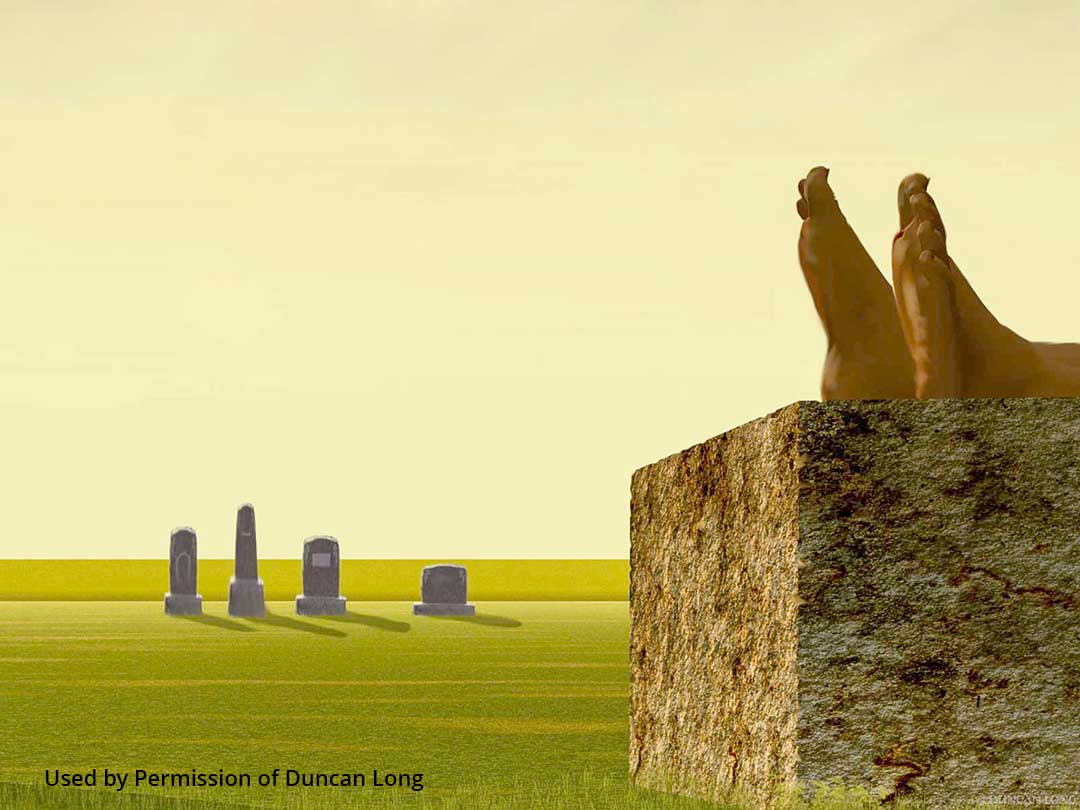
By combining these two verses, we discover that Sheol is below or in the netherworld. It is where bodies are buried either naked, clothed, in caskets, or cremation urns.
Sheol is also a dark place and a place of no sound. That is, dead bodies no longer see nor do they hear.
If I look for Sheol as my home, I make my bed in the darkness. Job 17:13 (NASB)
The dead praise not the LORD, neither any that go down into silence. Psalm 115:17 (NASB)
When we are in Sheol, no one will praise us and our bodies do not return to life.
For there is no mention of You in death; In Sheol who will give You thanks? Psalm 6:5 (NASB)
. . . he who goes down to Sheol does not come up. Job 7:9 (NASB)
As already stated, sometimes Sheol refers to the home of the spirits of the wicked dead and the righteous dead. For example, in Psalm 31:17 we read that the wicked go to Sheol. During the rebellion of Korah against Moses, which in he challenged Moses’ leadership, we are told that Korah and his family went down into Sheol. The ground opened up and swallowed the entire family.
Then the LORD spoke to Moses, saying, “Speak to the congregation, saying, ‘Get back from around the dwellings of Korah, Dathan and Abiram.'” Moses said, “. . . But if the LORD brings about an entirely new thing and the ground opens its mouth and swallows them up with all that is theirs, and they descend alive into Sheol, then you will understand that these men have spurned the LORD.” As he finished speaking all these words, ground that was under them split open; and the earth opened its mouth and swallowed them up, and their households, and all the men who belonged to Korah, with their possessions. So they and all that belonged to them went down alive to Sheol; and the earth closed over them, and they perished from the midst of the assembly. All Israel who were around them fled at their outcry, for they said, “The earth may swallow us up!” Fire also came forth from the LORD and consumed the two hundred and fifty men who were offering the incense. Numbers 16:23-24, 28, 30-35 (NASB)
In Jonah 2:2 we discover that the prophet Jonah, a righteous man and a prophet, was dying and going to Sheol while inside a great fish. Jonah cried out to God from the stomach of the great fish and God rescued him. This illustrates that the bodies of the righteous also go to Sheol when they die.
I cried out to the LORD because of my affliction, and He answered me. Out of the belly of Sheol I cried, and You heard my voice. Jonah 2:2 (NKJV)
Also, note that the patriarch Jacob (Genesis 37:35) and King David (Psalm 88:3) expected to go to Sheol. It is a dusty resting place to which our fleshly bodies go after death. In the grave our bodies are lifeless and continue to decay. They no longer function.
Sometimes Scripture reveals that our spirits also enter Sheol but into a different part of Sheol. This fact will be discovered later when we explore the meaning of the pit and several critical verses (Psalm 49:15; 86:13; Isaiah 14:9-11). Therefore, both the righteous and the wicked go to Sheol or the grave at death (Genesis 42:38).
Where Do We Go After Death?
The Pit
Sometimes both Sheol and “the pit” can refer to the grave for the bodies of the righteous dead and the wicked dead. For example, the term “the pit” refers to the grave (Job 9:31; Psalm 30:9). But in the Old Testament, “the pit” appears also to refer to the location of the spirits of the unrighteous dead. When it does, it is located deep within or in the recesses of Sheol. In Isaiah 14:15 God tells Lucifer or Satan,
Nevertheless you will be thrust down to Sheol, to the recesses of the pit. Isaiah 14:15 (NASB)
Since Satan is an angel, he will never die. So this verse reveal that Sheol has a broader meaning than just the grave. For Sheol includes the wicked angels. That reveals there is another dimension, region or compartment to Sheol. That would explain Isaiah 14:15 when it states, “the recesses of the pit.” The compartment appears to be “the pit.” The Hebrew word for “pit” in Isaiah 14:15 is bor. The word also appears repeatedly in connection with Sheol (Psalm 30:3, 9; Proverbs 1:12; Isaiah 38:18; Ezekiel 31:16). This seems to imply that within Sheol there is a recess called the pit.
Consider Isaiah 14:9-11 which is a taunt against the king of Babylon. It is a description of what happened to the wicked king.
Sheol1 from beneath is excited over you to meet you when you come;
It arouses for you the spirits of the dead, all the leaders of the earth;
It raises all the kings of the nations from their thrones. Isaiah 14:9 (NASB)
Here God said that the spirits of the dead and all the leaders of the earth in Sheol would greet the king. Then verses 10-11 reveal that the wicked dead would tuant and insult the king. Ezekiel 32:18-21 also states the “strong among the mighty ones” would taunt the Pharaoh of Egypt and the massive population of Egypt. The message is that the spirits of the dead greet those who come to Sheol. Harry Bultema wrote this about Isaiah 14:9-11 in his commentary on Isaiah,
From this picture it is evident that the concept sheol in the sense of a place of punishment and sheol in the sense of the grave are not strictly separated. One can hardly think of worms or maggots being anywhere else but in the grave of decomposition. But we also see in this horrible representation what it will mean one day to have to be in the company of the lost. The wicked often slavishly and cringingly flatter each other here on earth, even though they hate each other; but below in the place of punishment they will reveal themselves in their true hatefulness. All masks and semblances will be discarded there and there will be no longer similated love and subservience.2
So, the spirits of the wicked dead in Sheol, or the pit of Sheol, have consciousness and will continue to be wicked. Since they can talk, what would one expect from a wicked person?
Isaiah 38:18 indicates that those who go down into Sheol have no hope for eternal life when we are told that they cannot hope for “Your faithfulness.”
For Sheol cannot thank You, death cannot praise You; those who go down to the pit cannot hope for Your faithfulness. Isaiah 38:18 (NASB)
Psalm 6:5 adds that those who are in Sheol do not talk about Yahweh. No one will give Him thanks.
For there is no mention of You in death;
In Sheol who will give You thanks?
Psalm 6:5 (NASB)
That is, the spirits in Sheol are the spirits of the wicked dead. That explains why they taunt and heckle newcomers to Sheol. So, where do the spirits of the wicked dead dwell? Deuteronomy 32:22 and Lamentations 3:55 suggest the spirits of the wicked dead dwell in the lowest part of Sheol, that is, the pit.
For a fire is kindled in My anger, and burns to the lowest part of Sheol, and consumes the earth with its yield, and sets on fire the foundations of the mountains. Deuteronomy 32:22 (NASB)
The description is similar to that stated about hell and the lake of fire later in this brief study. Therefore, the pit uniquely refers to the location of the spirits of the unrighteous dead within Sheol. That agrees with Job 33:18 which tells us that God can keep a man’s spirit from the pit and his life or body from entering Sheol.
He keeps back his soul from the pit,
And his life from passing over into Sheol.
Job 33:18 (NASB)
That is, our dead bodies go to Sheol or the grave, and the spirits of the wicked dead enter the pit which is in the recesses of Sheol.
Hades
Hades is the New Testament word corresponding to Sheol. Hades occurs 10 times in the New Testament. The Septuagint, a Greek translation of the Old Testament, substitutes the Greek word Hades for the Hebrew word Sheol. This means the Hebrew word for Sheol and the Greek word for Hades are usually interchangeable. Hades refers to the grave, the place where the bodies of both the righteous and unrighteous dead go after death and return to dust.
This is evident by comparing Acts 2:31 with an Old Testament prophecy, Psalms 16:10, about the death and resurrection of Jesus Christ. Here is the Old Testament prophecy,
For You will not abandon my soul to Sheol; nor will You allow Your Holy One to undergo decay. Psalms 16:10 (NASB)
In Acts 2:3, the apostle Peter declared that the prophecy was fulfilled in Jesus Christ. Here is his statement.
. . . he looked ahead and spoke of the resurrection of the Christ, that HE WAS NEITHER ABANDONED TO HADES, NOR DID His flesh SUFFER DECAY. Acts 2:31 (NASB)
The passage simply says that Jesus was not abandoned to Hades and did not undergo decay. That is Hades refers to the grave. Clearly, Jesus did not go to hell since He was sinless (Hebrews 4:15). Psalms 16:10 and Acts 2:31 help us understand that Sheol and Hades are interchangeable terms. Death is what occurred and Hades is where the dead body decays.
In addition to Hades referring to the grave, it can refer to the place where the spirits of the unrighteous dead dwell (Matthew 11:23; Matthew 16:18; Luke 10:15; 16:23; Revelation 1:18; 6:8; 20:13-14). Luke 16:22-23 states,
Now the poor man died and was carried away by the angels to Abraham’s bosom; and the rich man also died and was buried. In Hades he lifted up his eyes, being in torment, and saw Abraham far away and Lazarus in his bosom. Luke 16:22-23 (NASB)
In this verse, it is clear that the rich man had conciousness in Hades. He could think, speak, and hear in Jesus’ parable. Within Hades he was tornmented. His torment occurred in hell which appears to be a subcompartment of Hades. Hades is the intermediate state where the spirits of the wicked dead await judgment at the Great White Throne described in Revelation 20:11-14.
In Matthew 16:18, Jesus tells Peter that Hades will not conquer the church. In other words, the church cannot be destroyed by the spirits of the wicked. In the book of Revelation, death and Hades appear together (Revelation 1:18; 6:8; 20:13). They belong together for to be in Hades means that a person has physically died and their spirits remain there until judgment.
In summary, Sheol is the Old Testament word for the grave and in the New Testament the word for grave is Hades. Sheol and Hades are the location where the dead bodies of both the rightoues and wicked wil dwell. But Sheol and Hades usually refer to the location of the unrighteous dead.
Final Destiny of the Wicked Dead
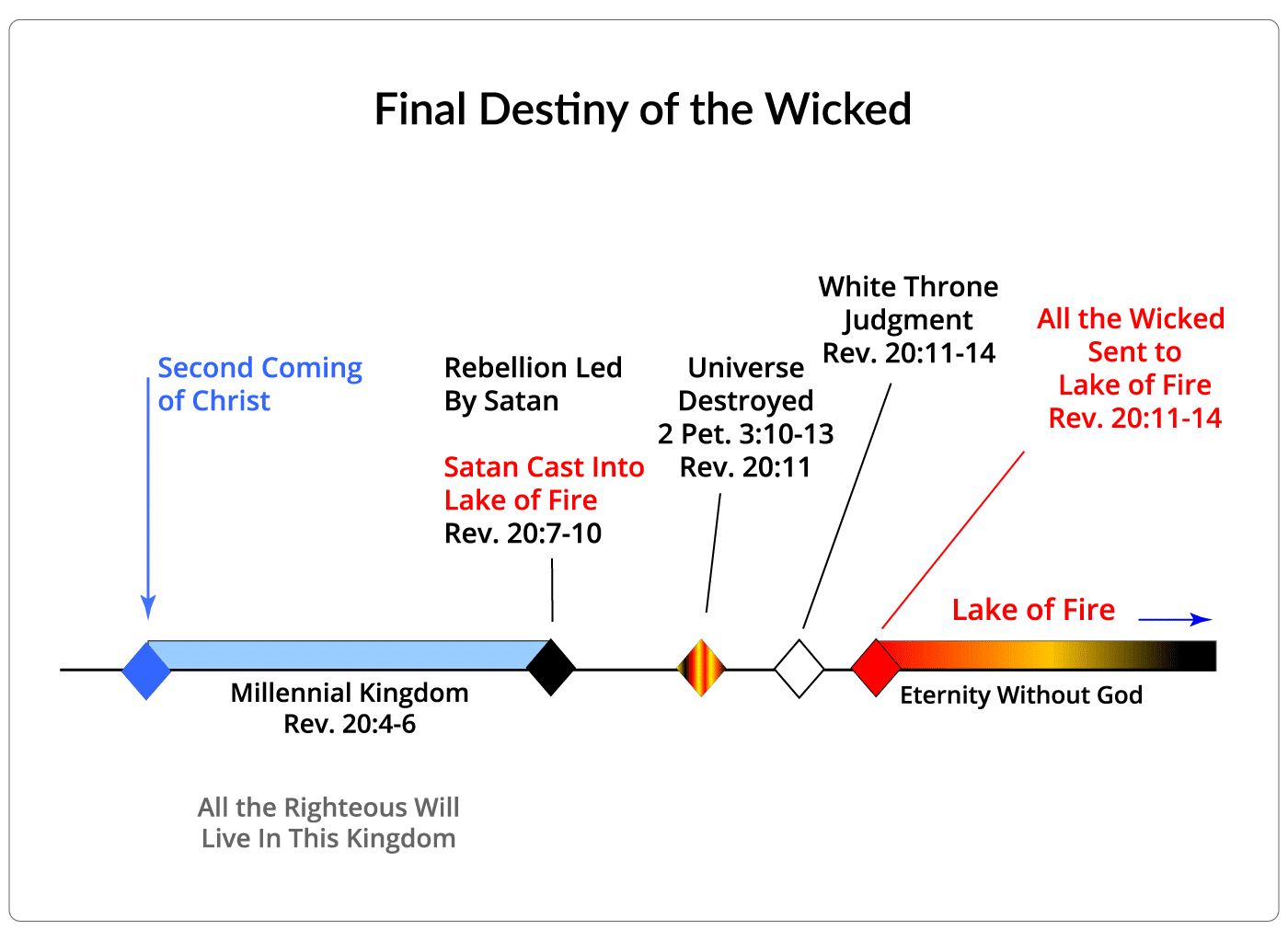
After God consumes the rebellion that will occur after the millennial kingdom, He will destroy the current heavens and earth (2 Peter 3:10-13; Revelation 20:11). God will judge the wicked dead. He will have already judged Satan and his demons (Revelation 20:10). The final destiny for the wicked dead, Satan, and his demons is hell or the lake of fire. What follows next provides more details.
Hell or Gehenna
Hell is the New Testament word for the location of the spirits of the unrighteous dead. The Greek word for hell is gehenna (Matthew 5:22, 29, 30; 10:28; 18:9; 23:15, 33; Mark 9:43, 45, 47; Luke 12:5: James 3:6). One of the most obvious examples that gehenna or hell is the place of the spirits of the unrighteous dead is Mark 9:43,
If your hand causes you to stumble, cut it off; it is better for you to enter life crippled, than, having your two hands, to go into hell, into the unquenchable fire . . . Mark 9:43 (NASB)
This is not a description of a grave in the dust of the ground. This is a place of “unquenchable fire.” The word “unquenchable” reveals that hell (gehenna) never ends, cannot be extinguished and it is a place of fire. Hell is called the lake of fire in the book of Revelation. The phrase lake of fire describes hell.
Gehenna or hell is further described as a place of horrible suffering (Mark 9:43, 48). It is a fiery place (Matthew 5:22; 18:9; Mark 9:43; James 3:6). According to Jesus, gehenna or hell is where both the body and soul are destroyed (Matthew 10:28).
Do not fear those who kill the body but are unable to kill the soul; but rather fear Him who is able to destroy both soul and body in hell. Matthew 10:28 (NASB)
In summary, hell is the place of final judgment. In the book of Revelation hell is called the lake of fire. The phrase lake of fire describes hell. In the Greek text “lake of fire” is composed of two words. Fire is an adjective that describes the lake; that is, the lake is a fiery place. Lake of fire appears to be a description and not a title of location. So, hell or the lake of fire will not be populated with the spirits of the wicked until after the Great White Throne judgmnet (Revelation 20:11).
Lake of Fire
At the end of this age, God will destroy this sin-corrupted universe and then judge the wicked (2 Peter 3:10-13; Revelation 20:11-15). The final judgment of the wicked dead before our holy God will occur at the great white throne judgment.
Then I saw a great white throne and Him who sat upon it, from whose presence bearth and heaven fled away, and no place was found for them. Revelation 20:11 (NASB)
Then Revelation 20:12-13 says all of the dead will be resurrected and stand before the throne. God the Father will open books and the book of life and judge them for their deeds. Since verse 13 states that death and Hades were thrown into the lake of fire, that reveals Hades does not contain any spirits of the righteous dead. Otherwise, everyone who has been born since Genesis 1:1 would be thrown into the lake of fire. In addition, verse 15 explicitly states that anyone who is in the book of life will not be thrown into the lake of fire.
And if anyone’s name was not found written in the book of life, he was thrown into the lake of fire. Revelation 20:15 (NASB)
If we combine all the information togther, we learn that Hades only contains the spirits of the wicked dead since everyone in Hades will be sent into the lake of fire. This reveals the judgment described in Revelation 20:11-15 is only a judgment for the wicked dead. The review of their deeds will reveal why God is justified in throwing the wicked into the lake of fire which will burn with brimstone forever and ever (Revelation 19:20; 20:10). So, the spirits of the wicked dead will be sent to the lake of fire and spirits of the of the righteous dead will enter the new heaven and new earth.

Final Destiny of the Demons
Every unbelieving man and woman will stand before the great white throne judgment. The great white throne judgment is only for unbelievers – the unrighteous dead. They will all be sentenced to the lake of fire. The lake of fire is not Hades, since God says that Hades will end up there. That is, the unrighteous dead will receive their immortal bodies and exist forever in the lake of fire.
And death and Hades were thrown into the lake of fire. This is the second death, the lake of fire. Revelation 20:14 (NASB)
The lake of fire is where Satan, the demons, the Antichrist, the false prophet and all who reject Jesus Christ in this life will spend eternity – eternal condemnation. It is a place of constant fire, darkness, silence and suffering. This will be a place of eternal torment.
Abaddon and the Abyss
Abaddon is another horrible place. It is the place where the angels who sinned in Genesis 6:1-4 are bound. They were and are particularly disobedient evil angels who sinned by having relations with women. This statement is supported by comparing Jude 6-8 with 1 Peter 3:18-20; 2 Peter 2:4-8 and Luke 8:31. By comparing these verses, we discover that these angels sinned before Noah built the ark in Genesis 6. They sinned in Genesis 6:1-4. Jude 6-8, with 1 Peter 3:18-20 and 2 Peter 2:4-8 provide the chronology. As a result, these angels were imprisoned in Abaddon (Old Testament name) or Tartarus (New Testament name).
It is clear that Abaddon is not Sheol since they are usually referred to as separate places (Job 26:6; Proverbs 15:11; 27:20). Proverbs 27:20 refers to both.
Sheol and Abaddon are never satisfied, nor are the eyes of man ever satisfied. Proverbs 27:20 (NASB)
Abaddon is also called an abyss in Revelation 9:11. The passage tells us that there is an angel – Satan – who is the king over the abyss. He has the same name as the pit.
They have as king over them, the angel of the abyss; his name in Hebrew is Abaddon, and in the Greek he has the name Apollyon. Revelation 9:11 (NASB)
In Revelation 9:1 we are told that Abaddon or the abyss is a bottomless pit. Later in Revelation we discover that Satan will go there some day.
And he laid hold of the dragon, the serpent of old, who is the devil and Satan, and bound him for a thousand years, and threw him into the abyss . . . Revelation 20:2-3 (NASB)
That is the same message of Isaiah 14:15.
Nevertheless you [Satan] will be thrust down to Sheol, to the recesses of the pit. Isaiah 14:15 (NASB)
This last verse implies that Abaddon is also within Sheol. It is a fiery place.
For a fire is kindled in My anger, and burns to the lowest part of Sheol, and consumes the earth with its yield, and sets on fire the foundations of the mountains. Deuteronomy 32:22 (NASB)
Tartarus
Tartarus is another New Testament name for Abaddon. The Greek word for Tartarus is tartaroo and it occurs only in 2 Peter 2:4. Also, Tartarus has been translated as hell in Scripture. Here is 2 Peter 2:4.
For if God did not spare angels when they sinned, but sent them to hell [tartarus], putting them into gloomy dungeons to be held for judgment. 2 Peter 2:4 (NIV)
Here we are told explicity that it is the place where the bound angels exist (Genesis 6:2-4; 1 Peter 3:19-20; 2 Peter 2:4-6 and Jude 6-7). Most likely they will remain there until Satan is thrown into the lake of fire (Revelation 20:10). They his demonic army will join him.
Final Destiny of the Righteous Dead
Now we ask, “Where do the spirits of a godly or righteous man exist? The answer is heaven or paradise in the Old Testament era and in the New Testament era. The Old Testament era continued until Christ’ death when He descended into Abaddon and declared victory to the bound angels. 1 Peter 3:18-19 states that Christ visited these spirits or evil angels in prison and declared victory. Ephesians 4:8 adds that Jesus “led captive a host of captives,” that is, He transferred Paradise to heaven.
Heaven
In the Old Testament heaven is pictured as being above while Sheol is below. In 2 Kings 2:11, God took the prophet Elijah up to heaven in a fiery chariot to be with Him forever. Scripture also says that God took Enoch up to heaven (Genesis 5:24; Hebrews 11:5). So, what is “up”? King David gives us the answer when he says that heaven is above and Sheol is below.
If I ascend to heaven, Thou art there; If I make my bed in Sheol, behold, Thou art there. Psalm 139:8 (NASB)
Sheol has no holding power over the spirit of a righteous person. We are told that the bodies of the righteous may die and return to dust, but their spirits go “up to heaven” to be with God,
The New Testament refers to paradise and heaven as the place where the spirits of the godly exist after physical death. Throughout Jesus’ ministry He referred to heaven.
The word heaven appears 145 times in the gospels alone and 275 times in the New Testament. Jesus told us that God the Father resides in heaven (Matthew 6:9). Mark 13:32 says that the angels are in heaven.
But of that day or hour no one knows, not even the angels in heaven, nor the Son, but the Father alone. Mark 13:32 (NASB)
Hebrews 12:23 and 2 Peter 3:13 indicate that the saints will go to heaven.
. . . to the general assembly and church of the firstborn who are enrolled in heaven, and to God, the Judge of all, and to the spirits of the righteous made perfect, Hebrews 12:23 (NASB)
But according to His promise we are looking for new heavens and a new earth, in which righteousness dwells.. 2 Peter 3:13 (NASB)
Paradise and Abraham’s Bosom
The first time the word paradise occurs is in a conversation between Jesus and a thief who was hanging on an adjacent cross during Jesus’ crucifixion. Jesus promised the thief that he would go to paradise. The thief believed in Jesus, and as a result, the thief was saved from the penalty of his sins.
And He said to him, “Truly I say to you, today you shall be with Me in Paradise.” Luke 23:43 (NASB)
There was no time, no opportunity for the thief to do any good deeds to gain God’s favor. This is a great example that salvation is a gift. It is not something we can earn. The thief just believed, trusted Jesus, and as a result he went to paradise (Revelation 2:7).
Another time the word paradise occurs is in 2 Corinthians 12:2-4. Paul tells us that once he was taken up to the third heaven.
I know a man in Christ who fourteen years ago – whether in the body I do not know, or out of the body I do not know, God knows – such a man was caught up to the third heaven. And I know how such a man – whether in the body or apart from the body I do not know, God knows – was caught up into Paradise, and heard inexpressible words, which a man is not permitted to speak. 2 Corinthians 12:2-4 (NASB)
The Jews considered the first heaven to be our earthly atmosphere. The second heaven was outer space and the third heaven is what we normally call heaven. In Acts 1:11 the apostles saw Jesus ascend upward into heaven. Paradise is another word for heaven.
The phrase “Abraham’s bosom” in the parable of Lazarus and the rich man is a synonym for Paradise (Luke 16:19-31). It does not occur any other place in the New Testament. Yet, it is clear in the parable that Lazarus is in heaven.
Death is wonderful for both the Old and New Testament saints. The Old Testament indicates that God received the spirits of the Old Testament saints at death (Psalms 49:15). They are currently waiting for their resurrection bodies, which they will receive at Jesus’ second coming. .
When New Testament saints or Christians die now, 2 Corinthians 5:1-10 teaches that we go immediately to be with the Lord Jesus in heaven. But we do not have resurrection bodies.
Therefore, being always of good courage, and knowing that while we are at home in the body we are absent from the Lord – for we walk by faith, not by sight – We are of good courage, I say, and prefer rather to be absent from the body and to be at home with the Lord. 2 Corinthians 5:6-8 (NASB)
Today there are many Christians in heaven. Some day in the future, Jesus Christ will descend briefly in order to rapture all living Christians up to heaven just before the Tribulation Period starts. When this happens, all Christians who are alive on earth at that time will meet Christ in the air,
Then we who are alive and remain shall be caught up together with them in the clouds to meet the Lord in the air, and thus we shall always be with the Lord. 1 Thessalonians 4:17 (NASB)
Every Christian since Pentecost will be instantly changed and receive immortal or heavenly bodies.
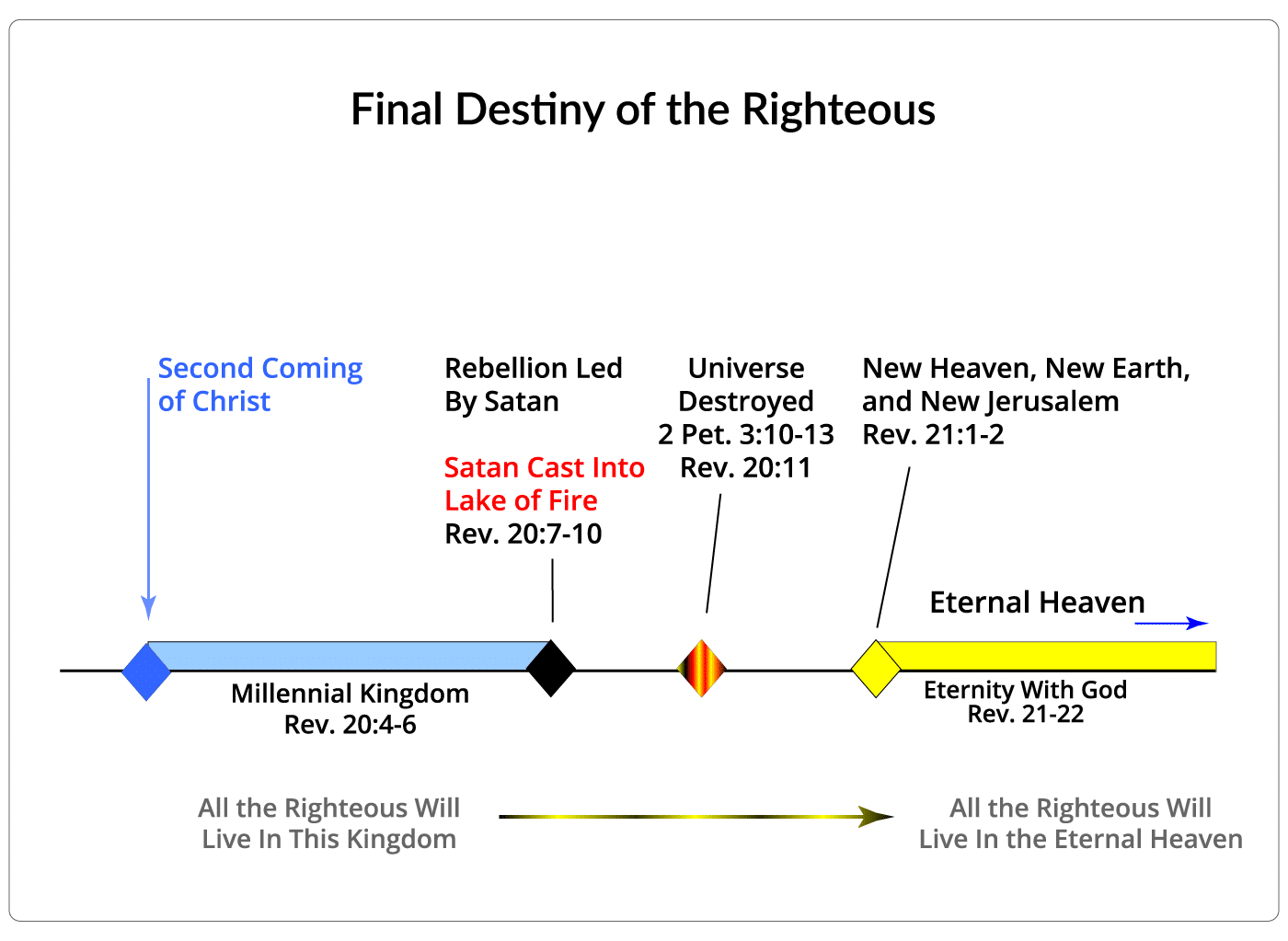
Then we will wait in heaven until Jesus’ second coming. When He returns to earth for the battle of Armageddon at the end of the tribulation period, every Christian and Old Testament saint will descend with Him (Revelation 19:11-16). All Christians will reign with Christ in an earthly millennial kingdom (Revelation 20:4-6). Old Testament saints will receive their resurrection bodies at the start of the 1,000 years earthly kingdom (Revelation 20:4). After the 1,000 years, a rebellion will occur and everyone involved will be swiftly consumed with fire from heaven (Revelation 20:8-10).
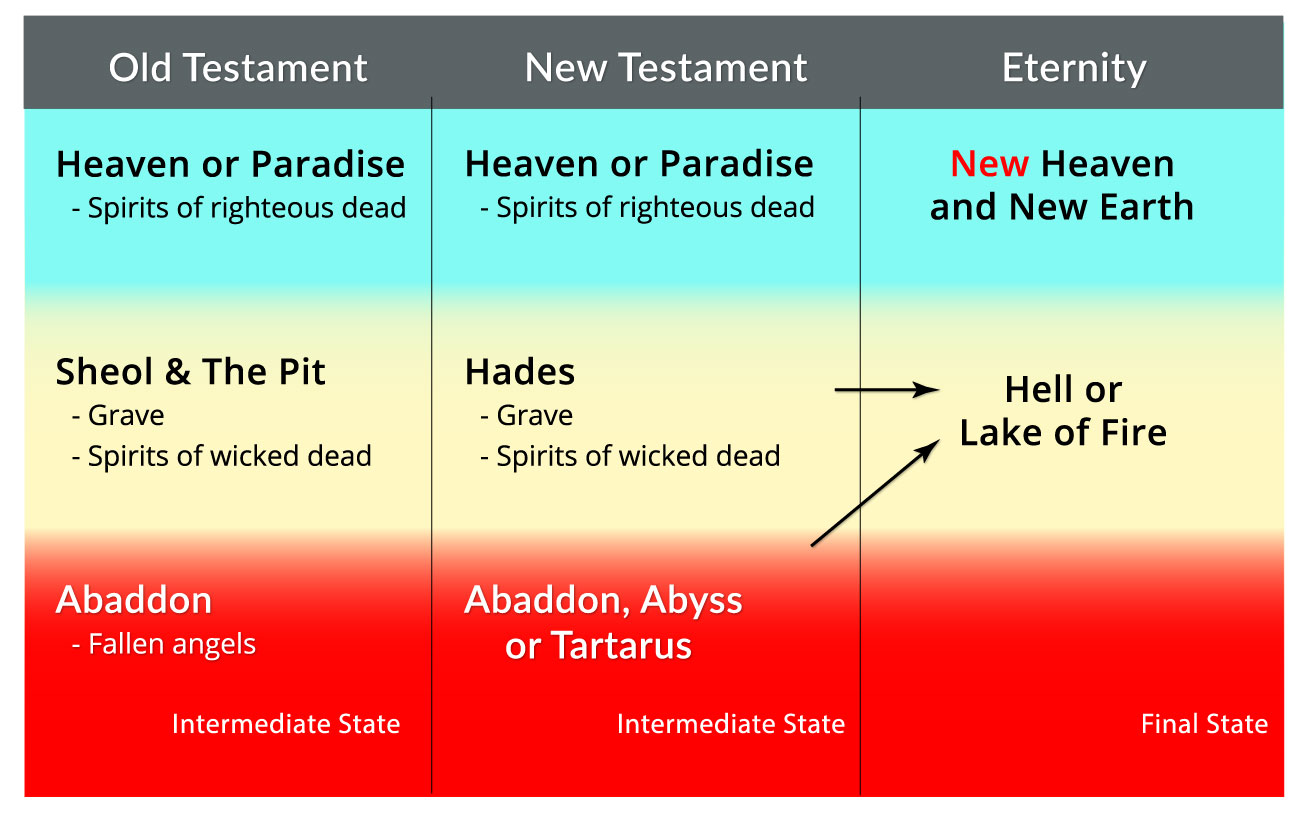
Definitions of the after life
New Heaven and New Earth
God has prepared a wonderful place for the saints of the eternal ages. Revelation 21-22 calls this place the new heaven and new earth. It is new since the old universe will have been destroyed. It is a place of joy, comfort, peace and harmony. There will no longer be suffering of any kind. It will be a place of eternal joy (Revelation 21:7; 22:14-15).
Revelation 2:7 states that the tree of life is in a place called paradise. Where is paradise? The answer is found in Revelation 22:1-3. In this passage we are told that the tree of life is in the new heaven and new earth.
Then he showed me a river of the water of life, clear as crystal, coming from the throne of God and of the Lamb, in the middle of its street. On either side of the river was the tree of life, bearing twelve kinds of fruit, yielding its fruit every month; and the leaves of the tree were for the healing of the nations. There will no longer be any curse; and the throne of God and of the Lamb will be in it, and His bond-servants will serve Him . . . Revelation 22:1-3 (NASB)
Paradise is the new heaven and new earth. That is where every saint will live for forever. What a great place in which to live.
Conclusion
In summary, we are told that the bodies of Christians will be buried in Hades or the grave and our bodiless spirits In summary, we are told that the bodies of Christians will be buried in Hades or the grave and our bodiless spirits will go to heaven. We will wait until the rapture occurs at which time we receive our immortal bodies and continue living in heaven. At the second coming of Christ, He will descend from heaven to the battle of Armageddon with all of the saints of all the ages. It will be a victory celebration! Then the Old Testament saints will receive their immortal bodies and we will reign with Jesus for 1,000 years. After Christ’s millennial reign, a brief battle will occur in which Satan and the world forces are defeated. Then God the Father will destroy the universe and everyone who has rejected Jesus Christ will be judged at the great white throne judgment. Then we will enter the new heaven and new earth, which will last forever.
References:
1. The New King James Version Bible (NKJV) reads Hell instead of Sheol. That is unfortunate since Hell refers to the place where the spirits of the unrighteous dead go and not the grave. The grave is where dead bodies go. The NKJV followed the 1611 KJV Bible.
2. Harry Bultema. Commentary on Isaiah. Kregel Publications. 1981. p. 167.
Suggested Links:
Searching for God — In Search of God — Go To HeavenDo the dead really go to heaven or hell?
Is Hell a real place? — What does Jesus say about Hell?
Isn’t the king of the bottomless pit a high ranking demon?
Are there two paradises?
Does the soul sleep after death according to the Bible?