The book of Enoch is one of the Pseudepigrapha books and was apparently written during the second or first century before Jesus Christ. It should be noted that this book is usually regarded to be the Ethiopic Apocalypse of Enoch.1 There is also a Slavonic Apocalypse which is called the second book of Enoch that was written late in the first century A.D. There is a third book or Hebrew Apocalypse of Enoch which is believed to have been written in the fifth to sixth century A.D.2 However, the book that is referred as the book of Enoch is the first book which contains one hundred and eight chapters which comprise five sections that are often also called books.3 What follows is a description of the book of Enoch, a comparison of Enoch to the book of Jude, and the answer to the question, “Why is the book of Enoch not included in the Bible?”
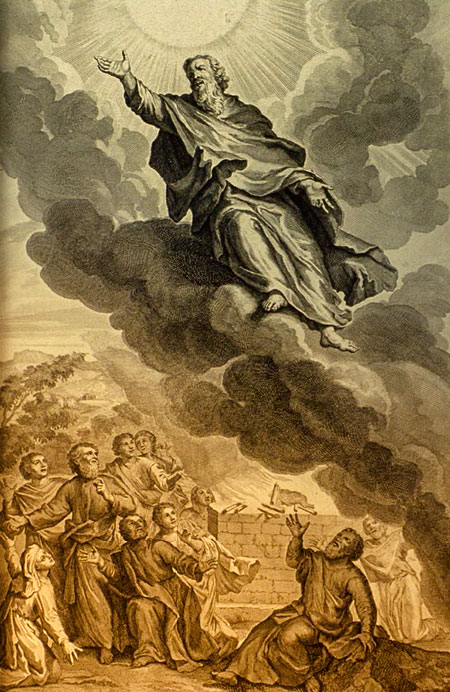
Overview of First Enoch (2nd to 1st B.C.)
The first book of Enoch has five sections. James H. Charlesworth outlines the book as follows:4
1. Book of the Watchers (1-36)
2. Book of the Similitudes (37-71)
3. Book of the Astronomical Writings (72-82)
4. Book of the Dream Visions (83-90)
5. Book of the Epistle of Enoch (91-107)
Chapters 1-5 provide a short introduction of Enoch and speak to the major themes of rewards, punishment, the end of the world and final judgment. Book 1 includes chapters 6-36 and is primarily about angels, the Tree of Life, Jerusalem, and the universe. Book 2 includes chapters 37-71 and deals with the One, the Son of God, or the Messiah, resurrection, the flood, Noah, future judgment, and paradise. Book 3 includes chapters 72-82 which deal with the stars, moon, astronomy, the universe, and Enoch’s mission. Book IV includes chapters 83-90 which concern predictions about the flood, a historical sketch, the future of Israel, and the messianic kingdom. Book V includes chapters 91-105 that deal with various challenges for the wicked and righteous. The concluding chapters of 106-108 discuss the sin after the flood until the coming of the Messiah.
Comparison of books of Jude and Enoch
While the book is fascinating to read, it is important to note that the first book of Enoch is not Scripture. That is, the book is not inspired by God. The book was quoted in the Apocryphal book of Baruch, and in several early church manuscripts: Barnabas 16:5, Idolatry 15:6 (Tertullian), and Eccl. Proph 3 (Clement of Alexandria). Some have speculated that Jude 14-15 is a quote from the book of Enoch and concluded that Jude regarded Enoch as Scripture. The following two quotes compare Jude 14-15 to the suspected passage in the book of Enoch.
Jude 14-15
. . . Behold, the Lord came with many thousands of His holy ones, to execute judgment upon all, and to convict all the ungodly of all their ungodly deeds which they have done in an ungodly way, and of all the harsh things which ungodly sinners have spoken against Him. (NASB) Jude 14-15
Enoch 1:9
. . . Behold, he will arrive with ten million of the holy ones in order to execute judgment upon all. He will destroy the wicked ones and censure all flesh on account of everything that they have done, that which the sinners and the wicked ones committed against him. – Enoch 1:95
Upon examination of these two texts, the reader will note that Jude refers to “thousands” of angels, but Enoch refers to “millions.” This could appear to be significant, but the Greek word in Jude that is translated as “thousands” is myrias. It literally means “ten thousand” when used in the singular. When the Greek word is plural, it means “innumerable.” Balz and Schneider state,
myrias “appears 8 times in the NT: in the literal sense, Acts 19:19 . . .; in the sense of myriads/thousands/tens if thousands (without further specification of the exact number).”6
Note that the Greek word, myrias, is plural in Jude. In R. H. Charles’ Greek text of 1 Enoch, myrias appears.7 It should be noted that R. H. Charles has written many books about the book of Enoch. He has supplied a Greek text of Enoch. The Greek text supplied by him has myrias in the plural. This means the Greek texts of Jude 14-15 and Enoch 1:9 both contain myrias and the apparent difference of “thousands” and “ten million” is due to differences in translation of the same word. The difference is not real since the Greek word is identical.
Careful examination of the two passages reveals some significant differences, however. First, Jude says that God will “convict” all of the ungodly, but Enoch says that they will be “destroyed.” In the Greek language, the words for convict and destroy are different. Therefore, this is a significant difference. There are other significant differences such as Jude says, “harsh things” but Enoch does not. Jude says, “spoken against” but Enoch says, “committed against him.” A comparison of the two passages reveal that the Greek text of Jude has 29 words, but the text supplied by R. H. Charles has 36 words.
Therefore, it is inaccurate to conclude that Jude just copied Enoch. It is important to notice that Jude does not quote the first book of Enoch but simply reports that Enoch “prophesied, saying.” That is, Jude is not citing the book of Enoch but the prophet Enoch.
It was also about these men that Enoch, in the seventh generation from Adam, prophesied, saying . . . Jude 14 (NASB)
Book of Jude Is Scripture
Since the book of Jude was written by Jude under the influence of God the Holy Spirit (2 Peter 1:21), we conclude that the book of Jude is truth. It does not matter if Jude knew about the non-canonical (non-biblical) source. What is important is that God the Holy Spirit guided Jude to write truth because God is truthful (2 Peter 1:20-21; 2 Timothy 3:16-17; Hebrews 6:18). Therefore, the first book of Enoch is wrong with regard to some facts and Jude can be trusted. Because Jude quoted the prophet Enoch, we can know what happened historically.
Book of Enoch Is Not Scripture
The Ethiopian Orthodox Church has recognized the book of Enoch as Scripture.8 But the book of Enoch was never referred to by Jesus or any of the New Testament writers as Scripture, and the book was not included in the New Testament by the apostles. It is commonly misunderstood that the content of the Bible evolved over time. But the New Testament clearly tells us that the apostles were identifying Scripture as it was being written (2 Peter 3:14-16; cf. 1 Timothy 5:18 and Luke 10:7 ). The New Testament books were being distributed by the apostles to the various churches to be read (Galatians 6:11; Colossians 4:16; 1 Thessalonians 5:27; 2 Thessalonians 2:2; 3:14). By the time the apostles died, the New Testament had been written and its books were known. The Muratorian Fragment and several of the early fathers have left us a list of books that were identified as belonging to the New Testament. The book of Enoch was never included in the Roman Catholic or Protestant Bibles. Some books were challenged later but never with success.
Conclusion:
You asked the question, “Why isn’t this wonderful book included in the Bible?” The answer is that Jesus and the apostles never called it Scripture. It is important to note that a few early church fathers highly valued the book of Enoch, but they never referred to it as Scripture. Therefore, we cannot view it as authoritative since it is not the Word of God.
References:
1. James H Charlesworth. The Old Testament Pseudepigrapha. Doubleday & Company. 1983. vol. 1, pp. 5-89.
2. Ibid. p. 93, 223.
3. Ibid. p. 7.
4. Ibid.
5. Ibid., p. 13.
6. Balz and Schneider. Exegetical Dictionary of the New Testament. Eerdmans Publishing. 1981. p. 446.
7. Text can be found at barnascha.narod.ru/books/1hanokhg.htm. However, note that the text has many typographical errors, maybe due to word processing.
8. Anke Wanger. The Biblical Canon of the Ethiopian Orthodox Tewahdo Church. Unpublished work. date unknown. p. 5.
Suggested Links:
How Accurate Is the Bible?Should the Deuterocanon be included in the Holy Bible?
Is the book of Enoch inspired?
What Is The Bible?
What Is the Muratorian Fragment?
Did Jude copy from the book of Enoch?
Is Phanuel an angel? The Book of Enoch refers to the angel Phanuel.
Does Jude 9 quote the Assumption of Moses? — the Testament of Moses?
Did the Council of Nicaea reject the book of Enoch?