
Religious Man Who Pretends to Be Spiritual
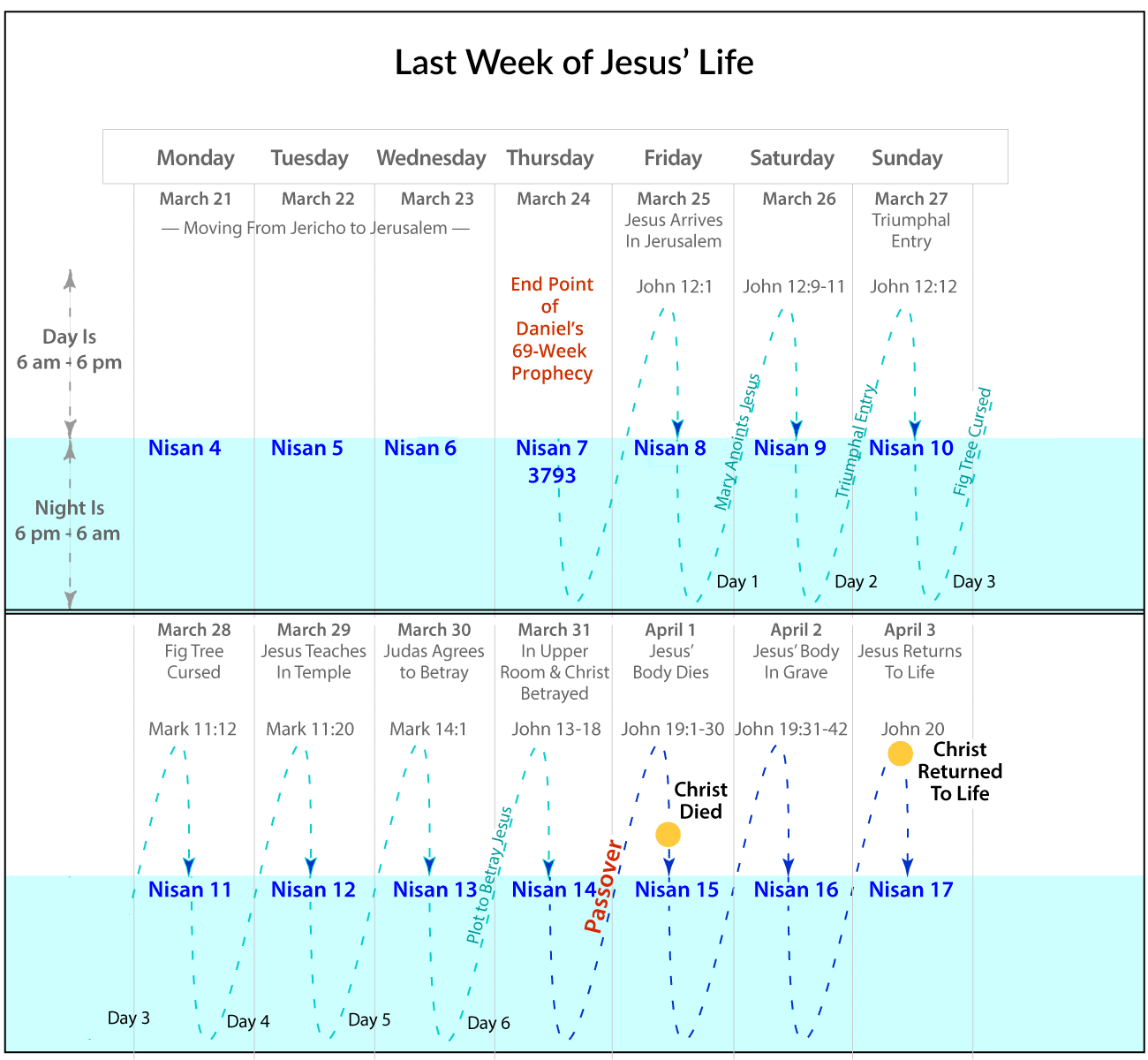
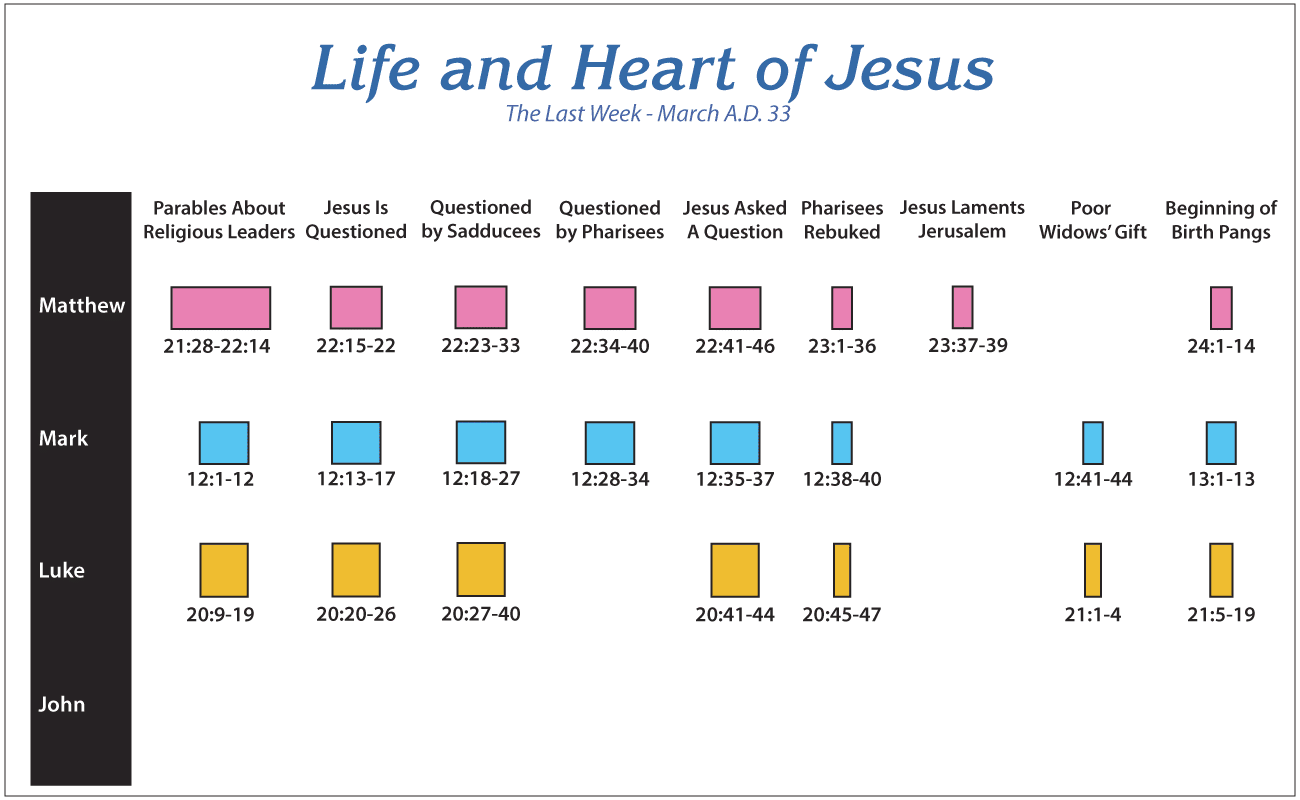
There are many false spiritual leaders in our Christian churches today, and that has always been true since the time of the apostles. We discovered in our recent studies that Jesus had rebuked the scribes and Pharisees for their pride and hypocrisy. They loved to be called Rabbi and Teacher, and to wear ecclesiastical robes. Jesus rebuked them to their face for not being servants. That was only the beginning of His condemnation of these religious leaders. In this study we will discover that Jesus continued condemning them. This time He warned the crowds and His disciples about the Pharisees by announcing eight woes about them, and He repeatedly called them hypocrites and blind guides. He announced an incredibly strong series of rebukes upon these unbelieving and spiritually blind religious leaders. The day was still Tuesday, March 27 A. D. 33 and Jesus will be crucified in three days. It must have been mid-afternoon since the gospels reveal Jesus did a lot of talking on this day. Tuesday does not begin until Mark 14:1. So, this is Jesus’ final warning upon these religious leaders. Luke 11:37-54 reports a shorter and similar warning about these religious leaders almost one year earlier. Since the gospel of Matthew is not always chronological, it is possible that Matthew was reporting the same event with more detail. But, it is most likely that Jesus repeated the message with more detail because it was perfect timing. Our study is from Matthew 23:13-33.
First Woe—Not Going to Heaven
The first of the eight woes that Jesus announced is found in Matthew 23:13. He said,
But woe to you, scribes and Pharisees, hypocrites, because you shut off the kingdom of heaven from people; for you do not enter in yourselves, nor do you allow those who are entering to go in. Matthew 23:13 (NASB)
The Greek word that Jesus used for “woe” is ouai. It was an announcement of coming doom since ouai has the sense of horror or dread. So, Jesus gave the audience an announcement that horror was coming upon the scribes and Pharisees. Jesus rebuked them as hypocrites. The Greek word for hypocrites is hypokrites, which literally means “play-actor” or “pretender.” If we combine these words together, we discover that Jesus cursed the Pharisees for being pretenders. We are going to discover what Jesus meant by pretenders in this study. Earlier Jesus had already called them hypokrites (Matthew 6:2, 5, and 16). Matthew 6:1 reports that Jesus said,
Beware of practicing your righteousness before men to be noticed by them; otherwise you have no reward with your Father who is in heaven. Matthew 6:1 (NASB)
That is, these men were not righteous. They only pretended to be righteous. They were hypokrites. The word not only identified them, it also described them.
For Jesus had warned them in Matthew 6:1 about practicing their righteousness. Then in verses 2, 5, and 16, He identified them as hypokrites. That is, they only pretended to be righteous men. That described them for they had trumpets sound when they gave to the poor so that people would watch them (v. 2). They prayed on the street corners (v. 5), and they wanted people to think they were fasting so they looked gloomy (v. 16). They were frauds.
Sadly, hypokrites also describes many church leaders today. They are only play-actors! They appear to be righteous men, but they will violate Scripture if it is to their advantage. They will give warnings about sins such as pride, deception, lying, lust, and others; but if it serves their purpose, they will make excuses and commit those sins.
This reminds me of one man who was teaching a men’s Bible study. The pastor could not teach the class, so he asked the man to teach that day. The sad part was the man repeatedly reminded the men in attendance that the pastor had asked him to fill-in that morning. I think most of the men in attendance understood that he wanted everyone to know that the pastor had asked him to teach.
It is sad that we cannot see the hearts of church leaders and pastors in order to determine if they are a hypokrites. But what is worse is that some men do not see their own hypocrisy! How about you?
Before we leave Matthew 23:13, we need to notice that on this occasion when Jesus warned the crowd about these pretenders, He said they had not yet entered into the kingdom of heaven, even though everyone thought that they had! For people saw them pretending on the street corners, giving money, and fasting. They were great “play-actors.” Their outward behavior did not reveal their inner person. I remember a woman who once said that her supervisor at work was a very nice man at work, but she did not know what he was like at home. The same is true of every person at church, whether a lay person, a church leader, or the pastor. What are they really like in private?
We should remember that Jesus told us in Matthew 7:21-23 that some church members, leaders, and pastors will not be allowed into heaven. Jesus said some of them will claim that they had prophesied, cast out demons, and even performed miracles. Yet, Jesus will tell them that He never knew them. That is, Jesus knows the hearts of men and women. Our real thoughts and attitudes cannot be hidden from Him. He can see past the “play-acting.”
We should also remember that Jesus warned us in the Parable of the Wheat and Tares (Matthew 13:24-30, 36-43) that unbelievers will enter our churches and they will look real. In the parable, the wheat symbolized true believers and the tares symbolized false believers. Jesus told us that the devil has placed unbelievers in our churches. They are in our churches today! Most likely, this means they may exist in every church as members, leaders, and even as pastors. But which ones are the pretenders?
I once visited a church in Berkley, California. The church was pastored by a man who believed that Genesis 1 was myth. In addition, He believed that Jesus was not virgin born and was not God. Yet, the church service looked like a traditional Bible-believing church. The congregation sang traditional hymns. A missionary spoke about his ministry. There was nothing doctrinally wrong with the pastor’s sermon. The service seemed to honor God. Yet, he was a heretic for in conversation after the service, he denied the deity of Christ. Unless before he dies he places his faith in Jesus Christ as his Lord and Savior, Jesus will one day say to him, “I never knew you!” He was a great pretender.
Jesus also said the hypocrites . . .
“. . . shut off the kingdom of heaven from people; for you do not enter in yourselves, nor do you allow those who are entering to go in.” Matthew 23:13b (NASB)
Since the Pharisees themselves were not going to enter heaven, that means they did not know how to enter heaven. The reason is that they did not believe Jesus was God Himself, the Messiah, the Savior of the world, and that He was going to die in our place so that our sins could be forgiven (1 Corinthians 15:1-7). So, if they did not know how to have their sins forgiven, then they could not help others be saved. So, Jesus said, “You shut off the kingdom of heaven from people.”
It is horrible that this is occurring today also, for many church leaders and pastors are just like the ancient Pharisees—”play-actors.” They have the wrong view of salvation and righteousness.
Second Woe—Great Condemnation
Verse 14 gives us the second of eight woes. It reads like this in the NASB,
[“Woe to you, scribes and Pharisees, hypocrites, because you devour widows’ houses, and for a pretense you make long prayers; therefore you will receive greater condemnation.] Matthew 23:14 (NASB)
Notice that the NASB has added brackets around the verse indicating that verse 14 should not be in our Bibles. The earliest and best manuscripts do not include the verse.1 However, the content of the verse does exist in Mark 12:40. Therefore, Jesus did say these words at this time but they were not recorded by Matthew in the original gospel of Matthew. That is, the verse does not belong in his gospel.
Consequently, we should note that Jesus condemned the Pharisees again. This time He accused them of exploiting widows for the money that had been left to them. It is well-known among churches that the older people usually have more money to give than the younger generation. The greedy Pharisees exploited this fact.
Jesus also condemned them for their long prayers, which were designed to make them appear spiritual. Since they exploited the people in every way, they would receive greater condemnation. This is another reminder that there will be degrees of punishment in hell for the wicked, including those Pharisees. For more discussion about degrees of punishment in hell, read Luke 10:1-16, 11:29-36.
Third Woe—Sent Proselytes to Hell
Once again, the earliest and best copies of Matthew did not include verse 14, but verse 15 does belong,
“Woe to you, scribes and Pharisees, hypocrites, because you travel around on sea and land to make one proselyte; and when he becomes one, you make him twice as much a son of hell as yourselves. Matthew 23:15 (NASB)
This is the third curse upon the Pharisees. Jesus revealed that these pretenders were eager to make proselytes. They were passionate about increasing the number of proselytes, just as many pastors do today. At the time of Christ, there were two types of Jewish converts. William Barclay explains,
There were those who were called the God-fearers. These accepted the conception of one God; they accepted the Jewish moral law; but they took no part in the ceremonial law and did not become circumcised. Such people existed in large numbers, and were to be found listening and worshipping in every synagogue, and indeed provided Paul with his most fruitful field for evangelization. They are, for instance, the devout Greeks of Thessalonica (Acts 17:4).
It was the aim of the Pharisees to turn these God-fearers into proselytes. The word proselyte is an English transliteration of a Greek word proselutos, which means one who has approached or drawn near. The proselyte was the full convert who had accepted the ceremonial law and circumcision and who had become in the fullest sense a Jew. As so often happens, ‘the most converted were the most perverted..A convert often becomes the most fanatical devotee of the new religion; and many of these proselytes were more fanatically devoted to the Jewish law than even the Jews themselves.2
The God-fearers are found in the New Testament (Acts 10:2, 22; 13:43; 17:4, 17). But the prize for the scribes and Pharisees was to convert a God-fearer into a proselyte, one who was devoted to Judaism and keeping its thousands of rules. The Pharisees taught then that keeping the laws gave them eternal life. So, Jesus said, “you make him twice as much a son of hell as yourselves.” That statement reveals that the Pharisees themselves were going to hell. They were wicked men who appeared to care about the souls of men, but they were just pretenders.
Today, some churches and pastors seek to make converts in order to increase the attendance rather than rescuing people from eternal condemnation in hell. Some pastors and church leaders want the new members to accept their mixture of doctrinal truth and worldly views. Jesus’ point was that the Pharisees were not concerned about truth or the eternal destiny of their proselytes.
Fourth Woe—Lied and Deceived
The fourth of the eight woes or curses upon the religious leaders is described in verse 16-22.
“Woe to you, blind guides, who say, ‘Whoever swears by the temple, that is nothing; but whoever swears by the gold of the temple is obligated.’ You fools and blind men! Which is more important, the gold or the temple that sanctified the gold? And, ‘Whoever swears by the altar, that is nothing, but whoever swears by the offering on it, he is obligated.’ You blind men, which is more important, the offering, or the altar that sanctifies the offering? Therefore, whoever swears by the altar, swears both by the altar and by everything on it. And whoever swears by the temple, swears both by the temple and by Him who dwells within it. And whoever swears by heaven, swears both by the throne of God and by Him who sits upon it.” Matthew 23:16-22 (NASB)
This time Jesus does not call the Pharisees hypocrites. Instead He calls them blind guides because they had read the Scriptures and could not accurately understand them. John MacArthur in his commentary on Matthew makes the point that they were blind due to their inability to accurately understand Scripture. He wrote,
. . . Jesus did not call His opponents hypocrites but blind guides, emphasizing their unawareness that they were ignorant of the truth.3
It is obvious that Jesus is rebuking them for their false teaching. He says they were blind three times, and each time he describes an error they are teaching. First, we are told that they said a person could swear two different ways. A person might swear or make an oath or a promise by the temple and then not keep it. That is, their “yes” could be a “no” and according to their religious teaching, that would not be wrong! But Jesus taught us in the Sermon on the Mount that our “yes” must be “yes” and our “no” must be “no” (Matthew 5:37). The Pharisees’ teaching gave approval to lying and deception.
The second example of their false teaching was swearing by the altar or by the offering on the altar. The third example was swearing by heaven. In every example, the Pharisees considered swearing by something inferior to be something that was superior! They had flipped the priorities. Thus swearing by the gold, an animal sacrifice, or heaven was binding, but swearing by the altar, the temple, or God Himself was not binding. That is unbelievably upside down. In the Sermon on the Mount, Jesus had warned them to not swear by heaven (Matthew 5:33-37). Such false teaching allowed the Pharisees to appear spiritual while not keeping their commitments. What false teaching and hypocrisy!
Today, church leaders excuse their gossiping and slandering of people because they claim that it is necessary to make decisions about people, but God never gives them that permission in Scripture. The twisting of Scripture occurs even among church leaders and pastors to accomplish their personal goals.
False teaching of the Bible exists because some teachers do not understand the Bible, yet the people think these false teachers are wonderful. They are just like the crowds that adored the Pharisees and believed they were wonderful, righteous men. Another reason is that some teachers are not born again. That is, they are just like most of the Pharisees. So, Jesus rebuked them for being blind guides, and claiming that Scripture allowed them to lie and be deceptive. Read Psalms 15:2-4.
Fifth Woe—Wrong Priorities
Jesus’ fifth of eight woes is recorded for us in verse 23-24.
“Woe to you, scribes and Pharisees, hypocrites! For you tithe mint and dill and cummin, and have neglected the weightier provisions of the law: justice and mercy and faithfulness; but these are the things you should have done without neglecting the others. You blind guides, who strain out a gnat and swallow a camel! Matthew 23:23-24 (NASB)
This time Jesus calls the Pharisees both hypocrites and blind guides. Some believe that Jesus’ statement is about tithing, but notice that Jesus ends by telling them that they are guilty of straining out a gnat and swallowing a camel. That is, the message of this woe is that they had wrong spiritual priorities. So, they would tithe very small plants such as mint, dill, and cummin. The Mosaic law required the Israelites to tithe even the seeds and fruit (Deuteronomy 14:22).
So, the Pharisees must have arranged for the people to know that they even tithed some of the smallest of plants. We can imagine counting these very small plants in order to tithe them! Jesus adds that the Pharisees ignored the more important or weightier parts of the law such as justice, mercy, and faithfulness. Matthew 23:14 and Mark 12:40 have already revealed to us that the Pharisees did not show justice and mercy.
According to rabbinic tradition, some parts of the law were weightier or more important than others. This is true for we learned in Matthew 22:36-37 that a Pharisee had asked Jesus what was the greatest commandment in the Law. Jesus told him that the greatest commandment was to love our God with our entire person. But the Pharisees did not keep their priorities. But that does not mean that some doctrines are less important than others.
This woe reminds me of a man who had created a long list of biblical priorities that we should keep. His list began with loving God first. Loving God is more than important than loving ourselves, our spouse or anyone else. So, we are to be trusting God, pursuing righteousness, reading Scripture, and enjoying faithfulness. The next priority was one’s spouse. Then came the family, work, the church, and the nation in that order. He was diligent to keep his priorities. He was not a pretender.
Sixth Woe—Overlooking One’s Sins
In Matthew 23:25-26 we discover the sixth woe.
“Woe to you, scribes and Pharisees, hypocrites! For you clean the outside of the cup and of the dish, but inside they are full of robbery and self-indulgence. You blind Pharisee, first clean the inside of the cup and of the dish, so that the outside of it may become clean also. Matthew 23:25-26 (NASB)
This woe reveals that the Pharisees overlooked their own sins that affected others. Today, we can be confident that there are church leaders who are just like the Pharisees. For them, the church is a job. The leader expects to be provided an excellent salary, even if it exceeds the salary of the vast majority of the congregation. The Greek word for self-indulgent has the sense of lacking self-control. So, if we combine these two thoughts together, we have a picture of a leader who is out of control in regard to his own desires. He may act gracious, but yet be authoritarian and demanding. He is a Diotrephes (3 John 9-10). Does that sound like a leader in your church? He views himself as the authority in the church and he acts like it.
The sixth woe reveals the Pharisees also exploited people to gain wealth and to please themselves. We discovered in the study, “Cursed Fig Tree and Second Cleansing of the Temple,” that the religious leaders exploited the people at the annual Passover feast. Annas and his sons had developed a scheme that made them very wealthy. They sold animals for the sacrifices at the annual passover to millions of travelers. They promised that the animals which were sold were acceptable for sacrifice. But in order to buy the animals, the people’s Roman money had to be exchanged into the temple coin. So Annas and his sons overcharged for both the animals and the exchange rate for the money. They made a fortune. That characterizes the heart of the scribes and Pharisees. They were full of robbery and self-indulgence. So, Jesus warned them to not overlook their sinful hearts.
Seventh Woe—Appear As Righteous
The next woe is very similar to the last one. This time Jesus rebuked them for appearing to be righteous. It is described in Matthew 23:27-28.
Woe to you, scribes and Pharisees, hypocrites! For you are like whitewashed tombs which on the outside appear beautiful, but inside they are full of dead men’s bones and all uncleanness. So you, too, outwardly appear righteous to men, but inwardly you are full of hypocrisy and lawlessness. Matthew 23:27-28 (NASB)
In order to understand this woe, here is an explanation about whitewashed tombs from Mark E. Moore which will be helpful.
The OT declared anyone unclean who touched a dead body (Num 19: 16). The Jews extrapolated that to coffins and even tombs. Therefore, about a month before Passover, crews would go out to the area around Jerusalem and whitewash all the sepulchers so that an innocent pilgrim would not inadvertently step on one and be disqualified from participating in Passover. As Jesus made his way to the Holy City just two days earlier, he would be reminded of this again by all the freshly painted graves. You were drawn to their beauty but defiled by their touch. So it was with the Pharisees.4
The Pharisees were wicked men who were careful to appear as righteous to those around them. So, when Jesus said, “They are full of dead men’s bones and all uncleanness” His message was that they were like graves. They were not sources of spiritual life. They were full of bones and filth.
So far, Jesus has repeatedly been condemning these religious leaders. Pharisaical religious leaders will do evil things to protect themselves and their reputation. So, Jesus’ next woe reveals that they hurt people and even killed to protect themselves. In addition, they interpreted the Scriptures in a way that pleased themselves.
Eighth Woe—Going To Kill Christ
Then in Matthew 23:29-33 we are given the eighth and last woe pronounced upon the scribes and Pharisees.
“Woe to you, scribes and Pharisees, hypocrites! For you build the tombs of the prophets and adorn the monuments of the righteous, and say, ‘If we had been living in the days of our fathers, we would not have been partners with them in shedding the blood of the prophets.’ So you testify against yourselves, that you are sons of those who murdered the prophets. Fill up, then, the measure of the guilt of your fathers. You serpents, you brood of vipers, how will you escape the sentence of hell”? Matthew 23:29-33 (NASB)
Now Jesus tells us that these religious leaders appeared to love the real prophets and the truly righteous when they decorated the tombs of the prophets and the righteous men of past ages. But they were just pretenders. Had they lived in our day, they would make themselves appear to love the prophets and to be righteous in other ways. Maybe they would have given long prayers and praised the dead at a memorial service and donated money. They may have even cried for them.
Jesus adds that they claimed to not be like others who killed the prophets and the righteous. One would think that they were truly loving, godly leaders. But all of these woes and their plans to murder Jesus proved that were just as guilty as their forefathers who killed the prophets and the truly righteous. Jesus ends by calling them a brood of snakes—deceptive and deadly. These pretenders were not going to heaven. Jesus said, “How will you escape the sentence of hell”?
Conclusion
So, if you are a leader, does one or more of these woes describe you? I know a church leader who admitted that he never takes his sins seriously. He always excused himself by taking comfort that there were godly men in the Bible whom God forgave. Sadly, church leaders and pastors need to take sin seriously. Everyone needs to take sin seriously. We need to desire to be righteous men and women. So, plead with the Father to help you be righteous by walking in the Holy Spirit, and being protected from the devil. Ask God to not allow you to be tempted. Strive to be holy and confess your sins daily. We should be very concerned that we not be pretenders and blind like the scribes and Pharisees. Ask God the Father to help you please Him as a righteous man or woman.
References:
1. “That ver. 14 is an interpolation derived from the parallel in Mk 12.40 or Lk 20.47 is cleat (a) from its absence in the earliest and best authorities of the Alexandrian and the Western types of text, and (b) from the fact that the witnesses that include the passage have it in different places, either after ver. 13 (so the Textus Receptus) or before ver. 13.” — Bruce M Metzger. A Textual Commentary on the Greek New Testament. United Bible Societies. 1994. p. 50.
2. William Barclay, The Gospel of Matthew, Third Ed., The New Daily Study Bible (Edinburgh: Saint Andrew Press, 2001), 338–339.
3. John MacArthur. Matthew 16-23. The MacArthur New Testament Commentary. Moody press. 1988. p. 381.
4. Mark E. Moore. The Chronological Life of Christ. College Press. 1996. vol. 2, p. 181.
Suggested Links:
Life of Christ – 200+ studies about the events, miracles, and teachings of JesusLast Days to the Crucifixion
Cursed Fig Tree and Second Cleansing of the Temple
Five Characteristics of the Pharisees That You Should Avoid