Discipleship Training – Part 2

The Bible describes Christians using the following words: sun, stars, lights, Mount Zion, Lebanon, treasure, jewels, gold, vessels of gold and silver, stones of a crown, lively stones, babes, little children, obedient children, members of a body, soldiers, runners in a race, wrestlers, good servants, strangers and pilgrims, sheep, lambs, caves of the stallions, eagles, doves, thirsty deer, good fish, dew and showers, watered gardens, unfailing springs, vines, branches of the vine, pomegranates, good figs, lilies, willows by the water-courses, trees planted by rivers, cedars in Lebanon, palm-trees, corn, wheat, salt, overcomers, children of God, those with white robes, brethren, and saints. These are not words that the world is using to describe Christians these days. Jesus warned us that such would occur. Just as angels rejoice when a person is saved, we have been told to rejoice when we suffer for Him! Suffering is part of this life for the Christian who is committed to following Jesus. That was the message that Jesus sent to His disciples before He sent them out on their first mission.

Background

In our last study, Jesus sent the disciples out in pairs to minister in the towns and villages of Galilee and Judea. They were to heal people and preach about the kingdom of God. They were to go with minimal supplies and depend upon God to meet their needs. I have wondered how Jesus would react to those today who do not want to minister for Him unless they are able to have at least a middle class income. Jesus and the disciples were not wealthy. Jesus’ disciples did not take very much with them. One would think that if they had little, surely God would have blessed them and their ministry by giving them a great response. Jesus also warned them that their message would be rejected and that they would be persecuted and insulted. It is difficult sometimes when strangers reject the good news about Jesus; but when family members reject us, that is even worse. Yet Jesus warned His disciples that even family members would reject them. Under circumstances like that, who would want to follow Jesus? Yet, the disciples did. That is a mark of a true disciple.

Yet, Jesus was not encouraging them to seek persecution or to remain if they encountered any. They were told to flee or escape if persecution occurred. Jesus encouraged them to flee, if possible. That was clear. There is no virtue in suffering for Jesus when one can escape it. It is stupid to remain and intentionally suffer.
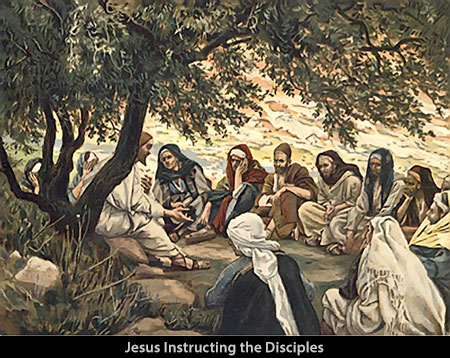
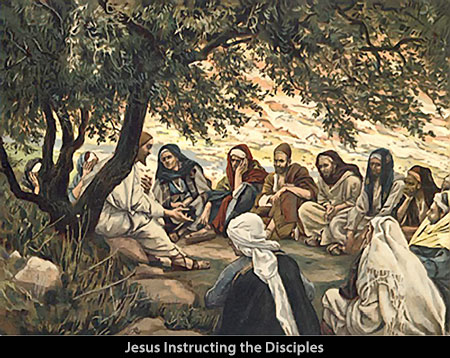
Jesus Instructing the Disciples

Not Above The Teacher

This study is a continuation of the last one. This is part two. Having warned them that persecution would come, Jesus now tells them that they should always expect to suffer for Him. Why would they think otherwise? Listen to Jesus,

A disciple is not above his teacher, nor a slave above his master. It is enough for the disciple that he become like his teacher, and the slave like his master. If they have called the head of the house Beelzebul, how much more will they malign the members of his household! Matthew 10:24-25 (NASB)

Jesus’ illustration is simple. It is about one person who has a lesser position than another person such as the disciple and teacher relationship. The disciple or learner does not know more than the teacher. It is in that sense that one is in a lesser position. One knows less and the other knows more. We all understand that the disciple is not above the teacher in that sense. In the teaching process, the goal of the disciple or student is to learn what the teacher knows. That is, it is “enough” for the disciple or student to become like the teacher. The Greek word that Jesus uses for “enough” is arketos. It means “sufficient” or “satisfaction.” That is, it is sufficient when the disciple knows what the teacher knows. That is the goal of education.

Then Jesus added, “If they called Me a devil, why not you?” Since the disciple is not above the teacher, why should the disciple expect to be treated better? One would expect that the teacher would receive honors and recognition for his knowledge and what he advocates but not the student. So if the teacher is maligned, insulted, and called a devil, why should the student expect to be treated better? The answer is obvious. The disciple should not expect better treatment.

Even though Christians are called many beautiful names in the scriptures, a true disciple will suffer in this life when he or she follows God. One sign or indicator that people are following God is that they will suffer. Many in the world do not consider Christians to be beautiful. Instead the world views us as problems. The same was true of Jesus and His disciples.

How did the disciples respond to Jesus’ words? It appears that they responded with fear since Jesus encouraged them not to be fearful. It is possible that Jesus just anticipated the obvious response. But if I had been there and listening, I believe that I would have been very concerned and apprehensive. So Jesus said,

Therefore do not fear them, for there is nothing concealed that will not be revealed, or hidden that will not be known. Matthew 10:26 (NASB)

Jesus will repeat “do not fear” again in verses 28 and 31. He encouraged them not to fear criticism and false accusations. The Pharisees had already slandered Him and committed the unpardonable sin by declaring that Jesus’ miracles, signs, and wonders were performed by demonic power. They had called Jesus a devil. Believers should not fear the false accusations, because the truth will eventually be revealed. The motives and lies of their accusers will become known eventually.

We should have great concern only about criticisms that are justified. Our true reputation will eventually become known. Some of us are slandered in the Christian community and within the church unfairly. For some the truth may not become known until they stand before the throne of God, but it will become known.
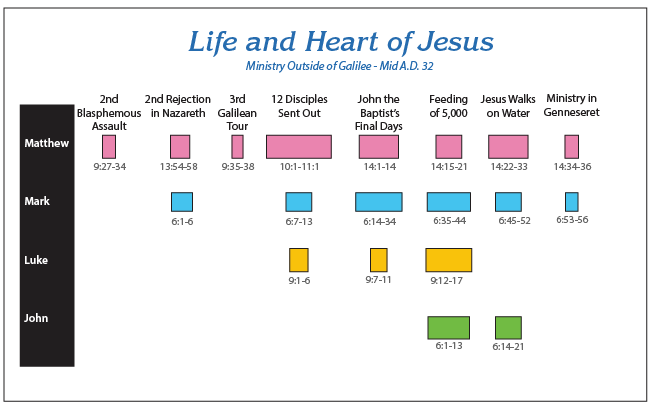
Chronology7 - Ministry Outside of Galilee

The Cure For Fear

Then Jesus encouraged them to be aggressive. Instead of being fearful, they should shout the truth about the kingdom and about Jesus from the mountain top.

What I tell you in the darkness, speak in the light; and what you hear whispered in your ear, proclaim upon the housetops. Matthew 10:27 (NASB)

Nothing spoken in secret was to be hidden. What they heard from Jesus in a whisper or in the darkness, they were to declare to the world from the roofs of buildings. Instead of being fearful, they were to be bold.

Do not fear those who kill the body but are unable to kill the soul; but rather fear Him who is able to destroy both soul and body in hell. Matthew 10:28 (NASB)

Proverbs 29:25 and Ephesians 6:6 echo Jesus’ statements,

The fear of man brings a snare, but he who trusts in the LORD will be exalted. Proverbs 29:25 (NASB)

. . . not by way of eyeservice, as men-pleasers . . . Ephesians 6:6 (NASB)

We should not fear men, but God. That is the message. Jesus’ point is that the cure for fear is to trust God and be aggressively bold. Yes, persecution will follow, but it will come anyway if we are true disciples. Our problem is that we seek the approval of others more than the approval of God. We must remember that God cares for us and loves us!

Are not two sparrows sold for a cent? And yet not one of them will fall to the ground apart from your Father. But the very hairs of your head are all numbered. So do not fear; you are more valuable than many sparrows. Matthew 10:29-31 (NASB)

When we decided to believe in Him, we started following Him. We entered a spiritual war zone. Now we must fight or be defeated. What else should we expect when light and darkness collide? Christians are children of the Light. He called us to follow Him. He knows that we will be persecuted. We should expect to suffer. We should not fear nor be surprised when it comes.

Penalty of Denial

Some will flee persecution by denying Him. So Jesus added this,

Therefore everyone who confesses Me before men, I will also confess him before My Father who is in heaven. But whoever denies Me before men, I will also deny him before My Father who is in heaven. Matthew 10:32-33 (NASB)

The point of this verse is that if we tell others about Him, Jesus will talk about us before God the Father; otherwise, He will not. Why should we expect to be treated any better? If we deny Him, then He will deny us. The Greek word translated as “deny” has the sense or meaning of “disowning, or renouncing.” 1 John 2:23 tells us that those who deny Jesus actually never belonged to Him. They were never Christians.

Whoever denies the Son does not have the Father; the one who confesses the Son has the Father also. 1 John 2:23 (NASB)

The ones who speak about Jesus are the true Christians.

Today, some Christians do not out and out reject Jesus; they just never talk about Him. They are afraid or indifferent. Lifestyle evangelism has been encouraged by many over the years. Those who teach that Christians should practice lifestyle evangelism say a believer’s life captures the attention of non-Christians and leads them to Jesus Christ. They believe that we do not need to say anything about God to a person until that person asks about our life and our faith. They say we should “carefully” present Jesus Christ to them. But lifestyle evangelism has weaknesses. In fact, lifestyle evangelism is contrary to Jesus’ teachings in this passage. Instead of being quiet, we are supposed to shout from the house tops and tell others about what we have heard. In fact, those who continually refuse to confront the world or tell others about Jesus may not belong to God at all (1 John 2:15-16).

Do you think that evangelism should avoid all and every form of conflict and tension? If so, listen to Jesus’ next words,

Do not think that I came to bring peace on the earth; I did not come to bring peace, but a sword. For I came to SET A MAN AGAINST HIS FATHER, AND A DAUGHTER AGAINST HER MOTHER, AND A DAUGHTER-IN-LAW AGAINST HER MOTHER-IN-LAW; and A MAN’S ENEMIES WILL BE THE MEMBERS OF HIS HOUSEHOLD. Matthew 10:34-36 (NASB)

As we have already seen, conflict and tension were common throughout Jesus’ ministry. Jesus’ point is that if the teacher encountered conflict, tension, insults, and rejection, why should a follower think that he or she should escape? Jesus expects you to tell others about Him. He knows that conflict will come to the faithful believer who engages the world. He sends us into the world knowing that conflict will occur. Jesus did not come to bring peace. Some families will be divided. The question is, “Are you following Jesus?”

He who loves father or mother more than Me is not worthy of Me; and he who loves son or daughter more than Me is not worthy of Me. Matthew 10:37 (NASB)

The cure for fear

Take Up Your Cross

Jesus expects us to be willing to deny ourselves and to be willing to suffer for Him. That is the message in Jesus’ next statement.

And he who does not take his cross and follow after Me is not worthy of Me. He who has found his life will lose it, and he who has lost his life for My sake will find it. Matthew 10:38-39 (NASB)

One who takes up Jesus’ cross may encounter suffering, insult, persecution, self-denial, self-abandonment, and death for Him. One who takes up the cross is one who is intentionally willing to yield his entire being to Jesus. It is the ultimate in willing, sacrificial service for Jesus. Jesus is looking for those who will call Him Master and prove He is their Master by their lives. Are you willing to shout from the housetop to the world declaring the good news about Jesus? Is Jesus truly your Lord and Master? Or, are Jesus’ words just nice thoughts?

God is not an Ogre

I imagine that the disciples were thinking after hearing these statements that if after being bold and suffering, many people responded positively, that Jesus would praise them for their faithful ministry. But Jesus surprised them when He said that those who responded to them had actually responded positively to Him and to God the Father,

He who receives you receives Me, and he who receives Me receives Him who sent Me. . . Matthew 10:40 (NASB)

It is a warning not to seek the praise and a following from those to whom we minister. The point is that God has given us the joy of sharing in His work. We are His messengers and He allows us to share in the results.

Conclusion

Jesus’ words have been very serious. He calls us to tell others about Himself. He calls us to serve Him without expecting to be rich or famous. He expects us to tell our families, friends, and strangers about Himself. He knows that we will suffer in a variety of ways. He encourages us not to be afraid by trusting Him and being bold. If necessary, we should be willing to die as He did. My friend, the days are coming when persecution will become worse. Jesus encouraged the disciples and He encourages us by promising rewards,

He who receives a prophet in the name of a prophet shall receive a prophet’s reward; and he who receives a righteous man in the name of a righteous man shall receive a righteous man’s reward. And whoever in the name of a disciple gives to one of these little ones even a cup of cold water to drink, truly I say to you, he shall not lose his reward. Matthew 10:41-42 (NASB)

Jesus refers to three situations: helping a prophet, helping a righteous man, and helping a “little one.” In each case, Jesus promises a different reward for different conduct. This suggests that God has different rewards for many different things that we do, including the ministry of His Word to others. Anything that we do for another will be returned to us in some form of reward.

God is not an ogre who does not care about His own. He will reward us for the faithful service which He has asked of us.

Thus did Jesus teach that every kind of dedicated action is blessed by His Father, and no sacrifice for Him will ever be made in vain. At the conclusion of a life for service would come “pay day,” when the Lord’s servants would be rewarded for their consecrated efforts. These promises would be a great incentive to serve faithfully, but there is reason to believe that the greatest motivating power in the lives of everyone was not the promise of future rewards, but their overwhelming love for the Master who had commissioned them to minster for Him. Every true servant will gladly exclaim, “If He rewards me, that will be wonderful; if He does not, I’ll do it anyway – just for His sake.”1


References:

1. Ivor Powell. Matthew’s Majestic Gospel. Kregel Publications. 1986. p. 204., modified


Comments or Questions?

Sign-up to be notified about future studies?

Discipleship Training – Part 1

Discipleship! What a curious word. It has the idea of training someone to become something that he or she is not. It implies that one needs help from another person in order to change. As God, Jesus was a master at discipleship; but yet one among His disciples never truly changed. A disciple maker cannot make one change. The discipleship that Jesus practiced was more than a study in a book and having someone listen to a series of sermons. Jesus was interested more in the character of a person and not just in his or her head knowledge. He had the disciples watch Him “do ministry.” They watched Him and heard Him. Then He let them engage in ministry under His watchful eye. He guided them and rebuked them. Today, few are willing to be rebuked, warned, or challenged to excel. Many believe the ministry experience should be a positive one, even the training. In this study (Matthew 10:1-23; Mark 6:7-13; Luke 9:1-5), we will discover some of Jesus’ discipleship training techniques. You may be surprised.

Jesus Instructing the Disciples

The Empowerment

The opening verse of our study tells us that Jesus has just called or summoned the disciples to Himself.

Jesus summoned His twelve disciples and gave them authority over unclean spirits, to cast them out, and to heal every kind of disease and every kind of sickness. Matthew 10:1 (NASB)

When the twelve arrived, He gave them authority to cast out demons and heal. This is more than book study and attendance at a meeting. Here we are told that they had power to cast out demons. The power was not their power; it was Jesus’ power. The Greek imperfect of “gave authority” reveals that Jesus was continuously empowering them throughout their ministry. He gave them a task and continued to help them accomplish their task. Just before Jesus left this world, He told His disciples in Matthew 28:20 that He would still be with them and help them in their ministry.

. . . and lo, I am with you always, even to the end of the age. Matthew 28:20b (NASB)

It was a promise that He would also help them in their God-assigned ministry. He does the same today.

The first verse also reveals that the disciples could heal every type of disease as well as sickness. In our last study, we discovered that together both disease and sickness referred to all forms of illness.

The Twelve

Who were the twelve? The next three verses lists them for us.

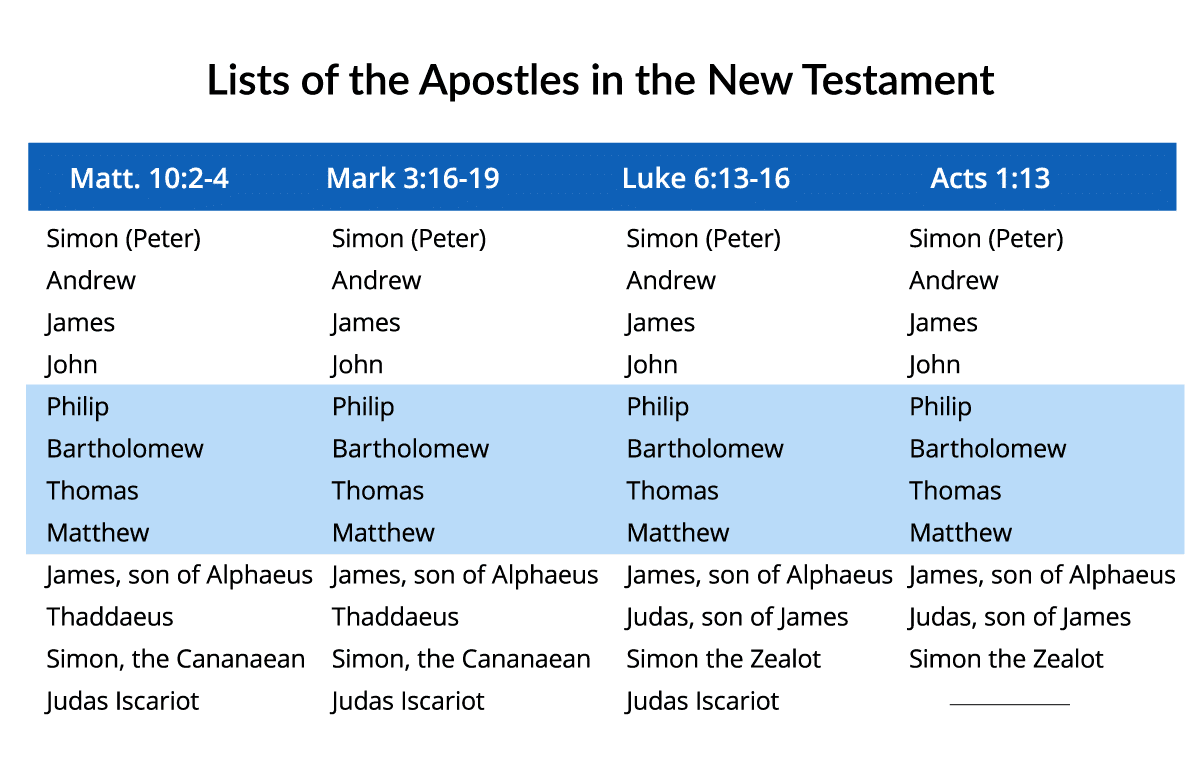
Now the names of the twelve apostles are these: The first, Simon, who is called Peter, and Andrew his brother; and James the son of Zebedee, and John his brother; Philip and Bartholomew; Thomas and Matthew the tax collector; James the son of Alphaeus, and Thaddaeus; Simon the Zealot, and Judas Iscariot, the one who betrayed Him. Matthew 10:2-4 (NASB)

A quick comparison of this passage to Mark 3:16-19, Luke 6:13-16, and Acts 1:13 reveals that the apostles are presented in three groups of four.

The first group of four apostles was Jesus’ inner group. They were with Jesus shortly after the beginning of His ministry. John 1:35-42 records the occasion on which they responded to Jesus by believing in Him. That is, they believed He was the promised Messiah. Jesus asked them to follow Him three times. The first time was after they believed. The second time occurred when they were fishing (Mark 1:14-20), and the third time occurred after another time of fishing (Luke 5:1-11). On that occasion they finally left everything and followed Jesus. At least three of them were invited to join Jesus when He raised Jairus’ daughter from the dead (Mark 5:37-43). Jesus also invited only Peter, James, and John to join Him on the Mount of Transfiguration (Matthew 17:1-13). All four privately asked Jesus questions on the Mount of Olives (Mark 13:1-8). Peter, James, and John were asked to wait for Jesus while He prayed in the Garden of Gethsemane (Matthew 26:36-37). Lastly, Peter and John were in discussion with Jesus prior to His departure to heaven (John 21:12-23). John was the disciple Jesus asked to care for His mother (John 19:26-27). It should be noted that James and John had the same father, Zebedee (Matthew 10:2), and Peter and Andrew were brothers (Matthew 10:2). These men were part of Jesus’ inner group.

The second group of four apostles included two men who were into details. That is, they appear to have been analytical men: Thomas and Matthew. Thomas is known as Didymus (John 21:2) and “Doubting Thomas” because He questioned that Jesus had actually returned to life (John 20:26-29). He wanted to place his finger into Jesus’ wounds to confirm that the wounds were real. Matthew was a tax collector for the Roman Empire. These two men were probably analytically oriented. It appears from John 1:35-51 that Philip and Bartholomew believed in Jesus Christ as their Messiah on the same day that Peter, Andrew, James, and John did. Bartholomew was also known as Nathanael.

We know very little about the third group of four apostles. We know almost nothing about James the son of Alphaeus from the Bible other than that he was also called James the Less (Mark 15:40) and that Matthew was his brother (Matthew 9:9; Mark 2:14). Thaddaeus was also called Lebbaeus and was known as Judas, the son of James. Simon the Cananaean was also called Simon the Zealot. The Zealots were anti-Rome and were politically motivated. One wonders how Simon felt about Matthew, who would have been considered a traitor by the Jews because he was a tax-collector for Rome. The Bible reveals nothing significant about this apostle. Judas Iscariot was the traitor (Matthew 10:4) who later hung himself (Matthew 27:3-6) and was therefore not listed in the book of Acts.

Finally, Mark 6:7 reveals that Jesus sent the apostles out in pairs. These men were to become the future leaders – Jesus’ apostles. It appears from scripture that Peter was impulsive and vocal, while Thomas was probably a very logical, thoughtful person. James and John were brothers who wanted to be first among the apostles. On one occasion later in His ministry, their mother asked Jesus if they could rule on His left and right. Matthew had been a tax-collector whom the Jews considered to be a traitor because he collected taxes for Rome, and Simon the Zealot was a radical who hated Rome. Judas was a traitor who stole money from the money bag. What a combination that must have been at first. We know almost nothing about some of the men since the pages of scripture are quiet.

Chronology7 - Ministry Outside of Galilee

Their Mission

After calling the men to Himself, Jesus told them what He wanted them to do.

These twelve Jesus sent out after instructing them: “Do not go in the way of the Gentiles, and do not enter any city of the Samaritans; but rather go to the lost sheep of the house of Israel. Matthew 10:5-6 (NASB)

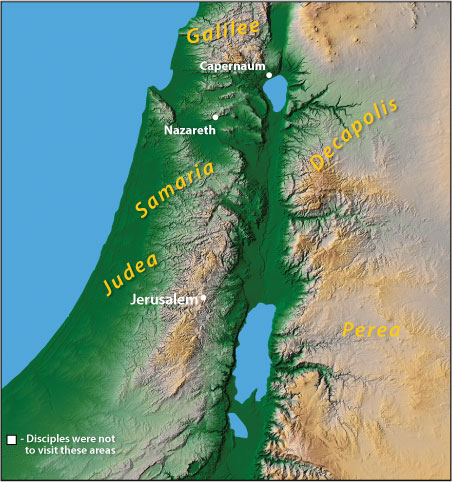
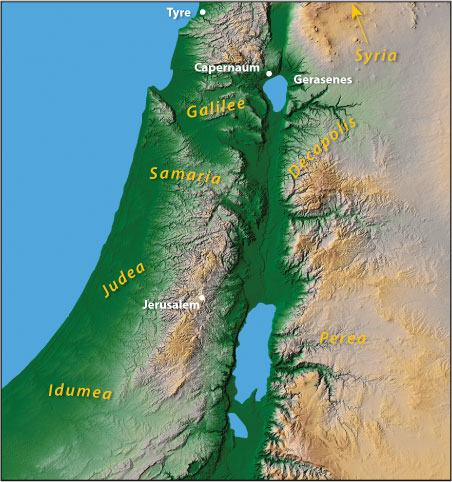
They were instructed to avoid Samaria and those regions belonging to the Gentiles. That left only Galilee in the north and Judea in the south. This was consistent with the directions that Jesus gave the apostles just before He returned to heaven (Acts 1:8). InActs 1:8 Jesus told the apostles to witness first in Jerusalem, then in Judea, then in Samaria, and finally throughout the rest of the world. The biblical principle was to present the gospel to the Jews first and then to others (Matthew 28:18-20; Acts 13:46; Rom. 1:16). Jesus called the Jews the lost sheep of Israel because their spiritual leaders, the Pharisees and Sadducees, were lost themselves and were leading the Jews astray.

As the disciples went on their mission, they were to preach and heal just as Jesus did. They were able to do so because Jesus empowered them for ministry. Their message and actions were simple. Jesus told them,

And as you go, preach, saying, “The kingdom of heaven is at hand.” Matthew 10:7 (NASB)

In Mark 6:12 we discover that in addition to warning others that the kingdom of heaven was “at hand,” they were to call them to repent. The expression “at hand” comes from a Greek word that means the kingdom of heaven had been and was approaching. It had been coming nearer and it was now closer to them. The kingdom was approaching, and they were to get ready by repenting of their sins. That was their message. It is still the message today. Jesus is returning, and people need to repent and make their peace with God.

The disciples were to heal the sick, raise the dead, and cast out demons.

Heal the sick, raise the dead, cleanse the lepers, cast out demons. Freely you received, freely give. Matthew 10:8 (NASB)

The disciples were in training, They were mimicking Jesus. They had been watching Him heal, raise the dead, cast out demons, and preach. Now it was their turn. This is true discipleship. They had reached a certain level of spiritual maturity. Discipleship always includes some form of instruction; it must include the opportunity to practice skills and use what one has learned. Discipleship making involves rebuke, admonition, praise, and encouragement. Unfortunately, some men and women will not accept admonition. This lack of humility and submission makes true discipleship very difficult.

Just imagine the reports that the religious and political leaders must have heard. It was no longer just Jesus who was performing miracles, but now also His disciples. We will discover later that the news about their mission spread throughout Judea and Galilee like wild fire and was even heard by King Herod (Luke 9:7).

List of the Apostles in the New Testament

Their Belongings

Jesus also told them what to take on their mission.

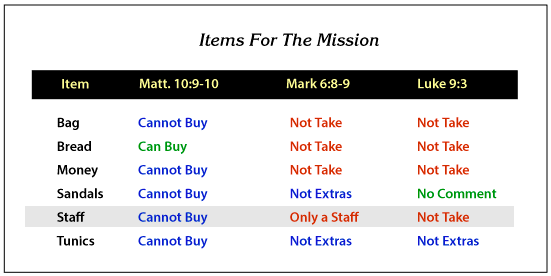
Do not acquire gold, or silver, or copper for your money belts, or a bag for your journey, or even two coats, or sandals, or a staff; for the worker is worthy of his support. Matthew 10:9-10 (NASB)

By comparing Matthew 10:9-10 with Mark 6:8-9 and Luke 9:3, we discover that Jesus had directed them not to take any extra clothes. Mark and Luke tell us that Jesus told them not to take a bag, bread, or money. They could not take an extra pair of sandals, a second staff, or a set of underwear (also called a tunic). Matthew makes it clear that they could not buy anything during their mission except bread.

Contradiction?

If one examines the three gospels closely, we discover what appears to be a contradiction between Mark and Luke about the staff. Luke seems to imply that Jesus told them that they could not take along a staff. But Mark says they could not take an extra. In fact, Mark says that the disciples could not take an extra pair of sandals, another staff, or extra underwear. Luke says nothing about the sandals and agrees that no extra underwear could be taken. Some have suggested that the staff Luke referred to was different from the one mentioned in Mark. It has been reported that it was customary for two staffs to be taken on a trip – one was for walking and another was carried over the shoulder. However, there is insufficient information to resolve the issue either way. What is clear is that they were to travel with very little. They were to trust God and go!

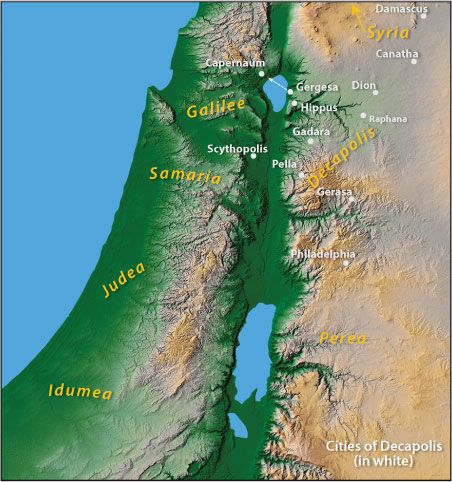
Map of Israel

Base Of Operations

It should be noted that it was customary for the Jews to show hospitality to religious leaders such as priests and rabbis. The people had been taught that God grants a blessing upon those who show such kindness. So it was common for devout Jews to give religious leaders food, clothes, money, and a place to sleep. This helps us understand the following statement from Jesus,

And whatever city or village you enter, inquire who is worthy in it, and stay at his house until you leave that city.” Matthew 10:11 (NASB)

The first part of Jesus’ directions told them to enter a village and stay in the home of one who was considered to be “worthy.” Recently I was asked what does “worthy” mean in this passage. We can be sure that Jesus was not referring to a wealthy man, a politician, a Pharisee, or Sadducee. Jesus had strong words for most rich people and the religious leaders of the day. So it is doubtful that He was referring to either one. The worthy man was most likely someone who had a great reputation for being a godly, God-fearing, spiritually mature man. Having been told who was worthy, they were to approach the home and inquire about staying. If permitted, they were to stay in the home while they ministered in the village. They were not to seek better accommodations.

The home was the base of operations in the village as they were to go from home to home sharing the gospel.

As you enter the house, give it your greeting. If the house is worthy, give it your blessing of peace. But if it is not worthy, take back your blessing of peace. Whoever does not receive you, nor heed your words, as you go out of that house or that city, shake the dust off your feet. Matthew 10:12-14 (NASB)

Unfortunately, different people have different points of view about who is godly and spiritually mature. So Jesus directed the disciples to follow the recommendation and give the home a blessing as they enter. The common blessing for the Jews was, “Shalom.” It means peace and implies God’s blessing upon the home and those within. But if they discovered later that the homeowner rejected them and their ministry, then they were to take back their blessing of “Shalom.” In fact, they were to treat the homeowner as the Jews treated the Gentiles by “shaking the dust off” of their feet. This visible act of lifting one’s shoe and shaking the dust off was performed by the Jews in order to remove what they regarded as defilement – “Gentile dust” from their feet. The Jews believed that dust from Gentile territory defiled them. So the disciples were to treat those who treated them as Jews rejected Gentiles. An illustration of this can be found in Acts 13:51.

At first, this may seem to be wrong. But even the rest of the New Testament warns us to avoid and, if necessary, to confront those who reject the gospel. Jesus was not talking about those who have not heard about Jesus or those who simply reject the good news about Jesus. He was talking about those who actively opposed the apostles. For example, Jesus told us to not cast our pearls before swine in Matthew 7:6. That is, do not continue offering your best if the person will reject the message. Unfortunately, one does not know how a person will respond until multiple attempts have been made. There are some who will not accept the good news about Jesus. Repeated attempts to share the gospel are a waste of time. Also, we have been warned not to give false teachers a greeting and not to allow them into our homes. If we do, we are helping them. Those who continuously reject the gospel are the enemies of Christ and the kingdom of God, and some day God will judge them.

Truly I say to you, it will be more tolerable for the land of Sodom and Gomorrah in the day of judgment than for that city. Matthew 10:15 (NASB)

This will occur not because God hates them, but because they have actively rejected the only help that God has provided for them.

Items For The Mission

Trouble Is Coming

One would think that people would welcome the good news about Jesus, but many do not. Not only is Satan opposed to God, not only is he the god of this world (2 Corinthians 4:4) who has blinded the world, but the gospel appears to be foolishness to many (1 Corinthians 1:18). So we should not be surprised that Jesus warned the disciples that trouble would follow them. The same is true for anyone who is seriously involved in ministry today.

So Jesus cautioned them with these words,

Behold, I send you out as sheep in the midst of wolves; so be shrewd as serpents and innocent as doves. Matthew 10:16 (NASB)

Stop for a minute and think about Jesus’ words. The disciples were to be like sheep among wolves. Wolves eat sheep. Anyone who has lived in the wilderness or desert long enough soon discovers that wolves usually attack their victims in packs. They are usually afraid to attack one-on-one. But they become bold when others join them. They attack their victim, grab its throat, and shred their victim. The same happens in churches and in the world. Christians are to be like lambs and not wolves. We are not to be wolves.

Then Jesus describes the type of vicious attacks that Christians will suffer, especially those who are fully engaged in the ministry.

But beware of men, for they will hand you over to the courts and scourge you in their synagogues; and you will even be brought before governors and kings for My sake, as a testimony to them and to the Gentiles. But when they hand you over, do not worry about how or what you are to say; for it will be given you in that hour what you are to say. For it is not you who speak, but it is the Spirit of your Father who speaks in you. Brother will betray brother to death, and a father his child; and children will rise up against parents and cause them to be put to death. You will be hated by all because of My name, but it is the one who has endured to the end who will be saved. Matthew 10:17-22 (NASB)

The attacks will come from those outside one’s family and from within the family. The attacks will occur at the national and local levels of government. The disciples would be betrayed and hated by those whom they would least expect. In verses 19-20, Jesus promised the disciples that the Holy Spirit will help them to know what to say when trouble comes. But the answer would not necessarily allow them to escape trouble. That was not the goal. The goal was to spread the good news about Jesus.

A Time To Fight

Jesus’ next words makes this point very clear.

But whenever they persecute you in one city, flee to the next . . . Matthew 10:23a (NASB)

Eventually, they may have to flee in order to escape persecution. In Acts 4:19-20, 29-31 and in Acts 5:40-42, the disciples refused the request of the Jewish Sanhedrin Council to stop telling others about Jesus Christ. The Holy Spirit helped them respond. They refused to obey and escaped. But later in Acts 8:1, persecution broke out and Christians fled from Jerusalem. This was a positive event because it resulted in the spread of the gospel. The gospels reveal that Jesus fled on one occasion (Luke 4:28-30). The apostle Paul did as well (Acts 9:30). There is nothing wrong in fleeing under these circumstances. A wise or shrewd servant will attempt to escape. Proverbs 27:12 says that the prudent man sees trouble and hides himself. So Christians should too!

Finish Going Throughout Israel

The last part of verse 23 has caused some confusion when Jesus said,

. . . for truly I say to you, you will not finish going through the cities of Israel until the Son of Man comes. Matthew 10:23b (NASB)

The key to understanding the passage is found in the Greek that is translated as “finish.” The Greek word is TELEO. It has the idea of “to complete, to finish, or to bring an activity to a successful end and or completion.” That is, the disciples would not bring the activity of going from village-to-village, city-to-city to a successful end or completion until the Son of Man comes. This is not a statement that says once the disciples had visited every city or village that Jesus would come. The emphasis is on the fact that their mission would not be completed until Jesus’ Second Coming!

Conclusion

Jesus called the disciples even though He knew that He was sending them into spiritual war. A majority of the verses have been about rejection and conflict. Yet, Jesus encouraged the disciples to not take anything personally. In verse 18, He told them that trouble would come for “My sake” and in verse 22 “because of My name.” Their mission was to preach Jesus Christ. They were to tell others about Jesus, and so should we. Trouble would come if they faithfully did as Jesus asked. Trouble would come because of their association with Jesus. That is the price for following Jesus. The disciples were to preach, heal, seek peace, fight for the faith when necessary, and flee when they must.

The following true life account is a simple reminder that Jesus wants you and me to be in the battle for lost souls.

I decided one day I would present the gospel to a doctor friend as we had lunch together. I drew a simple little chart that had on one side of the page a circle-God-and wrote under it “holy.” Then on the other side of the page I drew a circle representing the world-mankind-and under it the word “unholy.” And then I built a bridge between God and mankind with a cross and wrote the name of Christ across the horizontal bar of the cross. I was so careful to keep it simple. After lunch I slid it across the table at that restaurant. My heart was just in my throat. I thought, He’s [going to] believe. He’s [going to] love this! He looked at that, studied it for a few seconds, and he smiled and he said, “In a thousand years I could never believe that.” Couldn’t have been more clear or simple, but he couldn’t have been further from interest in that truth. And I said, “Have you ever seen that before?” He said, “No. Never in my life. Never. Never seen it and I’m not interested.”1

Are you ready and willing to tell others about Jesus? Remember, if you are faithful trouble will come!


References:

1. Charles R. Swindoll. The Tale of the Tardy Oxcart. W. Publishing Group. 1998. p. 165.


Comments or Questions?

Sign-up to be notified about future studies?

Jesus’ Priority In Ministry

After Jesus was rejected at Nazareth, He started on a tour of the cities and villages in the region of Galilee. It had been Jesus’ pattern from the beginning of His ministry to teach, preach, and heal, raise the dead, and cast out demons everywhere He went. His typical pattern had been to enter a synagogue on Sunday, proclaim the good news about the kingdom, and then heal. Sometimes the people responded; on other occasions they objected to His ministry. We do not read about the people singing or giving money prior to His messages. We do not read about Jesus giving a prayer prior to speaking or healing. The gospels and the secular records say nothing, except that He healed and preached. Whatever else Jesus may have done as part of His ministry, it is clear that the Holy Spirit considered it to be of less importance. This is a significant contrast to the typical Christian worship service today. Jesus’ emphasis was on the teaching of scripture and healing. Everything else was secondary.

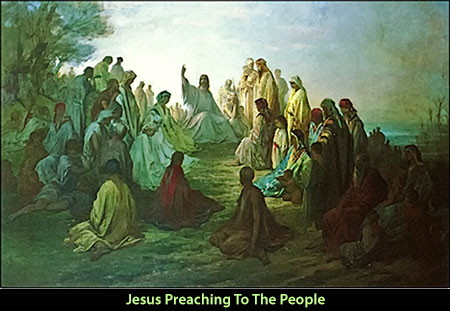
Jesus Preaching To The People

Touring The Region

Our study (Matthew 9:35-38) begins with Matthew’s summarizing Jesus’ actions,

Jesus was going through all the cities and villages, teaching in their synagogues and proclaiming the gospel of the kingdom, and healing every kind of disease and every kind of sickness. Matthew 9:35 (NASB)

As we have already said in addition to preaching, Jesus healed the people of every kind of disease and sickness. The Greek word for “disease” refers to the causes of disease: bacteria, viruses, or hereditary abnormalities. The Greek word for “sickness” refers to the side effects of the diseases, such as fever, fatigue, or sinus problems. Together we understand that when Jesus cared for a person, He took care of the entire person. He healed everything!

Jesus cared for the entire person – the spiritual and physical. The next verse in Matthew reveals that Jesus had a shepherd’s heart for the people.

Seeing the people, He felt compassion for them, because they were distressed and dispirited like sheep without a shepherd. Matthew 9:36 (NASB)

Here we are told that the people were distressed and “dispirited.” The Greek word for “dispirited” has the idea of “put down.” That is the people were discouraged, distressed, disheartened, and disappointed. Yes, the people had religious leaders, such as the Pharisees and Sadducees, but they were not good shepherds. If we look at the Old Testament, we discover that God had rejected many of the Jewish priests and so called prophets who had lived before them. Most of the priests and prophets were either serving themselves or seeking the approval of the people. Here is our first statement from God in Jeremiah,

The priests did not say, ‘Where is the LORD?’ and those who handle the law did not know Me . . . Jeremiah 2:8 (NASB)

God declares that the Old Testament priests did not know Him and did not know the scriptures about which they so confidently spoke. Just imagine someone “speaking for the Lord” and being uniformed about the passage they were teaching. Unfortunately, this often occurs today!

Then only three chapters later, God adds this rebuke to the prophets and the priests,

An appalling and horrible thing has happened in the land: the prophets prophesy falsely, and the priests rule on their own authority; and My people love it so! Jeremiah 5:30-31 (NASB)

This is an incredible statement. The so-called prophets were lying to the people and pretending that God had spoken to them. The priests were acting like benevolent dictators or “lording it over the people,” and everyone liked it. What a rebuke! What does it reveal about the people? Both the religious leaders and the people in the congregation were wrong – all of them!

Then eighteen chapters later God adds another to His charges against them,

“For both prophet and priest are polluted; even in My house I have found their wickedness,” declares the LORD. Jeremiah 23:11 (NASB)

Here we discover that the religious leaders were in sin, and they were sinning in God’s house. Today we would say that they sinned in the church.

Later in Malachi, God says that the priests did not teach the truth,

For the lips of a priest should preserve knowledge, and men should seek instruction from his mouth; for he is the messenger of the LORD of hosts. But as for you, you have turned aside from the way; you have caused many to stumble by the instruction; you have corrupted the covenant of Levi,” says the LORD of hosts. Malachi 2:7-8 (NASB)

They did not attempt to teach God’s truth. They used the scriptures for their own purposes. They were supposed to warn the people to stop sinning, but they didn’t. They were to teach about the whole character of God and not just a one-sided picture of God. Today some only teach that “God is love” and not much else. The goal as preachers is not to reform society, to rebuke the people for offensive conduct, to attempt to transform the leadership team, nor to exclusively encourage the people. God’s purpose for His priests and shepherds was to call attention to the people’s sin and to teach what God has said in the scriptures.

Chronology7 - Ministry Outside of Galilee

What a picture! These “spiritual leaders” were not godly shepherds nor men who were close to God. They were in the ministry for themselves. So when the Holy Spirit says that the people were like sheep without a shepherd, this was not new. It had been this way for a long time, and the Pharisees and Sadducees were only continuing the practice. But Jesus taught the truth. Jesus was holy. Jesus was a godly shepherd since He was God Himself. Jesus healed the people. He had compassion for the people. Ultimately, because He taught the truth, the religious leaders wanted to murder Him.

Cry Of His Heart

The next two verses give us a another view of Jesus’ heart,

Then He said to His disciples, “The harvest is plentiful, but the workers are few. Therefore beseech the Lord of the harvest to send out workers into His harvest.” Matthew 9:37-38 (NASB)

This is a strong passage. We understand that the harvest is great, but is it obvious that the harvest is enormous and the number of workers is exceedingly small? We have seen Jesus’ compassion in His actions. Now we can hear Jesus’ compassion for the people. We hear the need.

Jesus encourages us to “beseech” God the Father to send out workers. The actual meaning of the Greek word that is translated as “beseech” may surprise you. It actually has the idea of “pleading, begging, or ‘Please Lord'” And the Greek word translated as “send out” workers has the idea of “force out” or “drive out.” It is the same word that has been used for casting our demons. Taken together, we discover that Jesus encouraged the disciples to plead with God the Father to force workers out into the harvest. I do not know about you, but is it hard to pray this prayer without feeling obligated to go out into the harvest yourself! How does one plead with God to send workers and not feel obligated to go?

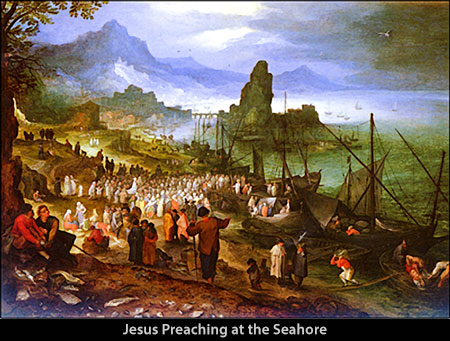
Jesus Preaching at the Seashore

Our Responsibility

Are you ready to go? Why do you or I need to go? The answer is given to us in the following passage.

So faith comes from hearing, and hearing by the word of Christ. Romans 10:17 (NASB)

Since one must believe and accept Jesus as Lord, Savior and God in order to be forgiven and find peace with God, workers are needed to communicate the truth of the Bible. That is, one must hear and be told the truth before one can believe or have faith.

After a person has spoken the truth, then the Word of God has been unleashed to perform its work. The apostle Paul tells us under the inspiration of the Holy Spirit the words contained in the Bible are the words of God. Once they are spoken, they will perform a work in the mind and heart of the hearer.

For this reason we also constantly thank God that when you received the word of God which you heard from us, you accepted it not as the word of men, but for what it really is, the word of God, which also performs its work in you who believe. 1 Thessalonians 2:13 (NASB)

God has called the workers of the harvest to plant and water. We are not responsible for the result. We are only responsible for planting and watering.

I planted, Apollos watered, but God was causing the growth. So then neither the one who plants nor the one who waters is anything, but God who causes the growth. 1 Corinthians 3:6-7 (NASB)

God the Father through the Holy Spirit causes the growth. We are “planters” and “waterers.” God produces the result. It is our responsibility to share the Word of God.

Here are four key verses that we can give someone. Or, put another way, use these verses to plant and water,

. . . for all have sinned and fall short of the glory of God . . . Romans 3:23 (NASB)

For the wages of sin is death, but the free gift of God is eternal life in Christ Jesus our Lord. Romans 6:23 (NASB)

For God so loved the world, that He gave His only begotten Son, that whoever believes in Him shall not perish, but have eternal life. John 3:16 (NASB)

And there is salvation in no one else; for there is no other name under heaven that has been given among men by which we must be saved. Acts 4:12 (NASB)

The first two passages tell us that each of us has sinned and deserves spiritual death, We have offended God by our evil behavior. As a result, we stand as sinners before a holy God. The message is difficult, but it is the truth. It is God’s message! He wants all to know. We can tell others lovingly or with indifference. Let’s tell them with love.

The second and third passages reveal that our sins will be forgiven if we believe in Jesus Christ and accept His death on the cross as payment for the penalty required by God for our sins. We must believe that He is God, our Savior and Lord. To the ancient Jews, to believe “in someone” implied that one believed everything about them. Since Jesus was God, the Messiah, our Savior, and our Lord, one who believes in Jesus believes that He was all of these. True faith will willingly submit to Him.

The last verse reveals that there is no other God who can forgive sins, only Jesus Christ. In fact, there is no other God, according to the God of the Bible.

And there is no other God besides Me,
A righteous God and a Savior;
There is none except Me. Isaiah 45:21b (NASB)

This means that there is only one God – Jesus Christ. Are you willing to plant and water?

Conclusion

On occasions, God allows us to see some of the fruit of our labors – some of the fruit of our planting and watering. There is no greater joy than to know that God has used us in some special way. On occasions, God allows me to see some of the fruit of my labors. For example, within the past year a woman sent the following note to NeverThirsty.org,

I would like to thank you for this lesson. I truly enjoyed it. I would greatly appreciate further lessons sent to me, for my heart’s desire is to grow in my relationship with my Lord and Savior, Jesus Christ. About the lesson, I used to be rocky soil. But praise God, I now am good soil.

It was a blessing. Such notes only come on occasion as God chooses. Sometimes, we also receive negative comments. On such occasions we praise God for the opportunity to suffer insults and rebukes for Him. God has asked us to present the good news about Jesus Christ even though some do not believe that it is good news.

God wants us to boldly plant and water. The following is a great example of a bold follower of Jesus. It is a true life story,

Jack Cooper in Dallas is an ophthalmologist. Instead of the trite “Now is the time for all good men to come to the aid of their country” flip chart [that is] standard for eye examinations, he made one that says, “God loves you and has a wonderful plan for your life:” He would do his cataract surgery, giving his patients eyesight again. Then when they would come in for a checkup, he would say, “Let’s see how you’re doing.” He would have them read, “God loves you and has a wonderful plan for your life:’ “Wow! I can read! ‘God loves me and has a wonderful plan for my … What does this mean?”1

Then the doctor had the privilege and opportunity to share the good news about Jesus Christ.

I would encourage you to plead with God the Father to force workers out into the Harvest. Are you willing to be one of those who will plant and water?


References:

1. Howard G. Hendricks. Say It with Love.


Comments or Questions?

Sign-up to be notified about future studies?

Second Rejection In Nazareth

During our last study in the life of Christ, Jesus healed two blind men and cast a demon out of a man who could not speak nor hear. The Pharisees responded by accusing Jesus once more of performing miracles by demonic power. They must have found their accusation effective or they would not have repeatedly used it with the crowds. It was war between them and Jesus. In this study (Matthew 13:54-58; Mark 6:1-6), Jesus revisits the city of Nazareth. The last time that He had visited the city (Luke 4:16-30), He had entered the synagogue, quoted Isaiah 61:1-2, declared that He was the Messiah, and then the people attempted to murder Him by throwing Him off a cliff. But Jesus escaped. So why did Jesus return to Nazareth? The answer is not found in some inner wish to die or some fanatical campaign. The answer is found in Jesus’ heart. Come and see!

Coming To Nazareth

The account of Jesus’ second visit to the city of Nazareth begins in Mark 6:1.

Jesus went out from there and came into His hometown; and His disciples followed Him. Mark 6:1 (NASB)

Jesus’ parents had fled to Egypt after they had been warned by God that King Herod would attempt to murder Him and every child under two years of age (Matthew 2:13-14). So they fled to Egypt in order to save Jesus. Later the family returned from Egypt after God told them that King Herod had died and directed them to return to Israel (Matthew 2:19-21). When the family returned, they settled in Nazareth, a city in the northern part of Israel in a region known as Galilee. Consequently, Nazareth became Jesus’ hometown. There He grew up from a child into an adult and then started His ministry.

Early in Jesus’ ministry He relocated His family (apparently after His father had died), from Nazareth to Capernaum (John 2:12-13). His sisters remained in Nazareth, perhaps because they were already married (Mark 6:3).

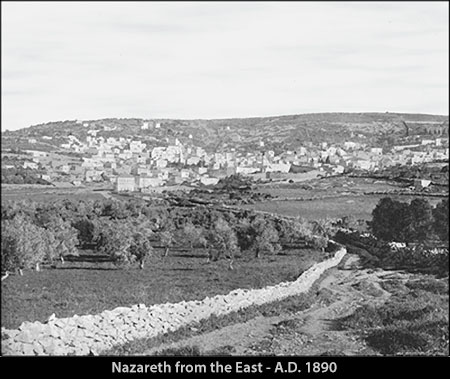
Nazareth from the East - A.D. 1890

Why Did Jesus Return?

As we have already stated, sometime later in Jesus’ ministry, He returned to Nazareth to tell the people that He was the Messiah. They responded by attempting to murder Him. Later Jesus decided to return again. This study describes this second return. Jesus did not return to Nazareth because the city was important. In John 1:46, Nathanael reveals that the city was unimportant when he said,

Can any good thing come out of Nazareth? John 1:46 (NASB)

Nathanael’s comment was negative. Nazareth was nothing special. It was a small, isolated city in the Galilean hills. Jesus did not return because it was a large wonderful city. Dr. J. Vernon McGee makes this comment about Jesus’ return,

There are certain men in God’s work who do not want to go to a small place to minister. I’ve actually been criticized by some ministers and Christian workers for going to certain small churches instead of going to larger ones. My feeling is that our Lord set us an example here . . . There is a story about Dr. C. I. Scofield, the man who was responsible for The Scofield Reference Bible. He had been invited to speak in a church in North Carolina. Because it was a rainy night, about twenty-five people came to the meeting. The young preacher leaned over and apologized to Dr. Scofield for the small number who had come to hear his preaching and teaching. Dr. Scofield replied, “Young man, my Lord had only twelve men in His school and in His congregation most of the time. If He had only twelve, who is C. I. Scofield to be concerned about a big crowd?1

Jesus did not return because the crowd was large. He returned because He was concerned about the people. He loved the people. He was concerned that they were sinners who needed their sins forgiven. He was concerned that they were going to miss eternal life. It is possible that He also returned to visit His sisters.

From a human perspective, I am personally amazed that Jesus returned to a group of people who had wanted to murder Him. They had run Him out of town. Jesus demonstrated an important truth for us – God has not called us to avoid conflict in the ministry. Sometimes we think that trouble is a sign of God’s judgment or that we did something wrong. But the Christian ministry is spiritual warfare! We have witnessed this fact in the pages of the gospels. The religious leaders of Jesus’ day repeatedly rejected Him. They continued to reject the apostles even after Jesus left. They persecuted the apostle Paul, and the Roman politicians persecuted Christians for many years after the apostles.

In our next study we will discover that conflict and ministry go together. One who desires to serve God will suffer. We will suffer just because we serve Jesus. We will suffer because there is a spiritual battle. We will suffer for living a godly life. Conflict is part of the Christian life.

If they persecuted Me, they will also persecute you . . . John 15:20 (NASB)

Suffer hardship with me, as a good soldier of Christ Jesus. 2 Timothy 2:3 (NASB)

Indeed, all who desire to live godly in Christ Jesus will be persecuted. 2 Timothy 3:12 (NASB)

So Jesus returned to the city of conflict!

Those who never suffer are probably not in the battle. They may be passive Christians. Yet, God encourages us to seek peace and avoid conflict. There are some Christians, however, who are warriors. For them, everything is a crusade. They enjoy controversy and conflict. Those who suffer for doing wrong deserve it. 1 Peter 2:20 tells us that we gain favor with God when we suffer for doing what is right.

For this finds favor, if for the sake of conscience toward God a person bears up under sorrows when suffering unjustly. For what credit is there if, when you sin and are harshly treated, you endure it with patience? But if when you do what is right and suffer for it you patiently endure it, this finds favor with God. 1 Peter 2:19-20 (NASB)

Chronology7 - Ministry Outside of Galilee

The Sabbath

Some time after Jesus arrived in Nazareth, the Sabbath arrived; and so Jesus went to the synagogue.

When the Sabbath came, He began to teach in the synagogue; and the many listeners were astonished, saying, “Where did this man get these things, and what is this wisdom given to Him, and such miracles as these performed by His hands?” Mark 6:2 (NASB)

Many people were present, when Jesus started teaching. It is very possible that the people had come because they had heard that Jesus would be speaking. The listeners could not believe what they heard. They started asking one another, “Where did He get these things? Where did He get His wisdom? Where did He learn how to do these miracles?”

We can just imagine their thoughts. Surely, He got His wisdom from some other place or some tutor. We will discover later in John 7:15 that it was common knowledge that Jesus did not have any formal rabbinical education.

If Jesus were alive today, the questions might be something like this, “What commentaries does Jesus own? Did Jesus learn that from a tape, book, CD, or DVD? Did He attend a pastor’s conference or get His material from some famous rabbi or pastor?” Many today think that a seminary education is important to prepare men for ministry. While a seminary education can be helpful, it is not essential.

What is essential is a man’s love, faithfulness, and obedient walk with God and a never ending search of the scriptures in order to increasingly know God resulting in ongoing transformation into Christ-likeness. There are those in the ministry today who do not have formal education, but they really know the One who was the from the beginning (1 John 2:12-14). There have been some noted pastors down through history who had no formal theological education, but they have been terrific spiritual examples. For example, C. H. Spurgeon (1834-1892), a British preacher, had no formal education beyond Newmarket Academy. Another example is Dwight L. Moody (1837-1899), an American evangelist, who also lacked formal education. Formal education can be very helpful, but it is not essential.

Just as some today show disrespect for those without formal seminary training, the people in this small Nazareth synagogue showed disrespect for Jesus’ lack of formal education. They did not realize that schools can educate only the mind. Religious education cannot guarantee that the heart is in love with God or that the person is growing spiritually.

He Is One Of Us!

Then the people added another insult and rejection.

“Is not this the carpenter, the son of Mary, and brother of James and Joses and Judas and Simon? Are not His sisters here with us?” And they took offense at Him. Mark 6:3 (NASB)

Their message was simple. “He is, ‘Just one of us!’ Surely, He is nothing special.” In the Greek text, a definite article appears before “carpenter.” This implies that Jesus had been “the” carpenter or craftsman of the town. When Jesus had lived there’, He was the carpenter. Not only was Jesus the carpenter, but they also knew His family: Mary, James, Joses, Judas, and Simon. Note that Matthew 13:55 provides the same list of Mary’s children. Those who claim that these children were not the offspring of Mary do so without proof. There is no hint in these passages that these men were not Mary’s sons. Since Matthew 1:25 reveals that Mary had sexual relations with Joseph, it is difficult to argue that Mary never had children unless one chooses to discredit the apostle Matthew and the Holy Spirit who jointly wrote . . .

 . . but kept her a virgin until she gave birth to a Son; and he called His name Jesus. Matthew 1:25 (NASB)

Mary ceased to be a virgin after Jesus was born.

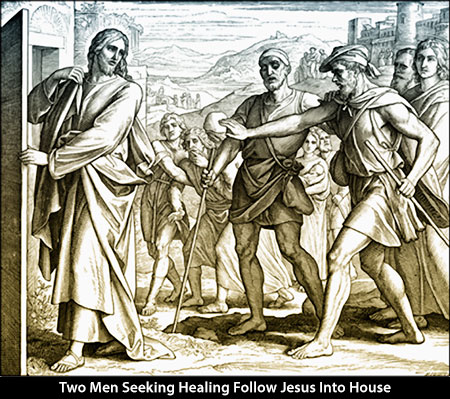
Two Men Seeking Healing Follow Jesus Into House

Prophet Without Honor

After the people rejected Jesus once again, He responded to them with these words,

Jesus said to them, “A prophet is not without honor except in his hometown and among his own relatives and in his own household.”‘ Mark 6:4 (NASB)

The people in the synagogue responded as some might today. Some discredit those whom they know in favor of those they do not know. Why will some churches select a man who has recently graduated from seminary, whom they do not know, and ask him to become their pastor even if they have a man who is highly gifted and capable of being their pastor sitting among them? We tend to highly value someone we do not know, only later to be often disappointed with them. Kent Hughes responds to our peculiar attitude with this account,

There are people who find it personally offensive if someone who – was one of them yesterday should have become much more today. Monlaigne, the famous French philosopher, politician, and writer, said that at home he was considered just a scribbling country proprietor, in the neighboring town a man of recognized business ability, and farther away a noted author. The greater the distance away, the greater he became.2
That was Jesus’ point.

Those who heard and saw Jesus did not reject Him for lack of evidence but in spite of overwhelming evidence. They did not reject Him because they lacked the truth but because they rejected the truth. They refused forgiveness because they wanted to keep their sins. They denied the light because they preferred darkness. The reason for rejecting the Lord has always been that men prefer their own way to His.3

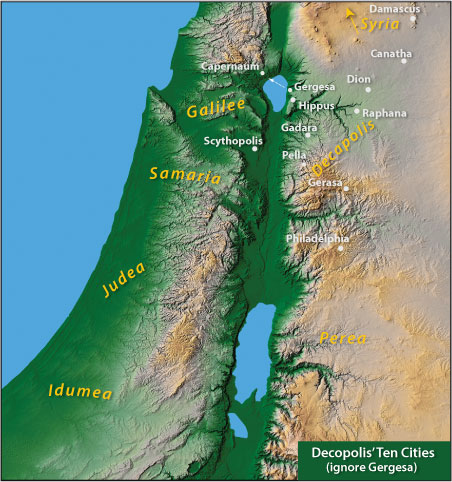
Map of Ancient Israel

Unbelief

The people in Nazareth did not approve of His message. Therefore, they rejected Him. As a result, very few people came to Jesus for healing, and very few miracles were performed. That is the message of verses 5-6.

And He could do no miracle there except that He laid His hands on a few sick people and healed them. And He wondered at their unbelief. Mark 6:5-6 (NASB)

The first part of the passage seems to suggest that Jesus was unable to perform any miracles. However, the rest of the passage reveals that Jesus did perform healings when people came to Him. Since Jesus was the God-man who had divine power for healing, the passage should not be understood as an inability to perform miracles. Instead, we should notice that very few people came to Jesus for healing. Therefore, He was prevented from healing many. Few people were interested and so few people came. Few believed in Him! Should Jesus have forced many people to be healed anyway? The answer is obviously, “No!” Only a few people came to Him because the hearts of the others were unbelieving. They did not come because they had found reasons for rejecting Him. As a result, they missed some tremendous blessings.

We are told that Jesus was surprised by their unbelief. The rejection of Jesus Christ is not something that has started only during our lifetime. As we have already discovered, Jesus was rejected early in His ministry. Many religious leaders rejected Him, but not all of them. That is the testimony of history and the gospel accounts.

Therefore some of the Pharisees were saying, “This man is not from God, because He does not keep the Sabbath.” But others were saying, “How can a man who is a sinner perform such signs?” And there was a division among them. John 9:16 (NASB)

We will discover later in our study that the religious leaders would join together and devise a plot to get rid of Him.

Therefore the chief priests and the Pharisees convened a council, and were saying, “What are we doing? For this man is performing many signs. John 11:47 (NASB)

Many people did reject Jesus. The religious leaders contributed to His rejection. Others just refused to believe because they preferred their own way – darkness.

But many of the crowd believed in Him; and they were saying, “When the Christ comes, He will not perform more signs than those which this man has, will He?” John 7:31 (NASB)

But though He had performed so many signs before them, yet they were not believing in Him. John 12:37 (NASB)

Jesus’ teachings and the rumors about His miracles should have encouraged them to respond, but they did not.

Conclusion

Why did Jesus return to Nazareth? Why did Jesus return to a city that had previously attempted to murder Him? I believe that Jesus returned because He loved them, desired to see them believe in Him, and gain eternal life. But in order to accomplish that goal, He had to be willing to suffer rejection!

Are you willing to suffer in your service for God? God has not called us to peace at all costs. Jesus returned knowing that the majority of the people in Nazareth did not welcome Him, but He returned anyway. God has called us to be peacemakers (Matthew 5:9). He has asked us to be at peace with all men as much as possible (Romans 12:18). If one is actively engaged in spiritual warfare and if one is doing what God has called him or her to do, then peace will not always exist. Warfare comes with serving God because the Evil One is waging spiritual warfare (Ephesians 6:12). The following words should ring in our ears and be memorized.

Suffer hardship with me, as a good soldier of Christ Jesus. 2 Timothy 2:3 (NASB)

Spiritual conflict (Ephesians 6:12) is unavoidable in the Christian life. Jesus, our God, has set the example. We must not shrink from telling others about Christ. We must not avoid spiritual conflict when wrong has occurred just because our culture or others in the church say conflict is wrong. There is a raging war between good and evil in our homes, churches, and nations. Sometimes spiritual warfare is an indication that one is a “good soldier” who is engaged in a conflict for 1) righteousness and 2) for the souls of those who believe in Jesus Christ. Be a good soldier! Jesus is our example!


References:

1. J. Vernon McGee. Matthew. Thru The Bible. Nelson Publishing Co.. pp. 83-184.
2. R. Kent Hughes. Mark. Crossway Books. 1989. vol. 1. p. 133.
3. John MacArthur. Matthew 8-15 . The MacArthur New Testament Commentary. Moody Press. p. 409.


Comments or Questions?


Second Blasphemous Rejection

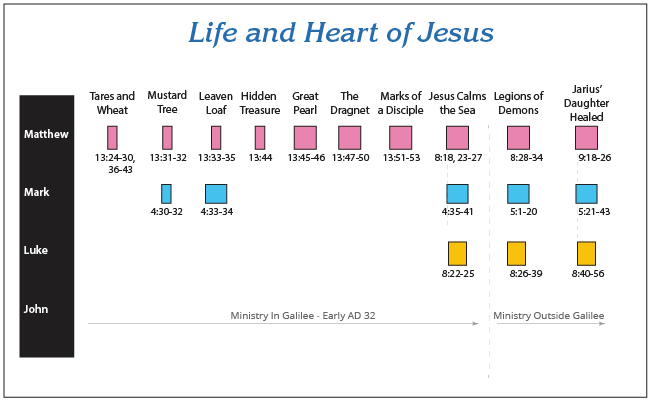
The life of Christ is painted differently in each of the four gospels. The gospels of Matthew, Mark, Luke, and John are arranged differently and each contains some material that is unique to the individual book. For example, the gospel of Luke is chronological (Luke 1:3-4), but the gospel of Matthew is arranged topically. By comparing Matthew to Luke and Mark, we discover that Matthew has grouped most of the events in a different order so that he could paint a unique picture of Jesus as the Messiah (Matthew 1:1). Forty-two percent of Matthew is unique and cannot be found in the other three books. The material that is unique to Mark, Luke, and John is 7 percent, 59 percent, and 92 percent, respectively. Any study of the life of Christ that focuses on only one book will miss a lot of information from the other gospels. Therefore, in this study series of the Life of Christ, we are harmonizing all of the gospels. That is, we are putting all of the accounts from the four gospels in chronological order so that we can gain a better understanding of the life of Christ. For example, in Matthew 12:22-45, we discovered that the Pharisees had accused Jesus of performing miracles and wonders by demonic power. In response, Jesus had warned them not to commit the unpardonable sin. Now if we reorder the accounts in Matthew, we discover that Matthew 9:27-34 actually occurs chronologically after Matthew 12:22-45 even though it appears earlier in the book. This is an important point. That is, Matthew 12:22-45 has already occurred before this study which is about Matthew 9:27-34.

Background

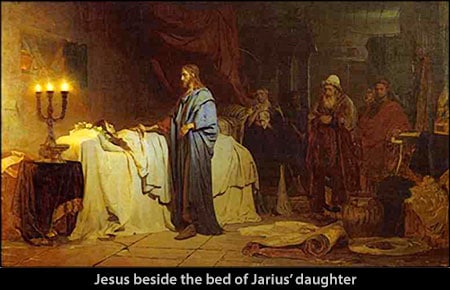
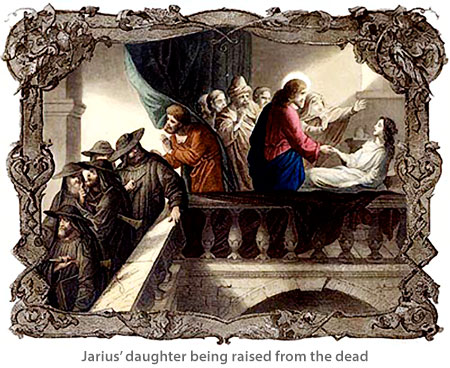
When the Pharisees had blasphemed claiming that Jesus was not performing His miracles and wonders by the Holy Spirit, Jesus rebuked them and warned them of the consequences. Later Jesus surprised the crowd by telling them that anyone who does the will of God is His mother, brother, or sister (Matthew 12:46-50). Jesus’ point was that those who are in opposition do not belong to God’s family. Those who believe will honor, respect, obey, and follow God. Then Jesus shared the kingdom parables (Matthew 13). After escaping the crowds, He calmed a sea storm in order to rescue the disciples (Matthew 8:23-27). Next, Jesus expelled “legions” of demons from two men (Matthew 8:28-34), healed a woman with a flow of blood, and raised Jairus’ daughter (Matthew 9:18-26).

The parables explained the reason for the conflict with the religious leaders and the promise of an eternal future with God. Calming the sea proved that Jesus was God to His disciples, and the demons echoed that truth by calling Him the “Son of God.” When the woman with the flow of blood was healed, we discovered that power would flow from Him in the process of healing; and when Jesus raised the dead, it proved He was more than a mortal man. Now we will discover another claim that is unique to the gospel of Matthew.

Modern Capernaum

On the pulpit of a great church, the Church of the Open Door, formerly located in downtown Los Angeles, California in the United States of America, there was a sign in the pulpit that preachers of the Christian faith saw when they approached to preach. The sign read, “Sir, we would see Jesus.” The message was that the congregation was not interested in “seeing” the speaker, nor were they interested in just an intellectual study of the Bible. That is also the goal of our studies. So far, we have seen Jesus in our studies. We have discovered God. He came and walked among us for a brief period of time. His name was Jesus and His actions proved His deity. This study is another glimpse of His majesty, grace, and power, and it occurred in the ancient city of Capernaum.

Two Blind Men

This study begins in the gospel of Matthew after Jesus raised Jairus’ daughter from the dead and left his home. We are told that two blind men started following Jesus when He left the house.

As Jesus went on from there, two blind men followed Him, crying out, “Have mercy on us, Son of David!” Matthew 9:27 (NASB)

These men called Jesus “Son of David.” The expression was a Jewish term which referred to the Messiah. Earlier, Jesus had declared that He was the Messiah to the woman at the well.

The woman said to Him, “I know that Messiah is coming (He who is called Christ); when that One comes, He will declare all things to us.” Jesus said to her, “I who speak to you am He.” John 4:25-26 (NASB)

The same message was communicated in a synagogue in Nazareth on a Sabbath morning (Luke 4:16-22). On that occasion, the people became angry because they did not believe Jesus was the Messiah. Jesus had quoted Isaiah 6:2, a passage that spoke of the Messiah, and then told them that He was the fulfillment of that prophecy. Isaiah 35:5-6 also described the Messiah,

Then the eyes of the blind will be opened and the ears of the deaf will be unstopped. Then the lame will leap like a deer, and the tongue of the mute will shout for joy. Isaiah 35:5-6 (NASB)

Jesus had quoted this passage to John the Baptist’s disciples as proof that He was the promised one – the Messiah (Matthew 11:5). Somehow these two blind men had discovered, knew, and believed that Jesus was their Messiah. They believed because of the testimony of others!

Chronology7 - Ministry Outside of Galilee

But how did these men find Jesus? We do not know. Were they brought by others to Jesus? If you were blind, how would you have found Jesus? How would you have felt? If you were blind how would you know which direction to move in order to find Jesus? The answer is obvious. You would not know which way to move, except by listening or having someone guiding you. When they heard that Jesus had passed by them, they started following and shouting loudly, “Have mercy on us, Son of David!” The Greek phrase translated as “crying out” starts with krazo. It means “to cry out loudly.” That is, they were shouting in order to be heard above the noise of the crowd. But Jesus did not stop. He kept on walking. Why did Jesus not stop? We will discover in the next verse that apparently He wanted to heal the men in a more private setting and wanted them to follow.

The Healing

When Jesus reached the house of Peter, the two blind men walked in after Him. Then Jesus stopped and asked them a question.

When He entered the house, the blind men came up to Him, and Jesus said to them, “Do you believe that I am able to do this?” They said to Him, “Yes, Lord.” Matthew 9:28 (NASB)

His question was simple and the men’s response was simple, “Yes!” They believed that Jesus could heal them. These men may have been physically blind, but they had great spiritual sight. They knew that He was the Messiah and they believed He could heal them. So they came!

Then He touched their eyes, saying, “It shall be done to you according to your faith.” Matthew 9:29 (NASB)

Some have taught that faith is required in order to be healed. But as we discovered in the last study, Jesus healed on occasions when people were dead or demon-possessed. Dead people do not have faith, and demon possessed people do not have faith. Jesus healed many times when faith was not required. But those who came to Him for healing would have had at least some faith, or they would not have come to Him. Why would anyone come if he or she did not believe He could heal?

If we review every passage in the gospels that refers to healing, we find an amazing truth. First, eighty-six percent of all passages that refer to faith in conjunction with healing, refer to people who have already come to faith in Jesus. That is, they were believers in Jesus Christ. Here are a few obvious examples,

And they brought to Him a paralytic lying on a bed. Seeing their faith, Jesus said to the paralytic, “Take courage, son; your sins are forgiven.” Matthew 9:2 (NASB)

And He said to the woman, “Your faith has saved you; go in peace.” Luke 7:50 (NASB)

Many times the passages reveal that the one being healed already believed in Him, because he or she called Jesus the “Son of David.” They believed that He was the Messiah (Matthew 9:27-29; Mark 10:48, 52) and healing followed.

Maybe one of the clearest examples is the time that Jesus healed ten lepers. Even though all ten lepers were healed, only one remained to thank Jesus. Now consider what Jesus said to him,

Then Jesus answered and said, “Were there not ten cleansed? But the nine—where are they? Was no one found who returned to give glory to God, except this foreigner?” And He said to him, “Stand up and go; your faith has made you well.” Luke 17:17-19 (NASB)

Why is this man unique? If he is unique because he believed in Jesus, then why were the other men healed? It is obvious that the other nine men believed that Jesus could heal them or they would not have sought Him. They asked Jesus to heal them because they believed He could. In that sense, their faith enabled them to be healed.

In the remaining fourteen percent of the references to faith and healing, Jesus simply referred to the fact that they had faith or that they believed. There is no clear evidence that faith or belief was the activating ingredient for their healing (Matthew 8:10; Luke 7:9).

In fact, God wants every Christian to believe in Him and to live by faith (Romans 1:17; Galatians 3:11; Hebrews 10:38). God expects us to trust confidently Him for the things that we request (Mark 11:24; James 1:5-6). Faith is expected when we ask God for anything. If we are not sure He can answer our request, then we should not ask. Why ask if we are not sure He can fulfill our request? Yet, we cannot expect that He will grant our every wish. We must not forget the following passage which the Holy Spirit wrote,

This is the confidence which we have before Him, that, if we ask anything according to His will, He hears us. And if we know that He hears us in whatever we ask, we know that we have the requests which we have asked from Him. 1 John 5:14-15 (NASB)

Our requests may not be according to His will and sometimes we may ask with wrong motives (James 4:2-3). So sometimes His answer to our prayer is, “No!”

Two Men Seeking Healing Follow Jesus Into House

Eyes Opened

After Jesus touched the eyes of these two blind men, they could see.

And their eyes were opened. And Jesus sternly warned them: “See that no one knows about this!” Matthew 9:30 (NASB)

The ancient writer Hillary wrote these insightful words,

The blind men saw because they believed; they did not believe because they saw.1

It is amazing that Jesus told them not to tell others. Surely, Jesus knew that people would discover that the men were no longer blind. We will discover in the next two verses that people were already present. So why did Jesus ask them not to talk about the healing? It appears that Jesus did not want these people to conclude that He was the Messiah yet. Eventually, the healing would become known. But the two men did not cooperate. They told everyone anyway.

But they went out and spread the news about Him throughout all that land. Matthew 9:31 (NASB)

Another Demon Expelled

As soon as the two men left, a demon-possessed man was brought to Jesus.

As they were going out, a mute, demon-possessed man was brought to Him.” Matthew 9:32 (NASB)

The New American Standard Bible  says that the man was “mute,” but the Greek word for “mute” is kophos. It can actually mean “mute” or “deaf” and sometimes it referred to both at the same time. Therefore, it is very possible that the man was both deaf and mute. The next verse implies that at least he was not able to speak. Then Jesus healed him.

After the demon was cast out, the mute man spoke; and the crowds were amazed, and were saying, “Nothing like this has ever been seen in Israel.” Matthew 9:33 (NASB)

The crowd could not believe what they had witnessed. They had never seen anything like this before in Israel. The Greek actually says, “Never!”

Second Blasphemous Rejection

Now we discover that some religious leaders are present. They had been there all the time, listening and watching. Previously the Pharisees had accused Jesus of performing miracles by demonic power (Matthew 12:22-45). But after seeing this miracle and hearing the response of the crowd, they did it again.

But the Pharisees were saying, “He casts out the demons by the ruler of the demons.” Matthew 9:34 (NASB)

This is just an incredible response after Jesus had just recently cast out “legions” of demons, raised the dead, healed two blind men and now this demon-possessed man. The religious leaders did not deny that Jesus did the miracles; they just had another explanation. They twisted the facts in an attempt to keep the people from following Jesus as the Messiah. They were religious politicians without integrity. They did not care about the truth, because they were jealous of Jesus (Matthew 27:18; Mark 15:10). Envy may be one of the most common problems in the church today.

When the people started responding, and as Jesus’ popularity increased, the religious leaders “went to war” against Jesus. They slandered His character repeatedly. A dear friend commented once that every time he asked a certain layman in the church to preach, he found jealously in his heart toward that individual. He said that he would worry about what others thought of the man’s speaking ability and compare the layman’s ability to his own. It was always a humbling experience for the pastor. My friend responded with integrity and honored the Lord by realizing that God has uniquely gifted all of us for the benefit of Christians.

But the Jewish religious leaders did not respond that way. Because of their envy they forcefully confronted Jesus on numerous occasions and if necessary would lie about Him. Their goal was to ruin Jesus’ reputation and cast doubt on His credibility. Ultimately, they had Him murdered.

Conclusion

The goal in the Christian life is to give honor to every believer. God has given each believer to the body of Christ for a purpose – to edify others (1 Corinthians 12:12-25). The goal of edification is to make us spiritually mature (Ephesians 4:11-16; Colossians 1:28). In Hebrews 10:24-25 we are told that we need to provoke one another to love and good deeds. We are to be models of godliness and spiritual maturity so that others will know how to become fathers in the faith (Hebrews 6:11-12; 13:7; 1 John 2:12-14). That is, there is no place for envy within the church.

Besides, envy is a sin and it displeases God. If the Pharisees had been spiritually mature, they would have supported Jesus and given Him honor. But they did not do that, and the result is recorded in the passages of the Bible and in the documents of ancient writers. They killed Him! Unfortunately, today some followers of Jesus Christ are being slandered and “killed” in a figurative sense. But God has called us to be men and women of peace. The true test of a man or woman of God is his or her willingness to allow another believer whom God is clearly blessing to take his or her ministry.

Ron Dunn tells a story about a woman who had been teaching an adult Sunday School class for many years. In his illustration he states that the leaders of the church had decided that it is time for another person to begin teaching the class. But when the woman was told that she would no longer be teaching, she was extremely disappointed. Her inner attitude was wrong. Then Ron made the point that her response revealed whom she was really serving – herself. She was more concerned about herself than the need to disciple and train another Bible teacher. In the same way, God has called us to train or disciple other men and women to carry on the ministry. Envy should never be a problem in the Christian life. Our goal should be to make disciples for the glory of the Lord.


References:

1. Hilary of Potiers. On Matthew.


Comments or Questions?

Jairus’ Daughter Resurrected

Some years ago a man was attempting to find a new job because his company was moving to another city about 500 miles (805 km) away. The man did not want to relocate. So he contacted a number of potential employers in an attempt to remain in his city. He was willing to relocate if his current employer would give him a promotion, but the company did not make that offer. So he was repeatedly asking God for the promotion or another job. As the days turned into months, nothing happened. He began to be discouraged, and finally one morning as he was traveling to work, he told God that he would stop fighting and stop seeking the promotion and relocate. He believed that was God’s desire since no job offers had been received. He was filled with emotion, disappointment, and had a deep sense of personal sacrifice. When he arrived at work that morning, he told his supervisor that he would relocate. Then late in the morning, he received an unexpected telephone call. After he picked up the telephone, a familiar voice greeted him and offered him the promotion for which he had been praying. When the conversation was over, he thanked God for the promotion. God had tested him. God had waited for him to yield finally and be willing to do whatever God desired for him. When the man was finally willing to yield and submit, God granted the desire of his heart. This study is about another man who had to yield finally and submit.

Background

While this study (Matthew 9:18-26; Mark 5:21-43; Luke 8:40-56) is about the resurrection of a man’s daughter and the healing of a woman who was bleeding, it is also about a man who must have been frustrated when it appeared that Jesus did not care. The events in this study occurred after Jesus and the disciples left the region known as the Decopolis and returned to Galilee. Earlier Jesus had escaped the crowd in Galilee by sailing to the region known as the Decopolis. It was there that Jesus expelled a legion of demons from two men. It was there that 2,000 pigs ran into the Sea of Galilee and were drowned. It was there that the people asked Jesus to leave and so He did. When Jesus returned to Galilee, the crowd quickly found Him.

When Jesus had crossed over again in the boat to the other side, a large crowd gathered around Him; and so He stayed by the seashore. Mark 5:21 (NASB)

The gospel of Luke tells us the reason they found Jesus so rapidly was that they had been waiting for Him (Luke 8:40). No matter where Jesus went in Galilee there were crowds. Crowds, crowds, and more crowds. Crowds everywhere were looking for Him. This particular crowd was large. When the people saw Him, they surrounded Him. So He lingered for awhile on the seashore. While He was speaking to the people, a synagogue official named Jairus found Him. As a synagogue official, he would have been very prominent in the community. He would have been a layman with responsibilities to direct the worship services in the synagogue. But when he saw Jesus, he did not act like a proud man. Instead, he humbled himself.

One of the synagogue officials named Jairus came up, and on seeing Him, fell at His feet and implored Him earnestly, saying, “My little daughter is at the point of death; please come and lay Your hands on her, so that she will get well and live.” Mark 5:22-23 (NASB)

Not only did the synagogue official kneel and bow, but Luke 8:41 tells us that he started imploring, or begging, Jesus to come to his home and heal his daughter. The man was serious and eager for Jesus to come. He was desperate. His daughter was twelve years of age, and she was his only child (Luke 8:42). The gospels clearly indicate that Jairus deeply loved her. Just imagine the crowd watching one of their synagogue leaders kneeling and begging. That would have been impressive for anyone to watch. If he was loved by the people, they would have felt great compassion for him.

Map of Ancient Israel

Conflict With Matthew?

Matthew 9:18 appears to give us a different version of Jairus’ statement to Jesus, since it implies that Jairus’ daughter was already dead.

While He was saying these things to them, a synagogue official came and bowed down before Him, and said, “My daughter has just died; but come and lay Your hand on her, and she will live.” Matthew 9:18 (NASB)

But a better rendering of the Greek reveals that Jairus said she was near the end of her life, and not necessarily dead. That is, she was in the last stage of her life. Jairus believed she was very close to death and time was urgent. Jesus needed to come quickly and not delay.

Jesus Follows

So Jesus got up from the ground and started following the synagogue leader to his home. But the crowd followed too!

Jesus got up and began to follow him, and so did His disciples. Matthew 9:19 (NASB)

And He went off with him; and a large crowd was following Him and pressing in on Him. Mark 5:24 (NASB)

The crowd was so eager to talk with Him that they pressed against Him as they walked. The Greek word for “pressing” has the idea that the people were pressing in from all sides. It must have been difficult to walk with people bumping and maybe some pushing others so that they could walk next to Jesus. What a picture!

Jairus’ eagerness for Jesus to reach his daughter must have caused him some anguish as the crowd slowed their progress. But Jairus did not know and could not have expected that Jesus was about to stop and take care of someone else first. His daughter would have to wait. Jairus’ patience would be tested and his desire would soon be frustrated.

Neither Jesus, the disciples, nor Jairus knew that a woman who had a twelve year hemorrhage was about to interrupt their trip. They did not know that she was moving her way through the crowd.

A woman who had had a hemorrhage for twelve years, and had endured much at the hands of many physicians, and had spent all that she had and was not helped at all, but rather had grown worse— after hearing about Jesus, she came up in the crowd behind Him and touched His cloak. For she thought, “If I just touch His garments, I will get well.” Mark 5:25-27 (NASB)

This sick woman was now poor. She had not always been poor. She had given all of her money to the ancient physicians who did not know how to heal her. They had made promises that they did not keep. We are told that she suffered “much” from these “physicians” only to get worse and not better. This woman had been abused and robbed in the process. (A dear friend of mine once advised me that fifty percent of all doctors graduate in the last half of their class! He was having fun with his comment, but yet his statement is true.) None of the doctors of that day could help this woman.

Therefore, she came after Jesus. We are told that she “came up” through the crowd. Since the crowd was pressing against Jesus, she must have brushed by others in order to get through the crowd. When she reached Jesus, she touched the edge of His cloak. Luke 8:44 says that she touched the “fringe” of his cloak. This may refer to the tassels on his cloak if it had tassels. She was trying to avoid attention. She came up from behind and leaned over or kneeled down in order to touch the edge of His cloak. She did not attempt to speak with Him. In fact, we see shortly that she probably did not want to talk with Him.

For she thought, “If I just touch His garments, I will get well.” Immediately the flow of her blood was dried up; and she felt in her body that she was healed of her affliction. Mark 5:28-29 (NASB)

Immediately the woman was healed. Jesus was and is the Healer of healers. He is the Doctor of doctors. If you do not mind, let me say that Jesus “graduated at the top of His class.” He is the God of the universe. She believed, and immediately she was healed.

Immediately Jesus, perceiving in Himself that the power proceeding from Him had gone forth, turned around in the crowd and said, “Who touched My garments?” Mark 5:30 (NASB)

Chronology6 - Ministry In Galilee to Ministry Outside Galilee

The Interruption

Immediately Jesus knew that power had left Him. Someone had been healed. Mark 5:30 and Luke 5:17 are unique verses in the gospels because only these two verses reveal that when Jesus healed, power flowed from Jesus. As soon as Jesus knew that power had flowed from Him, He stopped, turned, and asked, “Who touched My garments?” Wow! The woman must have been stunned and fearful, and Jairus must have been anxious. Jesus is thinking about, “Who touched Me?” and Jairus is thinking about his dying daughter. Jairus must have thought, “Doesn’t Jesus understand that my daughter is about to die?” Jairus wanted something else. He must have been like the man who did not want to relocate. But Jesus stopped and asked what appeared to Jairus to be an unimportant question.

The disciples had a different thought.

And His disciples said to Him, “You see the crowd pressing in on You, and You say, ‘Who touched Me?'” Mark 5:31 (NASB)

The disciples seemed to have good perspective. It sure seemed stupid to ask, “Who touched Me?” with all the people pressing upon Him from every direction. The Greek implies that the disciples were repeatedly asking this question as Jesus looked for the woman.

And He looked around to see the woman who had done this. Mark. 5:32 (NASB)

The fearful woman was not eager to reveal herself, but finally she did.

But the woman fearing and trembling, aware of what had happened to her, came and fell down before Him and told Him the whole truth Mark 5:33 (NASB)

When she came forward, she fell down at Jesus’ feet and explained why she touched His cloak. While we are told what she said, it is clear from Jewish law that she was not supposed to touch another person while she had a flow of blood (Leviticus 15:25-33). The Mosaic law said that a woman with a flow of blood was unclean while the flow continued. She was not allowed to attend the temple worship or participate in social life. No one could touch her, and she could not touch anyone. Seven days after the flow of blood stopped and after she offered a sacrifice of two pigeons, she could return to normal life. This poor woman had been an outcast, or unclean, for twelve years! Yet, she had touched Jesus’ garment in violation of the law. Therefore, she had good reason to be fearful. She had violated the law, and according to Jewish custom made Jesus unclean. She had also given the appearance of showing disrespect for Him. She must have been in great emotional anguish, fearing rejection. She might have been afraid that Jesus would undo the healing.

And He said to her, “Daughter, your faith has made you well; go in peace and be healed of your affliction.” Mark 5:34 (NASB)

But Jesus forgave her and finally told her that her faith had made her well and that she was free to leave.

This passage clearly teaches that she was healed because of her faith. It is obvious that her faith motivated her to push her way through the crowd and touch Jesus. She had faith in Jesus. But it is an error to assume that all healing requires faith. For example, the resurrection of the widow of Nain’s son did not require faith, since her son was dead. Dead people do not have faith.

The Bad News

How did Jairus feel while Jesus stopped, looked around, waited for the woman to come forward, and then spoke with her? How did he feel as the minutes passed one by one as Jesus and the woman talked? How did he feel when someone from his house came with the following report,

While He was still speaking, they came from the house of the synagogue official, saying, “Your daughter has died; why trouble the Teacher anymore?” Mark 5:35 (NASB)

The message must have been one of pain. His daughter was now dead. His wish for healing now seemed pointless, and his desire that Jesus would hurry was frustrated. I imagine he was grieving already with a flashing thought of disappointment that Jesus had delayed. Did he have a moment of anger? I am sure that the messenger’s suggestion that Jesus was no longer needed seemed logical. But it was also a reminder that Jesus had not hurried to help. The comment also revealed the messenger’s lack of faith and lack of understanding that Jesus was God.

Jesus heard the report and responded.

But when Jesus heard this, He answered him, “Do not be afraid any longer; only believe, and she will be made well.” Luke 8:50 (NASB)

Jesus encouraged Jairus to believe. Those were the words that Jairus needed to hear. Jairus had believed enough to seek Jesus, to ask Him to lay hands on his daughter, but his faith was weak. He had not realized that Jesus could also raise the dead. He had believed that Jesus could heal if she was alive, but he could not imagine that He might be able to help her when she was dead. His view of Jesus was very small. We, today, have the same problem on occasions.

Jesus beside the bed of Jairus' daughter

They Laughed

How long did take them to arrive at Jairus’ home? We do not know and we do not really care since she was already dead. When they arrived at the home, Jesus allowed only three of His disciples to enter the home.

And He allowed no one to accompany Him, except Peter and James and John the brother of James. They came to the house of the synagogue official; and He saw a commotion, and people loudly weeping and wailing. Mark 5:37-38 (NASB)

Mourners were already wailing and weeping outside the home. The message had already spread in the community. Now the crowd of people was even larger. Jesus did not stop to speak, but immediately entered Jairus’ home.

And entering in, He said to them, “Why make a commotion and weep? The child has not died, but is asleep.” They began laughing at Him. Mark 5:39-40a (NASB)

Inside Jesus attempted to encourage them, but they laughed and jeered at Him. Did His three disciples laugh? Did Jairus and his wife laugh? It appears that it was the other people inside the home who laughed. So Jesus entered the girl’s room and did not allow anyone else to enter, except the three disciples and the girl’s parents.

But putting them all out, He took along the child’s father and mother and His own companions, and entered the room where the child was. Taking the child by the hand, He said to her, “Talitha kum!” (which translated means, “Little girl, I say to you, get up!”). Immediately the girl got up and began to walk, for she was twelve years old. And immediately they were completely astounded. Mark 5:40b-4 (NASB)

Then He took the young girl’s hand and ordered her to get up. The gospel of Luke says her spirit returned.

And her spirit returned . . . Luke 8:55a (NASB)

The girl got out of bed and started walking. Everyone was amazed at what they saw, especially her parents (Luke 8:56). Then Jesus asked her parents to give her something to eat after He ordered them not to talk about the nature of the healing.

And He gave them strict orders that no one should know about this, and He said that something should be given her to eat. Mark 5:43 (NASB)

Jairus' daughter being raised from the dead

Conclusion

Jairus discovered an important truth. He discovered that God does not ignore our requests. He is not deaf. He does not sleep nor slumber. In fact, He knows all about your prayer before you even ask. Yet, delays are part of God’s plan. Often we must wait for an answer.

Yes, sometimes His answer is, “No!” He will often care for others while He is caring for us. Sometimes He must alter circumstances to answer our prayers. Sometimes He waits for us to yield or submit. That was the experience of the man who did not want to move to relocate with his employer. God will wait for us to stop making demands. He will wait until we are willing to do whatever He wants. Sometimes He will wait until we have given up and everything seems dark and lost, just as Jairus experienced. Then He will respond when the only thing left is to trust in Him. Then you might hear the words, “Only believe!” He seeks our submission and dependence upon Himself.


Comments or Questions?

Sign-up to be notified about future studies?

Legion of Demons

The war between Jesus and Satan has been raging since the beginning of time. Satan, filled with pride, desired to be like God (Isaiah 14:14), but failed in his attempt to establish himself as the ruler of the universe. As a result he and one-third of the angels of heaven were thrown out of heaven (Isaiah 14:12, Revelation 12:4) and denied the right to live there. However, Satan has continued causing trouble. Now he encourages people to disobey, doubt, and deny God. Jesus encountered Satan many times during His earthly ministry, starting with His initial temptation (Matthew 4:1-11). Satan lost every battle while Jesus was here on earth. Even the last battle – Jesus’ death on the cross – was actually a victory for God (Hebrews 2:14; 1 Corinthians 15:54-57). During Jesus’ ministry many demons were cast out. On one occasion Jesus expelled a demon and the people started wondering if He was the promised Messiah promised by the prophets (Matthew 12:23). The religious leaders could not explain away Jesus’ miraculous exorcism, and so they claimed that He was demon possessed (Mark 3:22). Jesus responded by warning the people and the wicked leaders that His ministry was divine in nature, and not demonic. The events that followed and those that we will examine in this study are further proof that He spoke the truth.

Gaderene Region: Yarmuk Valley with the Sea of Galilee

Background

In our last study, we saw that Jesus and the disciples had escaped the crowd in a boat, only to encounter a horrible storm later in the dark of the evening that probably made the disciples wish they were back on land. These fearful, struggling disciples finally asked Jesus to rescue them from the raging sea storm, only to become more afraid – afraid of the One who stopped the storm. The disciples had not yet understood who Jesus truly was.

When we come to this study (Matthew 8:28-34; Mark 5:1-20; Luke 8:26-39), Jesus and the disciples have arrived at the other side of the Sea of Galilee.

When He came to the other side into the country of the Gadarenes . . . Matthew 8:28a (NASB)

The gospel of Luke tells us that the country of the Gadarenes was also called the country of the Gerasenes. In fact the region was known as the Gadarenes-Gerasenes region. It was opposite Galilee. The region was known also as the Decopolis because ten Greek cities were located in the region. The capital of the region was Gerasa, and the largest city in the region was Gadera. The region was not poor or economically depressed. From the ruins that are left, it is obvious that the inhabitants were at least middle-class. They were not poor; that is for sure.

Gadara is identified today as Muqeis, or Umm Qeis, overlooking the southern valley of the Yarmuk river. The ruins are extensive, including remnants of two amphitheaters, a basilica, a temple, colonnades, large residence, and an aqueduct, all showing the size, beauty, and importance of the city.1

When Jesus and the disciples arrived at the other side of the Sea of Galilee and stepped out of the boat onto the shore, it must have been in the early morning as the sun just glinted over the horizon. As they did, two demon-possessed men met Jesus and the disciples as they were passing by some tombs.

. . . two men who were demon-possessed met Him as they were coming out of the tombs. Matthew 8:28b (NASB)

Most likely they landed near the ancient town of Gergesa which now appears to be called Kursi. Today, visitors can view a number of limestone caves along the seashore. Gergesa should not be confused with Gerasa or Gadera. Gadera is about 6 miles (9.6 km) southeast of the Sea of Galilee and Gerasa is another 35 miles (56 km) southeast. Gergesa is midway along the eastern coast of the Sea of Galilee.

Map of Ancient Israel

Possessed Men

The two demon-possessed men who came out of the tombs apparently attacked anyone who came near them. They were extremely violent.

They were so extremely violent that no one could pass by that way. Matthew 8:28c (NASB)

The gospels of Mark and Luke refer only to one man, the leader, who was naked.

And when He came out onto the land, He was met by a man from the city who was possessed with demons; and who had not put on any clothing for a long time, and was not living in a house, but in the tombs. Luke 8:27 (NASB)

We are told that these supernaturally empowered men would scream and cut themselves throughout the day.

And no one was able to bind him anymore, even with a chain; because he had often been bound with shackles and chains, and the chains had been torn apart by him and the shackles broken in pieces, and no one was strong enough to subdue him. Constantly, night and day, he was screaming among the tombs and in the mountains, and gashing himself with stones. Mark 5:3-5 (NASB)

Today some might say these men had psychological issues and have them admitted to a psychiatric ward for treatment. But these men did not have psychological problems. They had a spiritual problem. They were demon possessed, and Jesus knew it. The gospels tell us that the lead man ran up to Jesus, bowed down, and loudly shouting asked why Jesus had come. What a scene! I wish I had been there to see this man run up to Jesus, bow down, make demands of Jesus, and all the time Jesus is commanding the demon to leave.

Seeing Jesus from a distance, he ran up and bowed down before Him; and shouting with a loud voice, he said, “What business do we have with each other, Jesus, Son of the Most High God? I implore You by God, do not torment me!” For He had been saying to him, “Come out of the man, you unclean spirit!” Mark 5:6-8 (NASB)

Did you notice what the demon called Jesus? He called him “Son of the Most High God.” The phrase meant that he considered Jesus to be God (see John 10:36). The demons knew more than the religious leaders, the people, and the disciples. They understood even if the religious leaders did not. Just imagine how the disciples reacted as they watched these events.

Chronology6 - Ministry In Galilee to Ministry Outside Galilee

Legion

Matthew tells us that the demon had asked another question that neither Mark or Luke records,

Have You come here to torment us before the time? Matthew 8:29 (NASB)

Earlier the demons had also pleaded that Jesus would not torment them.

. . . I beg You, do not torment me. Luke 8:28 (NASB)

Why did he ask not to be tormented? The answer is hinted at by the gospel of Luke, where we are told the demon’s name was Legion and that he asked not to be sent to the abyss.

And Jesus asked him, “What is your name?” And he said, “Legion”; for many demons had entered him. They were imploring Him not to command them to go away into the abyss. Luke 8:30-31 (NASB)

The demon was speaking for many other demons. Some have claimed that there were over 6,000 demons inside the man who said that his name was Legion. This conclusion is reached because Roman legions were composed of about 6,826 men. But that seems unlikely. Rather, it appears that the demon only wanted to communicate the thought that there were many demons living in the man. This man had real troubles. We may think that we have real trouble on occasions, but most of us do not have problems like this man had. It was Jesus against many demons and not just one-on-one. Yet, Jesus had the advantage, and the evil spirits knew it and were afraid. It did not matter how many demons were in the man. When you fight with God, you will lose. Just one Jesus was all that was required.

Did you notice that they asked Jesus not to send them into the abyss? This is a reference to a place where some evil angels are already dwelling because they had sinned in the days of Noah (Genesis 6:1-2). 1 Peter 3:18-20 and 2 Peter 2:4-5 tell us that some evil spirits or evil angels sinned in the days of Noah and Jude 6-7 says that they went after strange flesh. That is, the angels cohabited with the human women in some way. As a result they were confined to a prison called the abyss. Revelation 9:1-2, 11 reveals that they will be allowed to escape in the final moments of the world before it is destroyed. Eventually, all of the evil angels will be confined to the abyss (Revelation 20:1-2) before the universe is destroyed and men and women are sentenced to an eternity in the Lake of Fire or to an eternity in heaven. For more information, the reader should visit the study Angels – Good & Evil. So these demons were afraid of Jesus – our God.

But the most startling part about their request is that they knew Jesus had the power to send them into the abyss. The abyss exists in a spiritual world and not in our world. Jesus had power in both the spiritual and non-spiritual worlds. Wouldn’t the Jewish leaders have been surprised!

Geasa Oval Plaza Columns

We Want The Pigs

Next we are told that the demons asked to remain in the Gadarenes-Gerasenes region. Why? We do not know. Indeed they asked to be sent into a nearby herd of 2,000 pigs.

And he began to implore Him earnestly not to send them out of the country. Now there was a large herd of swine feeding nearby on the mountain. The demons implored Him, saying, “Send us into the swine so that we may enter them.” Jesus gave them permission. And coming out, the unclean spirits entered the swine; and the herd rushed down the steep bank into the sea, about two thousand of them; and they were drowned in the sea.” Mark 5:10-13 (NASB)

Jesus gave them permission; and as soon as the demons entered into the pigs, they ran into the Sea of Galilee and drowned. The pigs were smarter than the two demon-possessed men. The pigs would rather die than live with those supernatural creatures living inside them. These pigs were smart!

Geasa Oval Plaza Columns

The Report

When the herdsmen of the pigs saw this, they ran and told those in the city (probably Gergesa) that they had lost the 2,000 pigs.

When the herdsmen saw what had happened, they ran away and reported it in the city and out in the country. The people went out to see what had happened; and they came to Jesus, and found the man from whom the demons had gone out, sitting down at the feet of Jesus, clothed and in his right mind; and they became frightened. Those who had seen it reported to them how the man who was demon-possessed had been made well. And all the people of the country of the Gerasenes and the surrounding district asked Him to leave them, for they were gripped with great fear; and He got into a boat and returned. Luke 8:34-37 (NASB)

So the people responded like most curious people do. They went to see if there were dead pigs floating on the Sea of Galilee and to see the men who were once demon possessed. These people soon realized that the report of the herdsmen was true, and they became very fearful. In fact, they were so afraid that they asked Jesus to leave their region. This is truly amazing. Rather than being thankful and finding protection and comfort in Jesus, they became fearful. They were afraid of Jesus because He had rescued the men. They were so afraid that they were begging Him to leave.

And they began to implore Him to leave their region. Mark 5:17 (NASB)

How would you have felt if someone had asked you to leave after serving God in such a great way? Would you have remained and ignored them? Would you become angry? What did Jesus do? Jesus did not remain. Instead, He planned to leave just as they had asked.

Gerasa Cardo To The North

As He was getting into the boat, the demon possessed man repeatedly asked to join Jesus. The demon possessed man was not afraid. But Jesus encouraged him to go home and tell others what had been done for him. The Greek language indicates that the man asked again and again. He did not want to accept Jesus’ refusal, but finally he did.

As He was getting into the boat, the man who had been demon-possessed was imploring Him that he might accompany Him. And He did not let him, but He said to him, “Go home to your people and report to them what great things the Lord has done for you, and how He had mercy on you.” And he went away and began to proclaim in Decapolis what great things Jesus had done for him; and everyone was amazed. Mark 5:18-20 (NASB)

So the man did just that. He told folks throughout the Decapolis. Those who heard responded differently than the people in nearby cities. They were amazed at the report.

Gerasa Triumphal Arch Hadrian 2

Conclusion

Why did God include this account of the rescue of a demon-possessed man? Why did God include the previous reports of Jesus calming the storm and record the parables of the kingdom of heaven? The parables of the kingdom told us that most people would reject God’s message and end up in eternal judgment. When Jesus calmed the sea, the miracle revealed that He was more than just a man. He was and is our God and the Creator of this world. The testimony of the demons called Legion was that Jesus was God.

Why were these events recorded for us after the religious leaders announced to the crowd that Jesus was demon possessed? The answer is that this event was not a tutorial on demons. Nor was this account a story about a crazy man. We were not told that Jesus calmed the waves and stopped the winds so that we might be thrilled with a miracle event. We were not told about the parables so that we could have sermons to preach, stories to tell our children, or something to write in a book. The historical account of the man possessed by a demon was not about a spectacular fight between good and evil. All of these events were recorded so that we might know and understand what the religious leaders who claimed that Jesus was demon possessed did not understand. They were recorded so that we can know and believe that Jesus was and is God.

Therefore many other signs Jesus also performed in the presence of the disciples, which are not written in this book; but these have been written so that you may believe that Jesus is the Christ, the Son of God; and that believing you may have life in His name. John 20:30-31 (NASB)


Reference:

1. Merrill C. Tenny, The Zondervan Pictorial Encyclopedia of the Bible. Zondervan. 1977. vol. 2. p. 623.


Comments or Questions?

Sign-up to be notified about future studies?

Jesus Calms The Storm

When Jesus had finished teaching the parables about the kingdom, it was evening (Mark 4:35). The day had started positively when Jesus healed a demon possessed man (Matthew 12:22-23). But the day quickly turned negative when the people started responding to Jesus. The Jewish religious leaders did not welcome the response of the people and quickly claimed that Jesus had performed miracles with the power of Satan. They maligned His character because they were jealous (Matthew 12:24; Mark 15:10). Jesus responded by warning them not to credit His ministry to the work of Satan (Matthew 12:25-45). Then Jesus told the crowd that those who did the will of God the Father are those who are truly saved (Matthew 12:46-50). Later in the day, Jesus taught the crowd the parables of the kingdom. It must have been a very emotional, long day for Him. In order to escape the crowd, Jesus eventually gave orders to His disciples to get into a boat and go to the other side of the Sea of Galilee (Matthew 8:18). Jesus was tired and needed some rest. It had been a full day.

Jesus Calms the storm

Leaving The Crowd

It appears that all the events of the day had occurred in the city of Capernaum on the west side of the Sea of Galilee. When Jesus directed His disciples to depart for the other side of Capernaum, He was referring to the east of the sea which today is called the Golan Heights. In Jesus’ day it was known as the country of the Gerasenes.

On that day, when evening came, He said to them, “Let us go over to the other side.” Mark 4:35 (NASB)

The sun was setting behind the men as they sailed across the lake. The sunset must have been beautiful as the sunlight mixed with the clouds in the sky. The trip would normally have taken less than two hours to cross the water, but trouble was about to occur on the water. The Sea of Galilee is about 13 miles (21 km) long and 8 miles (13 km) wide. The distance across the upper portion of the lake was even less.

The gospel of Mark tells us that the disciples led Jesus away from the crowd and helped Him get to the boat. The crowds must have been eager for Jesus to stay. Jesus needed help!

Leaving the crowd, they took Him along with them in the boat, just as He was; and other boats were with Him. Mark 4:36 (NASB)

Matthew 8:23 tells us that Jesus got into the boat first and then the disciples followed.

When He got into the boat, His disciples followed Him. Matthew 8:23 (NASB)

Mark 4:36 also alerts us to the fact that the crowd was very aggressive. They really did not want Jesus to escape. Some of them even got into other boats in order to follow Him. These people were persistent and unwilling to let Him have any rest. It reminds us of the popularity of Great Britain’s Princess Diana who was constantly surrounded by international photographers or paparazzi. Eventually, they contributed to a traffic accident and her death.

The crowd was thoughtless because they greatly desired Him. He was their healer and teacher and they wanted more of Him, just like a hungry lion eyeing a herd of antelope. Just imagine the disciples attempting to get away from the crowd and some of the crowd climbing into boats in order to go after Him. Wow, what a passion for Jesus. Today, we have His teachings written in a book called the Bible and yet, some do not care if they read what He said. In fact, some have never read the Bible. Some today might not have wanted to get into a boat and go after Jesus.

Map of Ancient Israel

Asleep In The Boat

Somewhere along the journey, Jesus fell asleep because He was exhausted.

But as they were sailing along He fell asleep; and a fierce gale of wind descended on the lake, and they began to be swamped and to be in danger. Luke 8:23 (NASB)

We do not know how long they had been sailing before He fell asleep, we just know that He did. Mark 4:38 says that He was asleep in the back (stern) of the boat on a cushion.

Jesus Himself was in the stern, asleep on the cushion; and they woke Him . . .  Mark 4:38 (NASB)

The boat was larger than a row boat. Otherwise, Jesus would have gotten wet, and the winds would have awakened Him. The stern of the boat must have had a protective cover or enclosure to protect Him from the elements of the storm.

Chronology6 - Ministry In Galilee to Ministry Outside Galilee

The Fierce Gale

After Jesus went to sleep, a “fierce gale” or great storm surprised them as they were crossing the sea. If they had expected this monstrous storm, they would not have attempted to cross the lake.

And there arose a fierce gale of wind, and the waves were breaking over the boat so much that the boat was already filling up. Mark 4:37 (NASB)

But as they were sailing along He fell asleep; and a fierce gale of wind descended on the lake, and they began to be swamped and to be in danger. Luke 8:23 (NASB)

The Greek word that is translated as “fierce gale” is LAILAPS. Matthew 8:24 calls it a “great storm.” It refers to a whirlwind or wind with cyclonic gusts. Kenneth Wuest, a Greek scholar, makes this comment,

The Greek word is used of a furious storm or hurricane. It never refers to a single gust, nor a steadily blowing wind, however, violent, but to a storm breaking forth from black thunder clouds in furious gusts, with floods of rain, and throwing everything topsy-turvy.1

Even in modern times storms drop from Mt. Hermon down into the Jordan Valley along the ravines. The drop of about 682 feet (208m) down to the Sea of Galilee results in a monstrous storm whipping across the water. We can imagine the winds shrieking through the rigging and the high waves slapping the sides of the boat and crashing over the boat as it bounced up and down over the huge swells. The Greek language reveals that the waves were repeatedly swamping or washing over the boat. This was a terrible storm.

At least four of the disciples in the boat (Peter, Andrew, James, and John) were experienced seamen and Matthew, who was there, records that this storm threatened the loss of the boat and most likely their lives. The boat was filling up with water as the waves continued breaking across the bow and washing along the boat. The boat was in danger of sinking and killing the men on board.

Were these men afraid? The answer is, “Yes!” They were all afraid, except for the One who was asleep. Just imagine Jesus asleep in the boat with everything that must have been occurring. The disciples were busy pulling in the sails, securing the boat, and hanging on to the boat while attempting to protect it from capsizing and sinking in the cloud covered darkness of the evening.

Jesus and the disciples in the Storm

Jesus Awakened

Finally, the disciples awakened Jesus. They had delayed awakening Him until it was clear that they were in desperate trouble.

They came to Jesus and woke Him up, saying, “Master, Master, we are perishing!” Luke 8:24a (NASB)

Mark 4:38 is even more vivid and adds,

. . . and they woke Him and said to Him, “Teacher, do You not care that we are perishing?”

The Greek language reveals that the disciples were attempting to awaken Jesus. He did not awaken easily. He was too exhausted. Why did the disciples wait so long to awaken Jesus? The fact that they waited reveals their great respect for Him. But finally, their fears motivated them and they awakened Jesus. When He awoke, they probably very excitedly told Him about the winds and waves and that they were about to die because of the gale like storm.

Jesus responded to them with a rebuke before He got up and did anything. Wow, Jesus was perfectly calm inside. He was not worried or fearful. Jesus was not concerned about the waves or the wind.

He said to them, “Why are you afraid, you men of little faith?” Matthew 8:26a (NASB)

These men were fearful. Their problem was a lack of faith.

Then Jesus stood to His feet and calmed the storm with two Greek words that are translated as three, “Hush, be still!”

And He got up and rebuked the wind and said to the sea, “Hush, be still. And the wind died down and it became perfectly calm.” Mark 4:39 (NASB)

Jesus said, “be being silent” or “muzzle it” and, instantly, the winds stopped and the sea was perfectly calm. Some have claimed that the winds just coincidentally stopped and it appeared to the disciples that Jesus had performed a miracle. But that explanation does not account for the waters being perfectly calm as the surface of glass. Most people know that the waters would have continued to be turbulent for some time after the winds had stopped. The waves would not have been instantly, perfectly calm. No, this was a miracle and the men in that boat knew it, especially the seamen.

Mount Beatitudes Sea of Galilee

The Real Fear

If you had been in the storm with the winds howling in your ears, water crashing over you, and the boat filling up with water, how would you have felt? I know how I would have reacted. I would have been fighting for my life, the lives of my fellow disciples, and the life of Jesus. With my energy spent and our efforts being ineffective, I would have been fearful. How would you have felt after Jesus calmed the water and stopped the storm? Would you have been thankful and relieved? How did the disciples feel? The answer may surprise you.

They were fearful and amazed, saying to one another, “Who then is this, that He commands even the winds and the water, and they obey Him?” Luke 8:25b (NASB)

The disciples were more fearful than they were before Jesus had stopped the storm and its effects. They were greatly afraid of Jesus. The fear on their faces must have been obvious. They had been fearful of the storm and now they are exceedingly afraid of Jesus. Yet, Jesus ignores the obvious and asks them a question.

And He said to them, “Why are you afraid? Do you still have no faith?” Mark 4:40 (NASB)

Why are you afraid? Matthew 8:26 adds that Jesus also said they had “little faith.”

He said to them, “Why are you afraid, you men of little faith?” . . . Matthew 8:26 (NASB)


Sunset on the Sea of Galilee

Seeking More Faith

Later in Matthew we will discover that Jesus will tell His disciples once again that they had little faith. In Matthew 14:31, He will tell Peter that the reason he started to sink into the sea as he was walking on the water was due to his little faith. In Matthew 16:8, Jesus will rebuke the disciples and tell them that they have little faith because they are worried about not having enough bread. And in Matthew 17:20, He will tell them that they cannot move a mountain because of their little faith. Their fear was due to their “little faith.” Are you fearful? If you are, it is because you have “little faith.”

If the disciples needed more faith, then we know that we need more faith! So how does a person obtain more faith? Initially, faith is given to us by the Holy Spirit as we listen and respond to the Word of God.

So faith comes from hearing, and hearing by the word of Christ. Romans 10:17 (NASB)

For by grace you have been saved through faith; and that not of yourselves, it is the gift of God . . .  Ephesians 2:8 (NASB)

This is an important truth because it reveals that faith does not come as a result of a personal decision. Faith is the work of God in one’s life. 1 Corinthians 12:9 also reveals that the Holy Spirit can give us a spiritual gift of faith. This spiritual gift gives an individual believer an extraordinary amount of faith. This reveals that God not only gives us faith, He can also increase our faith. The apostles finally understood this truth and eventually they asked Jesus for more faith near the end of His ministry,

The apostles said to the Lord, “Increase our faith!” Luke 17:5 (NASB)

Our faith can also increase as we watch very spiritually, godly, mature men and women live their lives of faith. That is the message of Hebrews 13:7.

Remember those who led you, who spoke the word of God to you; and considering the result of their conduct, imitate their faith. Hebrews 13:7 (NASB)

These individuals are very mature, godly believers who know the Word of God and whose lives are great examples of Christ. Their lives are the result of the Holy Spirit’s work. Their lives are examples of the work of faith within them. These righteous individuals have lived by faith and it is obvious.

For in it the righteousness of God is revealed from faith to faith; as it is written, “But the righteous man shall live by faith. Romans 1:17 (NASB)

So our faith can increase as we listen to the Word of God, as the Holy Spirit works within us, and as we mimic the faith of godly “fathers of the faith.” Now I have a question for you. Are you seeking more faith? If so, then ask God for more faith just as the disciples did. Study the Word of God diligently, and ask God to give you someone whose life you can imitate.

Conclusion

After the disciples had heard Jesus say, “Hush, be still!” it is not a surprise that they asked, “Who then is this?” when the shrieking winds had stopped and the waves became as smooth as glass. “Who then is this?” He was and is the God of the universe, and the elements obeyed their Creator. For the disciples, Jesus was the perfect model of someone they could mimic, for no one is more perfect and holy than God Himself. The One who could silence the winds and calm the waters was the ultimate example of One whose faith they could imitate, for He was God Himself.

Today, our faith can grow as we study the Word of God and see Him in its pages. We can ask for more faith and seek to be more like Him by imitating someone who is closer to His likeness. Some day we will see Him face-to-face and faith will no longer be required because our little faith will be a thing of the past. Yes, the just shall live by faith and some day we will see the author and the finisher of our faith.

. . . fixing our eyes on Jesus, the author and perfecter of faith . . .  Hebrews 12:2 (NASB)

Fix your eyes on Him and walk holy!


Reference:

1. Wuest, Kenneth. Mark, Wuest’s Word Studies From the Greek New Testament. Eerdmans Publishing Co. 1973. vol 1. p. 96.


Comments or Questions?

Sign-up to be notified about future studies?

Parables of the Kingdom

The parable of the Sower and the Seed was the first illustration that Jesus presented to His listeners about the kingdom of heaven. The parable revealed that people respond to the Word of God in a variety of ways, with most of them eventually rejecting it. Initially, some hear the good news about Jesus Christ with eagerness and joy, but later they decide to have nothing to do with Him. Those who hear, respond, and continue to believe in God are Christians. That is the message of the good soil. Jesus’ parables about the kingdom of heaven were taught after He was rejected by the religious leaders of His day and after His pronouncement of judgment upon them and their generation (Matthew 12:39, 41-42). All of the parables reveal how the kingdom of heaven has functioned and will continue to function. The parables also reveal how the human race is responding and will continue to respond to God and His Word. There are eight more kingdom parables to explore. This study will explore all of them.

Parables of the The Lamp and the Wheat and Tares

Parables of the The Lamp and the Wheat and Tares

Parable of The Wheat And Tares

The parable that Jesus gave after the “Sower and the Seed” was about two plants: wheat and tares.

Jesus presented another parable to them, saying, “The kingdom of heaven may be compared to a man who sowed good seed in his field. But while his men were sleeping, his enemy came and sowed tares among the wheat, and went away. But when the wheat sprouted and bore grain, then the tares became evident also.” Matthew 13:24-26 (NASB)

The parable is about a sower who sows good seed. The good seed starts to grow, but some tares also start growing along with it. A tare is an obnoxious weed that is often infected with fungus and sometimes has a poisonous narcotic in its seeds.1 The tares look like wheat until they are fully grown.

The slaves of the landowner came and said to him, “Sir, did you not sow good seed in your field? How then does it have tares?” And he said to them, “An enemy has done this!” The slaves said to him, “Do you want us, then, to go and gather them up?” But he said, “No; for while you are gathering up the tares, you may uproot the wheat with them. Allow both to grow together until the harvest; and in the time of the harvest I will say to the reapers, “First gather up the tares and bind them in bundles to burn them up; but gather the wheat into my barn.” Matthew 13:27-30 (NASB)

When the owner of the field heard about the tares, he instructed his servants to wait until both were fully grown. Then he would be able to separate the tares from the wheat.

The message of this parable is that it is sometimes difficult, if not impossible, to determine the real Christians from the false Christians. There are many non-Christians who are kind, gentle, gracious, and loving. They look like and act like Christians, but they are not. But God knows, and when the end of time comes, God will remove the Christ rejectors and send them into the Lake of Fire for eternity. But Christians will go to His “barn” or heaven.

Parable of The Lamp

The next parable that Jesus presented after the “Sower and the Seed” was the mysterious parable about the lamp. It is recorded only in the book of Mark and nowhere else. Here is the parable.

And He was saying to them, “A lamp is not brought to be put under a basket, is it, or under a bed? Is it not brought to be put on the lampstand? For nothing is hidden, except to be revealed; nor has anything been secret, but that it would come to light. If anyone has ears to hear, let him hear.” Mark 4:21-23 (NASB)

The lamp that Jesus referred to was a small bowl containing olive oil. The lamp was usually placed on a shelf or on a table in order to provide light to a room. Clearly, no one lights a lamp, brings it into a room, and then places it under a basket or under a bed unless he or she are searching for something under the bed. (When I taught this passage some months ago, a dear man said, “Yes, you wouldn’t want to put it under a bed because it would burn up the bed.” That was just a humorous comment, and it was not Jesus’ point.)

Parables of the The Lamp and the Mustard Seed

Jesus’ point is found in the next two verses.

And He was saying to them, “Take care what you listen to. By your standard of measure it will be measured to you; and more will be given you besides. For whoever has, to him more shall be given; and whoever does not have, even what he has shall be taken away from him.” Mark 4:24-25 (NASB)

Jesus uses a play-on-words in the statement, “Take care what you listen to.” The Greek word that is translated as “take care” is BLEPO. It’s basic meaning is “to see.” What Jesus was really saying is, “See what you hear.” He was encouraging them and us to listen to His teachings – the Word of God or the Word of the Kingdom. They were “to listen to the light.” The lamp was symbolic of Jesus’ teachings or the Word of God. Psalm 119 reveals that the Word is like a lamp. It lights our path.

Your word is a lamp to my feet and a light to my path. Psalm 119:105 (NASB)

Now we are ready to understand this parable. The first part of the parable tells us that the Word of God cannot be hidden or suppressed. The religious leaders and other opponents of Jesus Christ could attempt to suppress His teachings, the Word of God, but they would eventually fail. There are some today who want to suppress Jesus and His teachings. Increasingly we are hearing voices which claim that Christianity needs to be suppressed. But this parable indicates that they will be unsuccessful.

Those who hear the Word of God need to focus on it. Jesus’ listeners should not have listened to the Pharisees. They should not have listened to false teachers and neither should we. We are not to listen to messages from the pit of darkness but from the light. Those who are careful about what they hear will gain more spiritual insight, and those who enjoy the message of the darkness will lose what little spiritual insight they do have. The standard that we use is that those who seek spiritual truth will gain more spiritual insight, and those who settle for spiritual darkness will be spiritually dark. We are to listen to the light – the message of the kingdom. That is the meaning of this parable.

Parable of The Seed

The parable of the seed is not the same as the “Sower and the Seed.” This parable has a different message. Mark 4:26 records the parable.

And He was saying, “The kingdom of God is like a man who casts seed upon the soil; and he goes to bed at night and gets up by day, and the seed sprouts and grows—how, he himself does not know.” Mark 4:26-27 (NASB)

The parable reveals that the kingdom of heaven has started growing and will continue to grow by itself.

The soil produces crops by itself; first the blade, then the head, then the mature grain in the head. But when the crop permits, he immediately puts in the sickle, because the harvest has come. Mark 4:28-29 (NASB)

The end of the kingdom will come when the harvest is complete. The harvest includes seed that started growing beside the road, among the rocks, among the thorns, and on good soil. Unfortunately, only the seed that landed on good soil will grow to maturity and ultimately be harvested. The parable is simple. It tells us that the kingdom will grow by itself and eventually come to harvest. It cannot be stopped. The message of this parable is that the kingdom will grow.

Parable of The Mustard Seed

The parable of the mustard seed is about a very small seed that grows into a very large tree. Here is Jesus’ parable,

And He said, “How shall we picture the kingdom of God, or by what parable shall we present it? It is like a mustard seed, which, when sown upon the soil, though it is smaller than all the seeds that are upon the soil, yet when it is sown, it grows up and becomes larger than all the garden plants and forms large branches; so that the birds of the air can nest under its shade.” Mark 4:30-32 (NASB)

For anyone who objects to the statement that the mustard seed is the smallest of seeds, the following should help to clarify the situation.

Dr. L. H. Shinners, director of the herbarium at Southern Methodist University in Dallas and lecturer at the Smithsonian Institution, stated in a conversation that, “the mustard seed would indeed have been the smallest of those to have been noticed by the people at the time of Christ. The principal field crops (barley, wheat, lentils, and beans) have much larger seeds, as do other plants which might have been present as weeds and so forth. There are various weeds and wild flowers belonging to the mustard, amaranth, pigweed, or chickweed families with seeds that are as small as or smaller than mustard; but they would not have been known or noticed by the inhabitants. They are wild and they certainly would not have been planted as a crop . . . The only modern crop plant in existence with smaller seeds than mustard is tobacco, and this plant of American origin was not grown in the old world until the sixteenth century or later.”2

Parable of the Seed

So Jesus referred to a plant that the audience would have understood starts out very small, almost dust-like, and becomes very large. In Matthew 13:31-32, the same parable is recorded, but there we are told that the mustard seed becomes a tree. Multiple sources indicate that the Palestine mustard plant can grow to twelve or fifteen feet in height. It is tall enough for the birds to nest in and hide under from the sun.

Some believe that the birds of the air are symbolic of demons and demonic activity. They believe the birds are the same as those in the parable of the “Sower and Seed” in Matthew 13:4. There we are told that the birds ate the seed that fell beside the road.Matthew 13:19 indicates that the birds are symbolic of the evil one who comes and takes away the Word of God so that people will not believe. Thus they conclude that all birds represent demonic activity. But the rest of Scripture does not always refer to birds in a negative sense. In Matthew 6:26; 8:20; Luke 12:24; and James 3:7, birds are viewed in a positive sense.

Jesus’ parable very closely resembles the illustration given in Ezekiel 17:22-24 where God promised the Jews that He would establish Israel as a kingdom some day. In that passage God used the illustration of a sprig from a cedar tree that He would cultivate and grow into a tree. Eventually, the birds of every kind would nest under it. The birds in the Ezekiel passage represent the different nations of the world. Jesus and the ancient Israelites would have been familiar with the Ezekiel passage. This reveals that the point of Jesus’ parable of the mustard seed is that the kingdom of God will become enormous and spread over all the other kingdoms eventually becoming the greatest kingdom.

Parable of The Leaven

Jesus’ next parable is about a small lump of leaven that is put into some flour and eventually permeates all of the dough. In some ways it is similar to the parable of the mustard seed.

He spoke another parable to them, “The kingdom of heaven is like leaven, which a woman took and hid in three pecks of flour until it was all leavened.” Matthew 13:33 (NASB)

Some have concluded that the leaven has a negative meaning. It is important to notice that although leaven generally has a negative meaning in Scripture, there are times when the meaning is positive. Leviticus 23:17 is a positive example. Notice that the kingdom of God is described as being like leaven. If the leaven has a negative meaning, then the kingdom of God has a negative meaning. Therefore, it is best to understand the leaven as simply an illustration of the fact that the kingdom of God will eventually be everywhere. It will be in every part of the world and in every city. The parable of the mustard seed taught us that the kingdom of God will be the greatest kingdom, and the parable of the leaven reveals that the kingdom will be everywhere at the end of the age.

Holy Spirit’s Side Note

At this point the Holy Spirit reminds us once again that Jesus spoke to the crowd only in parables and in no other way. He spoke in parables because they had rejected Him.

All these things Jesus spoke to the crowds in parables, and He did not speak to them without a parable. This was to fulfill what was spoken through the prophet: “I will open my mouth in parables; I will utter things hidden since the foundation of the world.” Matthew 13:34-35 (NASB)

For a fuller explanation as to why Jesus spoke only in parables, please see the previous study about the “Sower and the Seed.”

Parable of the Hidden Treasure

Parable of The Hidden Treasure

The parable of the “Hidden Treasure” is very short – one verse.

The kingdom of heaven is like a treasure hidden in the field, which a man found and hid again; and from joy over it he goes and sells all that he has and buys that field. Matthew 13:44 (NASB)

Jesus does not describe the treasure or the field. That is not important to the parable. In Jesus’ day only wealthy people had financial banks for their riches. They would construct a building and then hire guards to protect their valuables. But there were no banks for the common person. As a result most people would bury their valuables in the ground inside their homes or out in a field. In this parable someone had hidden his treasure in his field. Unexpectedly, some man accidentally found it, probably while he was digging. Rather than tell the owner of the field, he quickly sold everything that he had and purchased the field from the unsuspecting and forgetful owner. Once he had bought the field, the treasure was his.

Parable of The Costly Pearl

The next parable about the costly pearl has the same basic meaning.

Again, the kingdom of heaven is like a merchant seeking fine pearls, and upon finding one pearl of great value, he went and sold all that he had and bought it. Matthew 13:45-46 (NASB)

This time Jesus uses two Greek words to communicate the idea that this individual was very wealthy. The first Greek word is “all,” and the second word is “as many as” or “great.” The second word is not translated in our English Bibles. But both words together indicate that all of his many things were sold. This person was extremely rich, and he sacrificed everything he had in order to purchase the pearl. In the parable of the “Hidden Treasure,” the person sold all that he had. But the wealthy man in this parable buys the pearl after sacrificing his many riches. His sacrifice was very great. Both men sacrificed. The average man and the rich man sacrificed all to obtain the kingdom of God. Jesus used both parables to tell us how valuable the kingdom of heaven truly is.

Both parables teach us that we must be willing to sacrifice our treasures if we want to belong in the kingdom. What are your treasures? We all have them: entertainment, books, a boat, sex, money, stocks and bonds, status, church, ministry, a leadership position, friends, the kids, or the family. Are you willing to sacrifice them for God? If you are unwilling to sacrifice everything, then you are not like the man in the parable of the “Hidden Treasure” or the “Costly Pearl.” They sold everything. Jesus said this,

He who loves father or mother more than Me is not worthy of Me; and he who loves son or daughter more than Me is not worthy of Me. Matthew 10:37 (NASB)

And He summoned the crowd with His disciples, and said to them, “If anyone wishes to come after Me, he must deny himself, and take up his cross and follow Me.” Mark 8:34 (NASB)

This is the message of these parables. Anyone who desires to be in the kingdom of God must be willing to sacrifice everything for Him. Only then can one enter the kingdom of God.

Chronology5 - Ministry In Galilee - Early AD 32

Parable of The Dragnet

The final parable is about a dragnet.

Again, the kingdom of heaven is like a dragnet cast into the sea, and gathering fish of every kind; and when it was filled, they drew it up on the beach; and they sat down and gathered the good fish into containers, but the bad they threw away. Matthew 13:47-48 (NASB)

In ancient times the dragnet, or sagene in the Greek, was a very large, weighted net that was dragged along the bottom of a lake and then pulled together in a semicircle. Eventually the net would be pulled together and brought onto the beach. Then the undesirable fish would be removed and the good ones kept. The first part of this parable states the obvious. Then He added this,

So it will be at the end of the age; the angels will come forth and take out the wicked from among the righteous, and will throw them into the furnace of fire; in that place there will be weeping and gnashing of teeth. Matthew 13:49-50 (NASB)

In the same way, just as fishermen remove the bad fish, the angels will remove the wicked souls and keep the righteous ones. The wicked will go into eternal punishment, but the righteous will have eternal life with God. Since Jesus said this place exits, and since He described it the way He did, then it must be real and miserable. Jesus’ description of eternal punishment does not sound like a place I want to visit, let alone live in the rest of my life.

Comments To Disciples

After Jesus was finished with these revealing parables, Jesus wanted to know if the disciples understood them.

Have you understood all these things? They *said to Him, “Yes.” Matthew 13:51 (NASB)

They answered, “Yes.” Then Jesus encouraged the disciples to share the new truths that they had discovered.

And Jesus said to them, “Therefore every scribe who has become a disciple of the kingdom of heaven is like a head of a household, who brings out of his treasure things new and old.” When Jesus had finished these parables, He departed from there. Matthew 13:52-53 (NASB)

They had old treasures and now new ones. They were to bring them out for the guests and share them. Then Jesus left the crowds and departed.

Summary of the Kingdom Parables

Conclusion

The parables of the kingdom paint a great picture. They reveal that the kingdom of God is growing and expanding in the hearts of men and women. Some will listen and respond, willingly sacrificing themselves to gain spiritual life. A man or woman cannot come to God, believe in Jesus Christ, and then continue living as always. One who comes to Jesus will be willing to give up everything that he or she has. This is the test of true faith. When a person believes in Jesus Christ, his or her sins are forgiven; but the sign or the characteristic of true faith is a willingness to sacrifice oneself for God. Does this sound like you? Are you a disciple of the kingdom of God?

The kingdom is moving from nation to nation and around the world. Now it is only a spiritual kingdom. But some day it will exist everywhere when Jesus establishes His earthly kingdom for 1,000 years. Then He will be Lord of lords and King of kings and every person will submit. People will have the opportunity to respond to God and believe in Jesus Christ during that time. At the end of the kingdom, the wicked of all the ages will be sent to the Lake of Fire for eternity. However, the righteous will enter God’s eternal heaven and live with Him forever.


Reference:

1. Encyclopedia Britannica 2005 Ultimate Reference Suite.
2. MacArthur, John. Matthew. vol. 2, The MacArthur New Testament Commentary. Moody Press. 1987. p. 369.


Comments or Questions?

Sign-up to be notified about future studies?

 

Parable of The Sower and The Seed

Do you think that a person can believe in Jesus Christ and then some day leave the faith, even reject Jesus, and still be a Christian? What does it mean that someone accepts or believes in Jesus Christ? There is confusion today about the characteristics of a true Christian. Some believe that a person becomes a Christian with a prayer. The following question is not unusual, “He prayed to receive Jesus Christ when he was in his twenties. He no longer attends church, but I just know that he is a Christian. Isn’t he?” This study (Matthew 13:1-23; Mark 4:1-20; Luke 8:4-15) will answer this question as we examine Jesus’ parable of the “Sower and the Seed.” This was the first of Jesus’ kingdom parables. It is foundational because it reveals the true identity of the citizens of the kingdom.

Day In Jesus’ Life

The events of the last two studies and the preaching of the kingdom parables all occurred in one day of Jesus’ life. It must have been a long day for Jesus. He must have been very tired and weary from His confrontation with the religious leaders. At the end of the last study, Jesus’ family had just arrived. As we start this study, Jesus leaves the house and sits down on the seashore of the Sea of Galilee. Most likely His family followed Him and they had some time together. But His break from the people did not last long, as we discover in our first two verses.

That day Jesus went out of the house and was sitting by the sea. And large crowds gathered to Him, so He got into a boat and sat down, and the whole crowd was standing on the beach.” Matthew 13:1-2 (NASB)

Mark 4:1 adds that the crowd was very large. So Jesus got into a boat and sat down, just as the Jewish rabbis did when they taught. The large crowd stood on the beach in order to listen to Him. Then Jesus started presenting His parables.

Parable Of The Sower

The gospel of Matthew says that Jesus presented many parables to the large crowd. Yet, the Holy Spirit only recorded a small number of them. The most significant of the parables is the parable of the sower and the seed. It is also the first recorded parable.

And He spoke many things to them in parables, saying, “Behold, the sower went out to sow; and as he sowed, some seeds fell beside the road, and the birds came and ate them up. Others fell on the rocky places, where they did not have much soil; and immediately they sprang up, because they had no depth of soil. But when the sun had risen, they were scorched; and because they had no root, they withered away. Others fell among the thorns, and the thorns came up and choked them out. And others fell on the good soil and yielded a crop, some a hundredfold, some sixty, and some thirty. He who has ears, let him hear.” Matthew 13:3-9 (NASB)

The parable was simple. It was about a sower who scattered seed as he walked. Some of the seed fell along his path, some fell beside the path or on rocks, among thorns and thistles, among weeds, and some fell on good soil. As expected, only the seed that fell on the good soil grew to produce a harvest. That was the end of the parable. Jesus did not explain its meaning to the crowd.

The Sower and the Seed

Why Speak In Parables?

Matthew and Mark tell us that as soon as Jesus and the twelve disciples were alone, the disciples asked, “Why do you speak to the people in parables?”

As soon as He was alone, His followers, along with the twelve, began asking Him about the parables. Mark 4:10 (NASB)

And the disciples came and said to Him, “Why do You speak to them in parables?” Matthew 13:10 (NASB)

The disciples did not understand why Jesus did not clearly explain the parables. How were the people expected to understand the message of the parable? Jesus’ answer was direct and maybe shocking.

Jesus answered them, “To you it has been granted to know the mysteries of the kingdom of heaven, but to them it has not been granted.” Matthew 13:11 (NASB)

The disciples could know the meaning of the parable but not the crowds. Mark 4:11 adds “those who are outside get everything in parables.” That is, those who are excluded from the kingdom, those who do not believe in Jesus Christ cannot know or understand the parable.

Why were they excluded? The answer to the question is given in Jesus’ next statement.

“For whoever has, to him more shall be given, and he will have an abundance; but whoever does not have, even what he has shall be taken away from him. Therefore I speak to them in parables; because while seeing they do not see, and while hearing they do not hear, nor do they understand.” Matthew 13:12-13 (NASB)

The first part of Jesus’ answer, Matthew 13:12, reveals that the crowd had a spiritual problem and that there is an established spiritual principle which grants more information to those who already have spiritual understanding and insight. That is, those who are not part of God’s spiritual family will eventually lose what little spiritual understanding they do have. It is like those who work hard. Usually, the more you work, the more you obtain in this life. Those who do not work eventually have very little and may lose what little they do have. In the spiritual realm, those who have a deeper relationship with God will grow even more. Those who do not have a relationship will become even further separated from God.

The second part of Jesus’ answer, Matthew 13:13, becomes personal, “. . . while seeing they do not see, and while hearing they do not hear, nor do they understand.” He now refers to the crowd directly. That is, after hearing Him teach on previous occasions, the crowd still could not understand spiritual truth. They could not understand because they were not spiritually alive.

1 Corinthians 2:14 reminds us that the natural man, or a person who does not have a spiritual relationship with God, cannot understand spiritual truth.

But a natural man does not accept the things of the Spirit of God, for they are foolishness to him; and he cannot understand them, because they are spiritually appraised. 1 Corinthians 2:14 (NASB)

Spiritual truth is foolishness to those who are not spiritually alive. They do not have any ability to understand it. Therefore, we should not be surprised that some seminary graduates and pastors have strange views about the teaching of the Bible and do not believe or accept some important truths. Seminary does not make a man spiritual. There are pastors who are not spiritually alive and yet they confidently teach the Bible. The Jewish religious leaders of Jesus’ day were just one example.

Then Jesus quoted the prophet Isaiah as further explanation,

In their case the prophecy of Isaiah is being fulfilled, which says,
“You will keep on hearing, but will not understand;
You will keep on seeing, but will not perceive;
For the heart of this people has become dull,
With their ears they scarcely hear,
And they have closed their eyes,
Otherwise they would see with their eyes,
Hear with their ears,
And understand with their heart and return,
And I would heal them.” Matthew 13:14-15 (NASB)

Did you notice that the prophecy predicted “the heart of this people has become dull?” That is, they had already rejected Jesus Christ. They had already heard about Jesus and heard His message. They came primarily to see Him perform miracles, to do wonders, to be healed, but the unbelieving crowd had rejected Him along with His teaching. Without spiritual life, they could not see; they could not hear nor understand. Therefore, Jesus spoke to them in parables.

Chronology5 - Ministry In Galilee - Early AD 32

Why should Jesus explain the parable? They were not spiritual because they did not believe in Jesus Christ. They had rejected the light (John 16:7-11) that God has given them.

But the disciples were different. They were already part of Jesus’ spiritual family. They believed in Him. Then Jesus added,

But blessed are your eyes, because they see; and your ears, because they hear. For truly I say to you that many prophets and righteous men desired to see what you see, and did not see it, and to hear what you hear, and did not hear it. Matthew 13:16-17 (NASB)

The Old Testament saints and prophets had longed to know about Jesus and to see Him. They would have loved to have been present. Even the holy angels had longed to know more about Jesus (1 Peter 1:10-12). The disciples were privileged. They could see with their eyes, hear with their ears, and touch the Son of God. They were spiritually alive and therefore Jesus would teach them just as the Holy Spirit does today.

Some Strange Views

Some teachers and pastors have said that the message of the parable is that we must avoid being unfruitful since true believers are to be fruitful. Others claim that the meaning of the parable is that reaping must be delayed in order to allow many people to come to God. Still some say that the parable seeks to teach us that the Word of God is not generally welcome by unbelievers. Another says that despite all the difficulties, the kingdom of heaven is expanding. These differences of views are not alternate or acceptable interpretations of the parable. They miss the meaning of the passage.

Parable Explained

What is the real meaning of the parable? Jesus starts the explanation with this,

Hear then the parable of the sower. Matthew 13:18 (NASB)

Who is the sower of the seed? Is it Jesus? Is it you? The first clue is found in Luke 8:11 where we are told that the seed is the Word of God. Matthew 13:19 reveals also that the seed is the word of the kingdom. This means that the Word of God is the message of the kingdom. The second clue is found in Matthew 13:3-4 where we are reminded the sower sows seed. That is, the sower gives out the Word of God. The third clue is found in 1 Corinthians 3:6-8 where the Holy Spirit tells us that we are the ones who plant or sow the seed (the Word of God), and it is God who gives the increase. That is, He has called us to be sowers of the seed. He has not called us to make seed or to make anyone become a follower of Jesus or to grow spiritually. He only asks us to faithfully sow seed. We are responsible only for scattering seed. It is God the Holy Spirit who brings the increase.

Romans 10:15 and 17 tells us that people must hear the Word of God in order to believe in Jesus Christ.

How will they preach unless they are sent? Just as it is written, “How beautiful are the feet of those who bring good news of good things! . . . So faith comes from hearing, and hearing by the word of Christ.” Romans 10:15, 17 (NASB)

The sower is anyone who follows Jesus and faithfully teaches or preaches the Word of God, that is, the Bible. If you are a follower of Jesus Christ, are you a good sower of the seed? Are you faithfully spreading the message of the Word of God about Jesus Christ? There are those who do not know that Jesus died for their sins. There are those who do not know that their sins can be forgiven by simply accepting Jesus’ claim that He is God and believing in Him. God has given His followers the privilege of sowing seed. Do you want to sow seed?

Seed Beside The Road

Jesus’ parable is about four different soils: soil beside the road, soil containing rocks, soil among thorns, and good soil. Each soil represents a different type of person. Together, all of the soils represent the hearts and minds of every living person.

Here is His explanation of the seed that fell onto the soil next to the road,

When anyone hears the word of the kingdom and does not understand it, the evil one comes and snatches away what has been sown in his heart. This is the one on whom seed was sown beside the road. Matthew 13:18-19 (NASB)

We have already discovered that the seed is the Word of God. Therefore according to Jesus’ explanation, persons whose hearts are like this soil do not understand the Word of God. According to Luke 8:12, they do not understand because the evil one (Matthew 13:19), Satan (Mark 4:15), or the devil (Luke 8:12), snatches away the Word of God. Luke 8:12 adds that consequently they do not believe and are not saved.

This soil represents anyone who hears the Word of God and does not understand because of the activity of the evil one. The evil one creates confusion by creating doubts about God (Genesis 3: 2-5), presenting intellectual arguments (1 Corinthians 1:18; 2 Corinthians 2:11), and introducing the teachings of alternative religions or different paths to God (2 Corinthians 11:14; 1 Timothy 4:1). Satan will do anything he can to cause a person to reject the truth of the Word of God. He is evil.

The Sower and the Seed

Seed On Rocky Soil

Then Jesus explained the second soil.

The one on whom seed was sown on the rocky places, this is the man who hears the word and immediately receives it with joy; yet he has no firm root in himself, but is only temporary, and when affliction or persecution arises because of the word, immediately he falls away. Matthew 13:20-21 (NASB)

This person hears the Word of God and at first is excited and happy about what he or she hears. Luke 8:13 says that the person believes for a while but eventually stops believing because of temptations to sin. Matthew 13:21 adds that affliction and persecution also motivate this person to stop believing. Together Matthew and Luke give us the complete picture. Persecution and affliction can motivate a person to respond incorrectly. That is, persecution and affliction will tempt a person to take an incorrect course of action and not respond to God.

Some years ago a woman was attending a women’s Bible study in order to learn more about God. She soon realized that the members of her family had a different view of God. They had a different faith. She started responding to the truth she was hearing, and a spiritual battle occurred within her about believing in Jesus. She strongly felt that what she was hearing was true but eventually decided not to believe in Jesus and give herself to Him because she was uncomfortable with the truth that loved ones who never believe in Jesus will go to hell. The fear of persecution and rejection tempted her to reject Jesus and she did. She is just one example of seed cast among the rocks. Lord willing, she may eventually believe and follow Him. We can only pray.

Mark 4:17 alerts us to the fact that some will respond to what they hear, but their response is “only temporary.” How long is temporary? We do not know, but it is clear that they do not continue. Eventually, they leave the faith.

The Four Soils

Seed Among The Thorns

Jesus’ third soil contains thorns.

And the one on whom seed was sown among the thorns, this is the man who hears the word, and the worry of the world and the deceitfulness of wealth choke the word, and it becomes unfruitful. Matthew 13:22 (NASB)

A person whose heart is like this soil hears the Word of God but due to anxiety or distress about issues in the world or concerns over money, eventually rejects Jesus. The Greek word that is translated as “worry” is merimna. It refers to a feeling of apprehension or distress. This person starts to worry about events in life or financial needs and eventually leaves Jesus Christ. This person may not intentionally ignore Jesus Christ, but does. He or she becomes preoccupied with issues in daily life, work, home, family, or even church and never believes in Jesus. A person can attend church but never believe in Jesus and never be saved from the penalty of sin.

I have often shared the true story about a man who considered himself to be a Christian. One day he told me that he was very disappointed with God because he thought that God would make him wealthy if he followed Jesus. He had missed the point that God does not forgive our sins and promise that we will become wealthy. God’s purpose is not to make everyone rich. God’s primary goal is to forgive our sins. This man had it wrong. The deceitfulness of wealth had caught him. God wants those who believe in Jesus Christ to follow Him.

Seed On Good Soil

The last part of the parable is about seed that fell on good soil.

And the one on whom seed was sown on the good soil, this is the man who hears the word and understands it; who indeed bears fruit and brings forth, some a hundredfold, some sixty, and some thirty. Matthew 13:23 (NASB)

The good soil represents a person who hears the Word of God, believes, and is saved. Luke 8:15 explains that this soil has an “honest and good heart.” It believes and holds fast. It perseveres or continues believing. This person understands the Word of God and does not pull away from God because of affliction or persecution, wealth, or the worries and cares of life.

Luke 8:15 makes it clear that this person believes that Jesus is God and continues believing throughout earthly life. He or she never stops believing. He or she bears fruit for God. The other soils never produced fruit. This is the only soil that produced spiritual fruit. Fruit is symbolic of spiritual growth and effective ministry for God. Galatians 5:22-23 tells us that the Holy Spirit produces the fruit of the Spirit in the life of believers.

But the fruit of the Spirit is love, joy, peace, patience, kindness, goodness, faithfulness, gentleness, self-control . . . Galatians 5:22-23 (NASB)

This type of fruit will be growing in one who is really a follower of Jesus. Faith comes by hearing the Word of God. Then the Word of God produces a miraculous work in the lives of those who really belong to God.

So faith comes from hearing, and hearing by the word of Christ. Romans 10:17 (NASB)

For this reason we also constantly thank God that when you received the word of God which you heard from us, you accepted it not as the word of men, but for what it really is, the word of God, which also performs its work in you who believe. 1 Thessalonians 2:13 (NASB)

The result is spiritual fruit. Romans 1:13 tells us that Christians can bear fruit by bringing others to Jesus Christ, and Ephesians 5:9 reveals that fruit includes godliness,

. . . for the fruit of the Light consists in all goodness and righteousness and truth . . . Ephesians 5:9 (NASB)

The true follower of God will bear different types of spiritual fruit.

Conclusion

The four soils reveal that people have rejected and will reject Jesus Christ for different reasons. At first some may respond, be happy, and rejoice; but if they are not true followers of Jesus Christ, they will eventually walk away. They will never produce any fruit. The following verse explains why someone may appear to be a Christian or a follower of Jesus Christ, but yet not be real,

They went out from us, but they were not really of us; for if they had been of us, they would have remained with us; but they went out, so that it would be shown that they all are not of us. 1 John 2:19 (NASB)

The four soils illustrate this truth. The four soils also illustrate how real followers of Jesus Christ continue believing and never stop. It is an error to conclude that just because someone claims to have believed Jesus was God, died for his or her sins and was willing for God to take control of his or her life, does not mean that he or she did or was serious. The ultimate proof comes later when he or she either stops believing and leaves the faith or continues. Real Christians continue in the faith.

The true marks of a follower of God are found later in the desires of the heart, the quest for a godly life, and one’s manner of conduct. The fruit of the life proves everything. Some day each and everyone of us will stand before God. Some will go into eternal life and some to eternal punishment (Matthew 25:46). Jesus will review the deeds we have performed or the fruit of our lives. There is no escape. True believers not only believe what Jesus claimed about Himself. Jesus taught that He was God, died for our sins, and returned to life. True faith also willingly submits to Him.

. . . if you confess with your mouth Jesus as Lord, and believe in your heart that God raised Him from the dead, you will be saved . . . Romans 10:9 (NASB)

Which kind of soil are you? The soil beside the road, the soil among the rocks, the soil with thorns, or the good soil?


Comments or Questions?

Sign-up to be notified about future studies?