
In Heaven They Neither Marry Nor Are Given in Marriage!
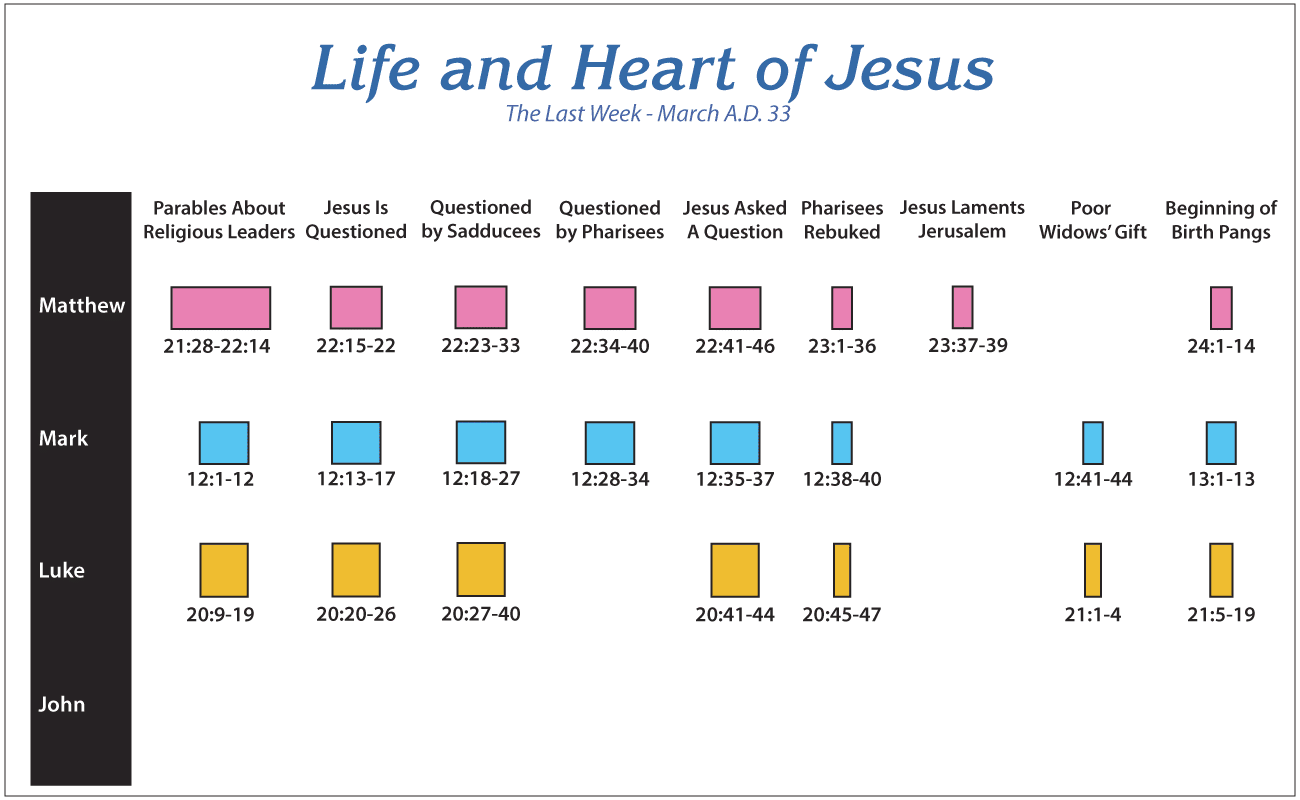
How often have you heard people talk about Jesus’ statement “in the resurrection they neither marry nor are given in marriage, but are like angels in heaven” and then say that means the evil angels in Genesis 6:1-4 could not have made human women pregnant? Others have said that Jesus’ comment means that marriage is sinful so God will not allow people to marry in heaven. That is, heaven does not allow marriage because it is a wicked practice. It is amazing that people become so interested in this statement from Christ, and then miss the reason Jesus said it. But we must not miss the message of Christ. He was not trying to teach us about what happened in Genesis 6:1-4. Those who think that this study is about marriage will miss something much more important. This study will reveal that a group of Sadducees tried to embarrass Jesus by asking Him a question for which no answer existed. They asked Jesus a theology question. Then He taught them and us an important lesson. Our study is from Matthew 22:23-33; Mark 12:18-27; and Luke 20:27-40.
Sadducees’ Theological Question
The first two verses of our study is Matthew 22:23-24.
On that day some Sadducees (who say there is no resurrection) came to Jesus and questioned Him, asking. Matthew 22:23-24a (NASB)
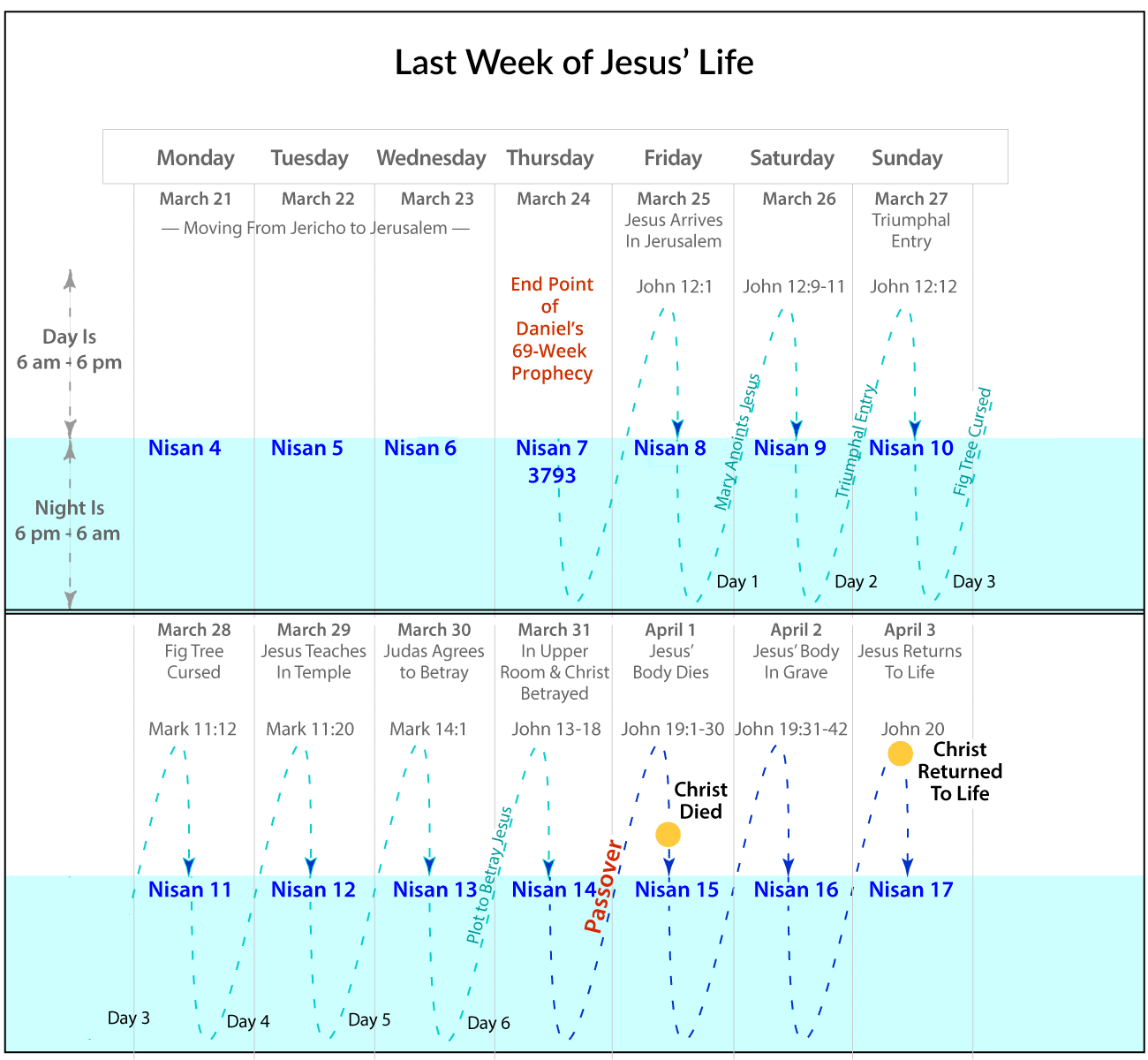
“On that day” reveals that what follows in this study occurred on the same day as the last ten studies. The title of the last study is, “Is It Lawful To Give Taxes To Caesar?” (Matthew 22:15-22; Mark 12:13-17; and Luke 20:20-26). The day on which the events in our study occurred was Tuesday, 29 March A.D. 33.
Therefore, it has been Tuesday for the last ten studies, and it will continue to be Tuesday for more studies to come! It is interesting that all four gospels give us more information about the last week of Jesus’ life than His birth, youth, and adulthood prior to thirty years of age. So, it was a Tuesday, and Jesus will die in three days.
We are told that the religious leaders named Sadducees began to ask Jesus a question about the resurrection. Mark 12:18 and Luke 20:27 add that the Sadducees did not believe there will be a future resurrection. In addition, we should note that Acts 23:8 says,
For the Sadducees say that there is no resurrection, nor an angel, nor a spirit, but the Pharisees acknowledge them all. Acts 23:8 (NASB)
So, the Sadducees did not believe in a future resurrection, but yet they asked Jesus a question about the resurrection! It is going to become clear soon that they were not seeking new information about angels or the resurrection. We are going to discover that they wanted to trap Jesus into making a theological error by creating a question that Jesus could not answer. Most likely they wanted to use it to justify crucifying Him.
Their question was about levirate marriage. Here is the beginning of their question.
“Teacher, Moses said, ‘IF A MAN DIES HAVING NO CHILDREN, HIS BROTHER AS NEXT OF KIN SHALL MARRY HIS WIFE, AND RAISE UP CHILDREN FOR HIS BROTHER.’” Matthew 22:23-24a (NASB)
According to the law of levirate marriage when a husband died and did not have a male heir, then his brother was supposed to marry his childless widow so that she could give birth to a male heir on behalf of the dead husband. This Mosaic Law is given in Deuteronomy 25:5-10. Here is the passage.
“When brothers live together and one of them dies and has no son, the wife of the deceased shall not be married outside the family to a strange man. Her husband’s brother shall go in to her and take her to himself as wife and perform the duty of a husband’s brother to her. It shall be that the firstborn whom she bears shall assume the name of his dead brother, so that his name will not be blotted out from Israel. But if the man does not desire to take his brother’s wife, then his brother’s wife shall go up to the gate to the elders and say, ‘My husband’s brother refuses to establish a name for his brother in Israel; he is not willing to perform the duty of a husband’s brother to me.’ Then the elders of his city shall summon him and speak to him. And if he persists and says, ‘I do not desire to take her,’ then his brother’s wife shall come to him in the sight of the elders, and pull his sandal off his foot and spit in his face; and she shall declare, ‘Thus it is done to the man who does not build up his brother’s house.’ In Israel his name shall be called, ‘The house of him whose sandal is removed.’” Deuteronomy 25:5-10 (NASB)
Verse 5 says the law applied to brothers whose families lived together. Levirate marriage is an exception to the law against incest in Leviticus 18:16; 20:21 since it continues the deceased husband’s name. In addition, that would mean his land rights are preserved within the family and the widow would be provided for financially. It is the only exception to the law of incest that is given in Scripture.
Before someone thinks this law legalized polygamy in general, we must notice that the levirate marriage law does not endorse polygamy. First, it applies only to brothers or kinsman within a family. Individuals from another family line were excluded. Second, if one of the brothers died without a male heir and left a childless widow, then one of the surviving brothers or kinsman was obligated to marry her for the purpose of raising up children for his deceased brother. If she gave birth to a son, then the oldest son was given the father’s name. This greatly limited the men the childless widow could marry.
In addition, the surviving immediate brother or kinsman might choose to refuse to perform his duty of marrying her and raising up children for his dead brother or kinsman. If he refused, then he would be disgraced in Israel. Notice that the brother or kinsman had a duty to engage in sexual activity with the childless widow for the purpose of continuing his brother’s name. We are also told that the childless widow had a right to demand that she be married. So, the surviving brother was also obligated to care and provide for the wife of his deceased brother. That is, levirate marriage was not polygamy. There is no requirement or permission given to any of the near kinsmen or brothers to have many wives by levirate marriage for it is claimed by the Jewish rabbis that the surviving brother had to be unmarried before marrying his dead brother’s wife.
Now we should note that the Sadducees’ question did not mention the dead husband’s brother but the next of kin. That is, someone might note that the translation of Deuteronomy 25:5-10 does not refer to kinsman. But the Sadducees did in Matthew 22:23-24a. Here it is again,
“IF A MAN DIES HAVING NO CHILDREN, HIS BROTHER AS NEXT OF KIN SHALL MARRY HIS WIFE, AND RAISE UP CHILDREN FOR HIS BROTHER”
This helps us understand the word “brother” in Deuteronomy 25:5-10 should be more properly understood as a kinsman, as we have already been discussing. There are two examples of levirate marriage in the Old Testament. The first example is between Onan and Tamar, and the second example is between Ruth and Boaz. In the book of Ruth, we are told that a woman named Ruth was a childless widow (Ruth 4:5). Her deceased husband was without an heir. Also, we learn that Boaz was a kinsman of Naomi’s husband, Elimelech (Ruth 1:2; 2:1). Elimelech had two sons named Mahlon and Chilion. One of them had married Ruth. Therefore, Boaz became Ruth’s kinsman redeemer (Ruth 2:1; 3:2). Ruth 4:10-14 reveals that Boaz married Ruth according to the law of levirate marriage. Therefore, we learn from the book of Ruth that levirate marriage is not just between brothers but in a broader sense between kinsmen.
So in summary, the Sadducees referred to levirate marriage at the beginning of their question. Here now is the rest of their question.
“Teacher, Moses said, ‘IF A MAN DIES HAVING NO CHILDREN, HIS BROTHER AS NEXT OF KIN SHALL MARRY HIS WIFE, AND RAISE UP CHILDREN FOR HIS BROTHER.’ Now there were seven brothers with us; and the first married and died, and having no children left his wife to his brother; so also the second, and the third, down to the seventh. “Last of all, the woman died. In the resurrection, therefore, whose wife of the seven will she be? For they all had married her.” Matthew 22:24-28 (NASB)
Now it is clear at this point that the Sadducees had not asked a serious Bible question. For example, all seven brothers would have had to live near one another. Also, the childless woman would have had to continue to be childless while she was married to the first six brothers or kinsmen. It is extremely unlikely that a woman would have married seven kinsmen and six of them would have not have fathered at least one child and all six of them died in succession! Further, the brothers would have had to die within 3-4 years of each other since most women cannot give birth in their forties. In addition, she would have had to be first married when she was about sixteen years old.
The likelihood that a childless woman would marry seven brothers or relatives is highly improbable. Therefore, it is clear that the Sadducees created a fictitious story in order to trap Jesus into making a statement they could use against Him. Since the Sadducees did not believe in the resurrection, why did they create a story about the resurrection? The answer must be that it was a trap. Maybe they hoped that Jesus would say she would be married to all seven brothers in the resurrection in violation of Leviticus 18:16; 20:21. Then they could accuse Him of having a false doctrine. Maybe they hoped that Jesus would say He could not give them an answer. Whatever the correct answer might be, the question was a trap.
The Surprise Answer
Then Jesus answered their question. Here is the first part of His answer.
“But Jesus answered and said to them, “You are mistaken, not understanding the Scriptures nor the power of God.” Matthew 22:29 (NASB)
The first important word in this verse is “mistaken.” The Greek word for mistaken is planao. It literally means “to lead astray, to deceive, or to cause to wander off the path.” That is, the Sadducees had wandered off the path as a result of not understanding the truthfulness of Scripture. Even though they had memorized the first five books of the Old Testament and taught the Scriptures, they did not understand what they were teaching. At first, we might think that their problem was just that they did not believe what they read since Scripture does refer to the resurrection, the existence of angels, and to spirits. Surely, they had read about the resurrection, angels, and spirits. But Jesus tells us that even though they had read about those things, they did not understand what they read. Notice that Jesus said they did not understand. How could they read Scripture and not understand it? Many years ago I knew a woman who said that she would read the Bible before she became a believer and could not understand anything. Then after she became a believer, she could finally understand what she was reading.
This is the same problem the Sadducees had. They did not understand Scripture because they did not believe in God the Father. The proof that they did not believe in God the Father is that they had rejected Jesus Christ. Why do we know that this is true? Listen to Christ Himself,
And Jesus cried out and said, “ He who believes in Me, does not believe in Me but in Him who sent Me. He who sees Me sees the One who sent Me. I have come as Light into the world, so that everyone who believes in Me will not remain in darkness. John 14:44-46 (NASB)
Here Jesus teaches us that the one who believes in Him also believes in God the Father. That is true of everyone. The Sadducees were not believers, so the Holy Spirit was not giving them insight into the truths of Scripture. If you are rejecting Christ today, my friend, then you are rejecting the Father too!
Consequently, the Holy Spirit will not help you understand the Scriptures and He was not helping the Sadducees understand them either (1 Corinthians 2:12-14). In Luke 24:45, we read that Jesus opened the minds of the disciples so that they could understand the Scriptures.
“Then He opened their minds to understand the Scriptures.” Luke 24:45 (NASB)
The message for us today is that unless the Holy Spirit helps us understand the Word of God, we cannot understand it.
We should stop now and ask if this can happen to us? Can believers fail to understand Scripture? The answer is yes. Let us consider two of the most important reasons why this can occur for believers. First, consider 2 Peter 3:16 where Peter states that the “untaught and unstable” distort Scripture. That is, those who are untaught do not have a strong grasp of all of Scripture. Therefore, they will frequently make errors about the meaning of Scripture. Why? We rarely find all that Scripture teaches about a topic in one verse, chapter, or book of the Bible.
Consider the truths about prayer. They are scattered all over Scripture. Sadly, some who teach and preach the Bible spend little time seriously studying all of Scripture. A gifted speaker can give a seemingly good sermon with little study. Consequently, since the teacher or preacher is not constantly studying all of Scripture, he tends to be repetitive. The sermons are dull and one’s spiritual growth is blunted because his is blunted.
They can deceive most people but not someone who has a stronger grasp or understanding and knowledge of Scripture than the preacher or teacher. Consider that the preachers of yesteryear taught two and three times a week—Sunday morning, Sunday evening, and Wednesday night. Many studied and taught multiple books of the Bible, as well as doctrines week-after-week, month-after-month. But today, a growing trend is that pastors teach or preach only time during the week—Sunday morning. There is no evening service or Wednesday evening Bible study and prayer meeting, as was the former pattern in churches many years ago. It is obvious that if a preacher or teacher only prepares for one sermon, then he is most likely studying the Bible less than those of past years. This reveals that many pastors today are studying far less in general and know less than the preachers of the past.
One of the doctrines that is frequently distorted today is that of future things or eschatology. Over the years many pastors have admitted that they do not understand the doctrine of future things, so they do not teach or preach about it. Then many will add that it will “all pan-out” in the end. That is supposed to be a funny comment. But, they fail to understand that prophecy occupies a major portion of Scripture. So, if they do not understand the doctrine of future things very well, they will not understand the Scriptures.
The same is true for every believer. Failure to seriously study the Bible will result in sermons, teachings, and personal studies that contain error. It might have great application, but the message can contain great errors.
The second important reason a person can fail to understand Scripture is that they habitually live a life of sin. There are two reasons that this is true. First, sin grieves the Holy Spirit and when that happens, our ability to understand Scripture is hindered. Second, Jesus told us in John 14:21 that if we keep His commandments then He will reveal Himself to us. Then we can understand the Scriptures. The Sadducees were unstable, and so is every unrepentant believer.
Jesus Teaches The Sadducees
Jesus’ reply that the Sadducees were “mistaken, not understanding the Scriptures” must have been insulting to these religious leaders. What is worse for them is that a crowd was present (Matthew 22:33) when Jesus’ rebuked them. It is obvious that they wanted to ask a question a difficult theological question. We can be confident that they did not expect the answer they received from Jesus. John MacArthur adds this,
“The Sadducees probably expected Jesus to say nothing and to walk away in humiliation and disgrace . . .”1
But Jesus surprised the Sadducees by telling them that they did not understand the Scriptures and then gave them a theological lesson about life in heaven, angels, and the future resurrection. Jesus’ reply has two parts. First, He said,
“For in the resurrection they neither marry nor are given in marriage, but are like angels in heaven.” Matthew 22:30 (NASB)
That is, in heaven marriage does not occur. That does not mean that marriage here on earth is wrong. For in Genesis 2:24 God commanded that biological males and biological females should marry. In Genesis 1:27-28, He commanded married biological males and females reproduce. There is a biblical definition of gender and a true marriage. But in heaven there will not be any children born. Every person will be a spirit with an immortal body. Procreation will not occur in heaven.
Now notice that Jesus did not teach us that people will become angels, as is so often assumed by many. Nowhere do the Scriptures ever state that people become angels. The extremely popular movie “It’s a Wonderful Life” features an angel named Clarence who is George Bailey’s guardian angel. In the movie this angel was once a human on earth and he is trying to earn his wings! But Scripture never teaches us that humans will become angels.
Neither did Jesus try to teach us about what happened in Genesis 6:1-3 regarding the sons of God and the daughters of men. At that moment it was not important enough for Jesus to discuss. Jesus’ point is simple. The Sadducees did not understand the very book they had memorized and taught. That was our Lord’s message to the Sadducees for they were wrong about life in heaven. They were wrong about angels which do exist (Genesis 3:24; 19:1, 15; 28:12; 32:1 and many more references). They missed the fact that the resurrection will occur. Then Jesus added,
“But regarding the resurrection of the dead, have you not read what was spoken to you by God: ‘I AM THE GOD OF ABRAHAM, AND THE GOD OF ISAAC, AND THE GOD OF JACOB’? He is not the God of the dead but of the living.” Matthew 22:31-32 (NASB)
What was Jesus’ point? The Pentateuch did teach the resurrection for Jesus quoted Exodus 3:6. He made the point that God is not the God of the dead but of the living. He reinforced this by using the present tense for “I AM.” He also emphasized the statement by using the emphatic “I” in the Greek. That is, He emphasized the fact God is the God of these three men. He is the God of the living. The point is that the resurrection does exist, and a bodily resurrection will occur in the future. In addition, the prophet Daniel tells that there will be a resurrection (Daniel 12:2-3, 13). So, the resurrection was implied in Exodus 3:6 and clearly taught in Daniel.
Conclusion
So, the Sadducees missed all three doctrinal truths. They did not understand the Scriptures that they studied. As we have already discovered, in order to understand the Scriptures, we must be a believer in Jesus Christ, we must be repentant and confessing our sins, be praying for insight, and have a strong grasp of Scripture. The last point is missing today by many. They know just enough to convince others, but their command of Scripture is poor.
As a result, a flurry of doctrines and horrific teachings have been taught in the last fifty years ranging from: annihilationism, preterism, various Word of Faith doctrines, Hyper-Grace, and others. They are like the Sadducees. They can read Scripture, but they cannot understand. Have you ever wondered why there are so many different interpretations about Bible passages and so many differing doctrines? The sad truth is that many are like the Sadducees – always teaching but having a poor or incomplete understanding of what they have read. So, they emphasize application. It is obvious that when Paul wrote, he did not intend for each of us to have a different idea about what he wrote. There is only meaning to every verse. So, do not be fooled into thinking that various interpretations of Scripture are okay. That is not true! Every interpretation cannot be correct.
So, the questions you should ask yourself if you teach the Bible are: “Am I a believer in Jesus Christ?” “Am I repenting and confessing my sins?” “Am I praying as I study and prepare to teach?” and “Do I have a strong grasp of Scripture?” If the reply to the last one is no, then you need to seek someone to help you learn as much about the Scriptures as possible. May the Lord bless you as you study. As you do, remember the goal of Bible study is not to know the Scriptures but to know God (Jeremiah 9:23-24).
The last verse in our study is verse 33,
When the crowds heard this, they were astonished at His teaching. Matthew 22:30 (NASB)
They were astonished because of His great command of Scripture.
Suggested Links:
Did Onan die because he did not want to have children?When and Why God Permits Divorce
Is It Better Not To Marry? — Matthew 19:10