What Is the Bible?
All Scripture is inspired by God and is profitable for teaching, for reproof, for correction, for training in righteousness. 2 Timothy 3:16 (NASB)
General Revelation
One of the greatest mysteries is how did this universe and everything in it come into existence? We believe in cause-and-effect. That is, something is created by something. We cannot understand how nothing causes something to come into existence. Science cannot explain the mystery of how the universe could come into existence out of nothing. A wise and serious person will eventually realize that is true. The universe should not exist, nor should our world. So, why does it exist? Romans 1:20-22 gives us the answer,
For since the creation of the world His invisible attributes, His eternal power and divine nature, have been clearly seen, being understood through what has been made, so that they are without excuse. For even though they knew God, they did not honor Him as God or give thanks, but they became futile in their speculations, and their foolish heart was darkened. Professing to be wise, they became fools, Romans 1:20-22 (NASB)
This passage teaches that God has revealed Himself through the creation. Our universe and world can only exist by something that caused it to come into existence. The creation screams that there is something beyond this universe. The passage teaches that those who deny that God created the universe are not wise but are fools. In theology, general revelation refers to God revealing Himself to us through the creation of the world and universe (Psalm 19:1). That is, God has left signs or evidence that He exists. Those signs are telling the wise person that God does exist.
1. So, what signs has God left to help us discover He exists? —
2. What signs has God left that reveal He exists (Acts 14:16-17)? —
3. According to Romans 2:14-15 what else reveals God exists? —
4. What does Job 38-39 reveal about our universe? —
Specific Revelation
So the creation strongly hints that God exists; but it does not give us specific information about God. It is the Bible that gives specific information about Him. It is the only book that God wrote to teach us about Himself and ourselves. It is like a very long email. The Bible is a unique book because when it speaks, it always speaks truth. When it speaks about science, history, or spiritual matters, it always speaks truth. It is unlike any other book ever written. God has put accurate historical data and fulfilled prophecies in the Bible so that we can know it was written by Him. So, how has God spoken to us?
God has spoken to men in a theophany. That is, He appeared and spoke to men in the form of a person or as an angel. God spoke through the prophets in dreams, visions, miracles and signs. The Holy Spirit moved men to write Scripture. Write down the different ways He has done this according to the following verses.
Theophanies
How did God appear in Genesis 3:9, 11; 16:7-13 ? —
How did God appear in Genesis 26:2 ? —
How did God appear in Exodus 3:2-43 ? —
How did God appear in Judges 6:11-13? —
Dreams, Visions, & Prophecies
How did God speak to Joseph? (Genesis 20:3) —
What is the book of Jeremiah? (Jeremiah 1:4-9) —
What is the book of Ezekiel? (Ezekiel 1:1-3; 11:24) —
How did God speak to Daniel? (Daniel 2:19, 28) —
What did God tell Ezekiel to do? (Ezekiel 21:9) —
Miracles & Signs
How did God speak to Moses? (Exodus 3:1-6, 13-15) —
How did He reveal Himself to the Egyptians? (Exodus 7 – 13) —
What did God do for Gideon? (Joshua 7:36-40) —
What did God do in Joshua 10:12-14? —
Content of the Bible
So, the Bible provides us with specific revelation about God. He did this by using human authors. We can find their books in the Bible. The Bible has two sections called the Old Testament and the New Testament. God has given us a test to help us determine what He wrote. We can trust what He wrote because He knows everything and He always tells us the truth. He is not like us in that He never lies.
The Bible was written over a period of 1,600 years by God the Holy Spirit and forty human authors. These human authors were kings, prophets, fishermen, priests, peasants, scholars, doctors, rich men and poor men. It was written in different places such as in the wilderness, in homes, in king’s palaces and in prisons. It was written in different geographic areas such as Asia, Europe and Africa.
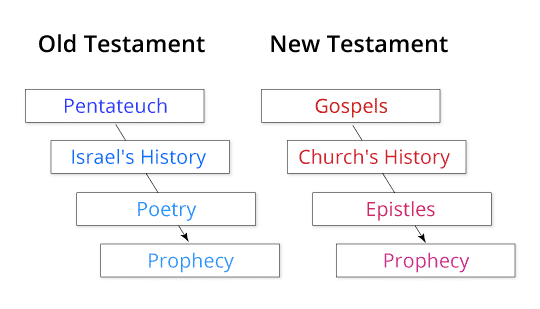
The Old Testament contains thirty-nine books. The first five books, the Pentateuch, are an introduction to God, angels, man, sin, our world and its beginning. The next 12 books record the early history of God’s workings with Israel from about 1445 B.C. to 400 B.C. It starts with Israel entering Palestine, covers the establishment of the royal line of the Kings, Israel being deported into Babylon as captives, and concludes with Israel back in the land after the seventy years of captivity in Babylon. The five books of poetry start with the oldest book in the Bible, the book of Job. The other books of poetry include Psalms, Proverbs, Ecclesiastes, and the Song of Solomon. The remaining seventeen books are prophetic and include such books as Isaiah, Jeremiah, Ezekiel, Daniel, and Jonah. These books are divided into the major and minor prophets. The terms “major” and “minor” refer only to the size of the books.
The New Testament starts with four books called the gospels. Write down the names of the four gospels in the space below.
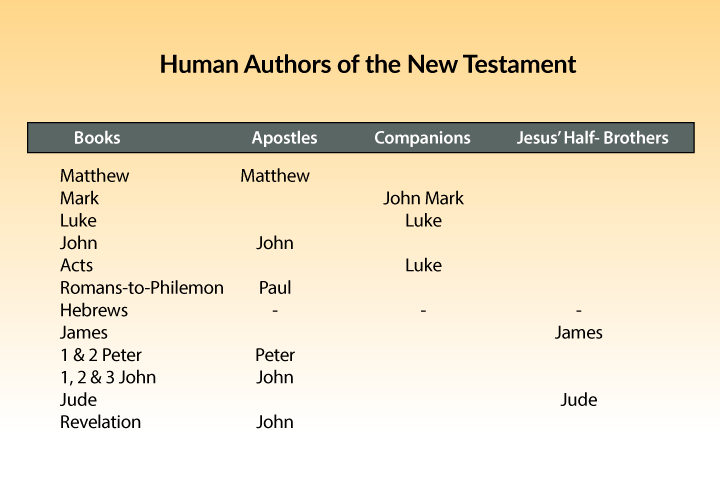
They record the birth, ministry, death, and return to the life of Jesus Christ. The book of Acts which follows is the only historical book in the New Testament. It records the acts of the apostles and the history of the early church. The other twenty-two books are called the epistles and contain the writings of the apostles Paul, Peter, John, and Jesus’ brothers named James and Jude. The last book, Revelation, is the only book of prophecy in the New Testament. It records the prophetic events related to the tribulation, the second coming of Christ, the millennial kingdom, and the eternal state. This brings the total of New Testament books to twenty-seven for a grand total of sixty-six books in the Bible.
Inspiration of the Bible
In addition to appearing as a theophany, and God speaking to us through dreams, visions, miracles, and signs, He has also written the Bible for us to read. That is the message of 2 Timothy 3:16-17.
All Scripture is inspired by God and profitable for teaching, for reproof, for correction, for training in righteousness; so that the man of God may be adequate, equipped for every good work. 2 Timothy 3:16-17 (NASB)
The word inspired in this verse comes from the Greek word “theopneustos” . The word means that all Scripture is “God-breathed.” The Greek word captures the fact that when we talk, we expel air through our vocal cords and people hear us. This helps us understand the words contained in the Bible are God’s words. God selected the words and the Holy Spirit moved men to write the various books that are contained in the Bible. It is amazing that God wants us to know Him. He could have been s
It is amazing that God wants us to know Him. He could have been silent, ignored us, but He did not. God went to great effort to make sure the Bible was written accurately. How did God do this? 2 Peter 1:21 gives us the answer. We are told the Bible was not a creative idea of human minds. Instead the Bible was written by God. That is the message of 2 Timothy 3:16, and 2 Peter 1:21. Peter adds that God the Holy Spirit wrote the Bible by moving human authors to write what He wanted written. The following verses are examples that help us understand 2 Peter 1:21. Therefore, answer the questions below to discover the principle of how 2 Peter 1:21 worked.
1. Acts 28:25-27 gives us another example of how the Bible was written. In this passage, the apostle Paul tells us that there are two authors of Isaiah 6:9-10. What are the names of the two authors?
2. Even though the prophets wrote the Old Testament books, they did not understand everything they wrote. What did they not understand (1 Peter 1:10-11)?
3. Even though the prophets wrote the Old Testament books, they did not understand everything they wrote. What did they not understand (1 Peter 1:10-11)?
4. What do all of these passages reveal about who wrote the Bible?
The message is that the Bible is the Word of God. It does not just contain the Word of God; it is the Word of God. The central theme of the Bible is Jesus Christ. The Old Testament looks forward to Jesus and the New Testament looks back to Jesus. All of Scripture looks forward to His second coming! The New Testament shows that 1) Jesus Christ is the Messiah, the Savior who died for us in order to forgive us and take away our sins. 2) He returned to life after being dead for three days. 3) He is in heaven now, and 4) He is coming again. It is through Jesus that we can have eternal life. Why did He allow Himself to be crucified on a wooden cross? The answer is that God loves you and He wanted to save you from your sins.

Authority of Scripture
Because God wrote the Bible, it is called the words of the Lord (Psalm 12:6), Word of God (1 Samuel 9:27), the Law of the Lord (Psalm 19:7), and the message of Christ (Colossians 3:16). This means the Bible is authoritative since it was written by our God. God is the real author of Scripture – both the Old and New Testaments. There are prophecies in both the Old and New Testaments. The Old Testament prophets, the New Testament apostles and Jesus Christ all made prophecies about the future. The prophecies reveal that all of the Bible was written by God, who cannot lie. Therefore, we know the Bible is authoritative.
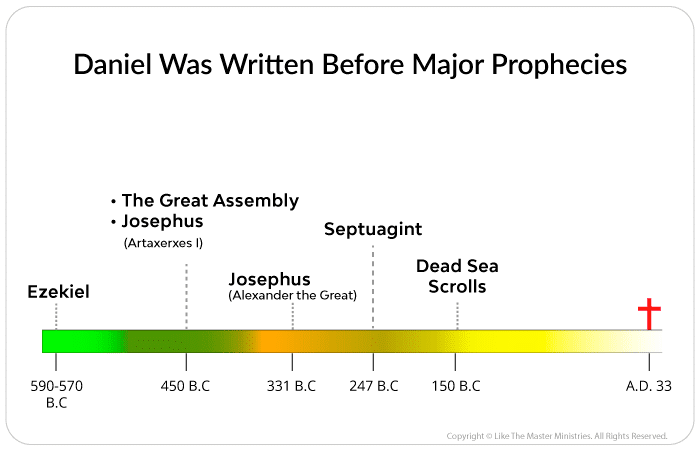
One example of fulfilled prophecy is found in the book of Daniel. We know that all of the prophecies in the book of Daniel, except for one, were written before 450 B.C. for the book of Daniel exists in the Dead Sea Scrolls. Daniel existed in the Septuagint. The Roman historian says Alexander the Great was shown the book of Daniel, and the Great Assembly knew of the book. The book contains prophecies about the rise and fall of four great empires: the Babylonian, Medo-Persian, Grecian, and Roman empires. There are many detailed prophecies in Daniel 11 about the Grecian empire after Alexander the Great died. But the most amazing prophecy in Daniel is a prophecy about the year in which Jesus Christ would die on a cross. Daniel 9:25-27 is a prophecy about Jesus Christ, the Messiah. It states that He would die after 24 March A.D. 33. Jesus died on 01 April A.D. 33. Can you imagine that a prophecy given in 530 B.C. could be so accurately fulfilled? Amazingly, Jesus not only died in the week that was prophesied, Jesus also fulfilled a great number of other Old Testament prophecies.
The book of Isaiah contains seventeen specific prophecies about Jesus Christ (Isaiah 7:14; 9:6; 11:1; 28:16; 29:18; 35:5; 40:1-3; 50:6-7; 53:1, 7-9, 11; 55:3; 62:11). The message is that Jesus came to die so that our sins could be forgiven. Jesus returned to life. That was also prophesied in Ps. 16:10. Today, Jesus is in heaven and plans to return to earth someday. Prophecy is the fingerprint of God. It is the proof the Bible is His book. There are many other prophecies in the Bible which have been fulfilled.
God has also given us a test that we can use to determine if the Bible was written by Him. The test is found in Deuteronomy 18:21-22. The passage says that we can know God has spoken through a prophet when the prophecy comes true. The Bible is a very unique book with over 1,800 prophecies recorded in about 8,500 verses. That is about 27% of the Bible.
Inerrancy of Scripture
Consequently, the Bible does not contain errors, contradictions or mistakes. Why is the Bible without any errors? What do the following verses reveal about God?
Numbers 23:19 —
Titus 1:2 —
Hebrews 6:18 —
These verses reveal the character of God. Therefore, we can trust what God says and the Bible He wrote. The Bible is without error. What is the message of 2 Peter 1:18-19? How does the verse reveal that Scripture is without error?
How does Galatians 3:16 reveal that Scripture is accurate down to the plurality of a word?
Canon of Scripture
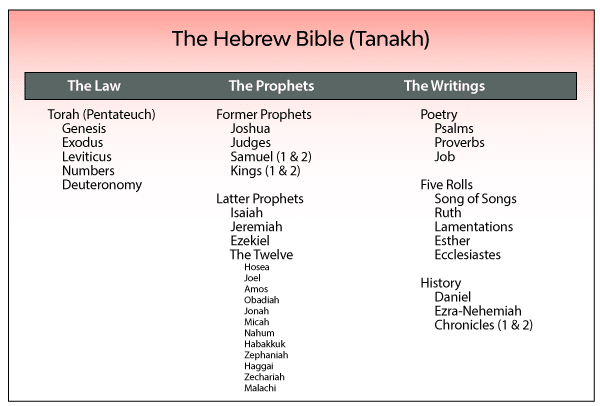
Now how do we know which books belong in the Old and New Testaments? A quick look at a number of passages in the New Testament reveal that Jesus directly quotes the Old Testament Scriptures as inspired and authoritative (Matthew 21:42; 22:29; 26:54; Luke 16:31; 24:27; Luke 24:44; John 5:39). Some important passages reveal that Jesus referred to one or more of the divisions of the Hebrew Bible, also called the Tanakh. At the time Jesus and the apostles walked this earth, the Old Testament books were called the Scriptures. They were divided into three sections: The Law, The Prophets, and The Writings. Psalms was the largest book in the third section. Now notice how Jesus endorsed the Hebrew Bible as being Scripture. Jesus spoke these words,
But he said to him, “If they do not listen to Moses and the Prophets, they will not be persuaded even if someone rises from the dead.” Luke 16:31 (NASB)
Then beginning with Moses and with all the prophets, He explained to them the things concerning Himself in all the Scriptures. Luke 24:27 (NASB)
Then in Luke 24:44, Jesus endorsed the entire Old Testament as Scripture. Here is the verse,
Now He said to them, “These are My words which I spoke to you while I was still with you, that all things which are written about Me in the Law of Moses and the Prophets and the Psalms must be fulfilled.” Luke 24:44 (NASB)
Now by studying the chart above, can you explain why we know that Jesus endorsed all of the books of the Protestant Old Testament? These passages reveal that Jesus considered the Old Testament books to be written by God and to be authoritative. It is important to know that neither Jesus nor the apostles ever quoted from the Apocrypha or the Pseudepigrapha.
The New Testament and early church history also reveal the apostles determined which books belonged in the New Testament. For example, 2 Peter 3:15-16 reveals that Peter stated Paul wrote Scripture. In turn, Paul indicated that Luke wrote Scripture in 1 Timothy 5:18 when he quoted a sentence from Luke 10:7 as being Scripture. Now, who wrote the gospel of Luke? This means that Peter endorsed Paul who endorsed Luke as writing Scripture. This reveals the apostles were reviewing the writings of one another and determining who was writing Scripture and what was Scripture. The writings of the apostles were also distributed among the churches (Colossians 4:16; 1 Thessalonians 5:27). The apostle John wrote the last book of the New Testament, the book of Revelation. It is safe to conclude that the books of the New Testament were approved by the apostles as Scripture.
By the end of the first century the canon, or the Bible was complete. The Muratorian Fragment (A.D. 150-170) lists the books of the New Testament, except for Matthew, Mark, Hebrews, James, 1-2 Peter and 3 John. The document is called a fragment because portions of the document have been torn off. The well-known biblical scholar Westcott states that the missing books were probably included initially because the document is torn where they would have been listed! By the end of the second century, the early church fathers had quoted from all of the New Testament books. This means that the Bible had already been established by A.D. 200. In the years that followed, the authority of certain books was challenged and church councils were convened to review and verify the contents of our Bible. The Council of Carthage (A.D. 397) is usually pointed to as the council which finally put the debates to rest. But unfortunately, there will always be those who will challenge the authority of various books in the Bible.
Today’s Bibles
The original documents were written in the Hebrew, Aramaic, and Greek languages. Today’s Bibles have been translated from the ancient languages into many modern languages. There are also a large number of speciality Bibles. These Bibles are all based on copies of the original manuscripts, sometimes called autographs, of the sixty-six books of the Bible. The Old Testament was a collection written in Hebrew and Aramaic. Today the Jews call the Old Testament the Tanakh. The Greek version of the Old Testament is called the Septuagint and was written about 280-150 B.C. The Septuagint is abbreviated as LXX. Its Greek words are sometimes used to understand word meanings in the Old and New Testament. The New Testament was written in Greek and Aramaic.
In A.D. 383-405, the Latin Vulgate was created. This is a Latin version of the entire Bible. Since then at least thirty-four different versions of the Bible have been published. Some of the significant versions of the Bibles today are the 1611 King James Version, New American Standard Bible (NASB), New King James Version (NKJV), the English Standard Version (ESV), and in 2022 the Legacy Standard Bible (LSB) was published. It is considered to be the most accurate Bible for study since it is the closest to the original languages. The NASB, NKJV, ESV, and LSB Bibles were the best Bibles available at the time this document was written. They are all very close word-by-word translations of the original books of the Bible. The Living Bible is called a free translation because it tries to accurately communicate the idea of the passage. The NIV is somewhere in between. If you desire to study the Bible without knowing the original languages, use a NASB, LSB or the ESV. They are best for Bible study since they do not inject words, ideas, and meanings that do not exist in the original manuscripts.
Things To Ponder
1. The Old and New Testaments point us to one person. Who is that person (John 5:39)?
2. Some people claim that Nostradamus (A.D. 1555) is a prophet because some of his predictions came true. They are not aware that he made many mistakes. For example, he predicted that France would be victorious in a struggle with Spain during the 16th century. In fact, the opposite happened and France was driven out of Italy by the Spanish in 1559. Nostradamus predicted that World War III would start on July 4th, 1999 between Russia, Turkey and Iran with Iran launching weapons of mass destruction into Europe. Why is this enough to know that he is not a prophet from God according to Deuteronomy 18:21-22? How can we know when God speaks?
3. Do you believe the Bible is without error and written by God? If so, why?
4. How did men write the books of the Bible according to 1 Peter 1:10-12; 2 Peter 1:21; and Acts 28:25?
5. What does 1 Peter 1:10-12 reveal about God’s heart attitude toward you?
6. Which is the best view of 2 Timothy 3:16? (Circle one)
a. The Bible is nothing more than a group of words some men wrote.
b. The Bible is very encouraging and inspirational.
c. Only the parts of the Bible that speak to me in a personal way are inspired by God.
d. Only some parts of the Bible are inspired.
e. Every word and concept in the Bible was written by God.
7. 1 Peter 1:10-12 tells us that the prophets wanted to understand what they wrote. Who will help us understand the Bible according to 1 Corinthians 2:12-13 and John 16:13-14? Why does He do this?
8. What are the three best translations of the Bible for Bible study? Why?
9. The Old Testament prophesied that Jesus was coming. He came and died just as Daniel 9:25-27 had prophesied. The Bible also says He is coming again. Are you ready for Jesus’ return? That is, are you a Christian?
10. What unanswered questions do you have about the Bible?
11. Why did God give us the Bible according to 2 Timothy 3:15 and then 1 Timothy 3:15-16? Look for at least three reasons.
12. This lesson has an attachment called “Overview of the Books of the Bible.” Using that document, determine which Bible book best goes with the following personal questions you might have.
Topics of the Books of the Bible
Evidence that I have true faith. __________________
Am I being legalistic? __________________
I want to understand salvation __________________
Discovering Godly wisdom __________________
Jesus is the Messiah __________________
Suggested Links:
Solid Root SeriesIntroduction To Solid Roots
How has God revealed Himself? – General and Specific Revelation
Why We Can Trust The Bible — inspiration and the canon of Scripture
What does it mean that the Bible is inspired? – Inspiration of Scripture
How Accurate Is the Bible?
Can we add new books to the Bible? – Is the canon of Scripture closed?
Overview of the Books of the Bible – themes and descriptions
How To Study The Bible – Discipleship Series
Who Is God? – Discipleship Series