
Woman Experiencing Very Strong Birth Pangs
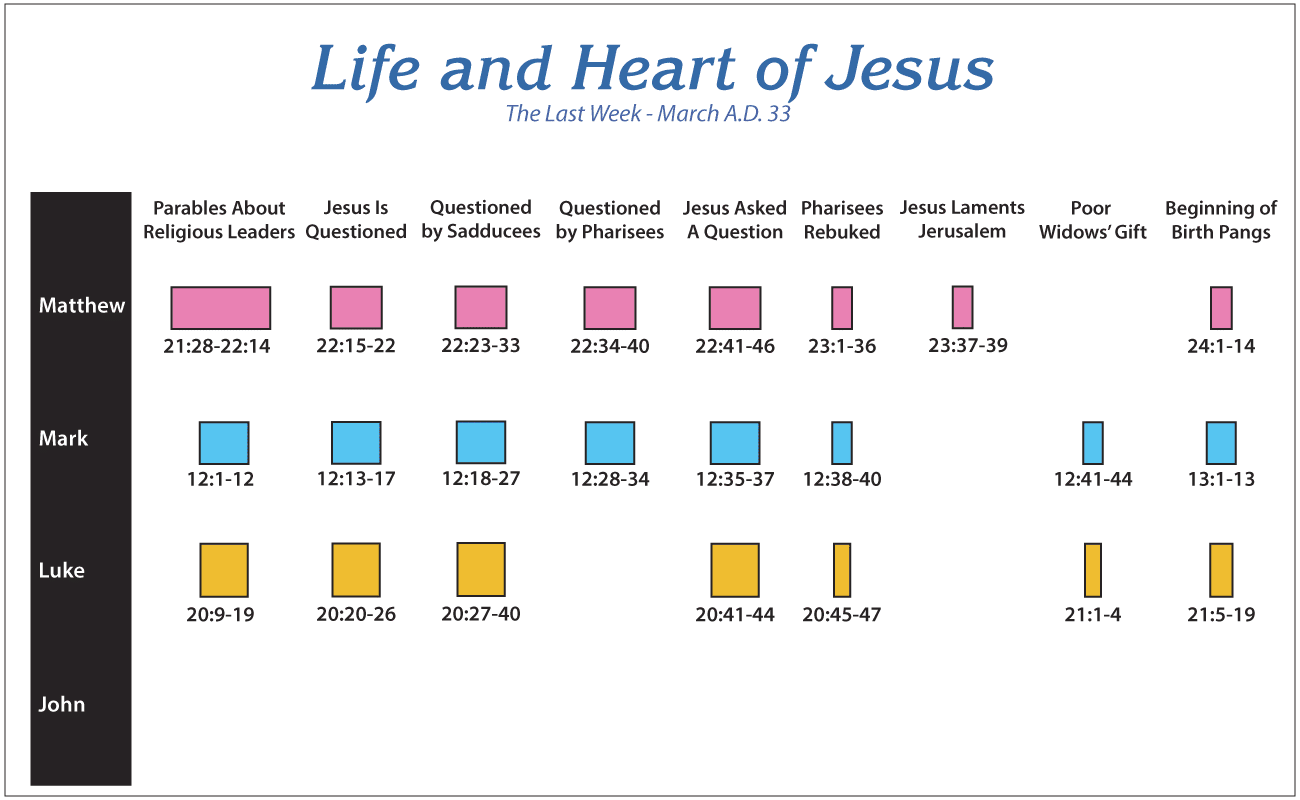
We discovered in the last study, “Christ Prophesies About the Temple and the Second Coming,” that the premillennial view accurately describes God’s plan for the future. It results from interpreting Scripture literally, except when it is clear that a passage is poetic, a parable, or clearly symbolic. When Scripture is not interpreted literally, the teacher must be creative in his interpretation of a passage. He is forced to piece together something that sounds biblical. A literal approach forces the teacher to understand the words of Scripture literally. If he is consistent in literally understanding Scripture, everything will eventually logically connect. When this occurs, Bible teachers discover the next major event in God’s plan for our future is the rapture of the church, followed by the tribulation, and the second coming of Christ. The rapture will occur like a thief in the night, but not the second coming of Christ for He Himself gave us signs in Matthew 24 that help us know when His return is very near. That is, after the rapture occurs, the second coming of Christ will occur seven years later. That is, the second coming of Christ does not occur like a thief in the night. An important statement about the timing of the second coming of Christ is found in Luke 17:22, where Jesus told the apostles they would not see His second coming. Historical records reveal the last apostle, John, died about 110 A.D. That means, the second coming of Christ did not occur in the first century. In fact, John wrote the book of Revelation in AD 95. It describes the tribulation, the second coming of Christ, the millennial kingdom, judgment, and the eternal state. That reveals the second coming could not have occurred in AD 70. So, the signs of the second coming that Jesus gave in Matthew 24 have yet not appeared. If the signs have already occurred, they would not be signs but just events in human history. To be signs, they must occur very near Christ’s coming. This study is about those signs (Matthew 24:4-14; Mark 13:3-13; Luke 21:5-19).
Two Questions and Answers
Matthew 24:3 tells us that Jesus’s disciples asked two questions.
As He was sitting on the Mount of Olives, the disciples came to Him privately, saying, “Tell us, when will these things happen, and what will be the sign of Your coming, and of the end of the age?” Matthew 24:3 (NASB)
The first question was about the time these things will occur, and the second question is about the signs of the second coming of Christ. But Jesus answered them in reverse order. His answer to the first question is given last in verses 32-51, and the answer to the second question is given first in verses 4-28. The description of the second coming of Christ is placed between the two answers in verses 29-31.
When He gave the signs of His second coming He divided them in three parts. The first group of signs of His coming He called birth pangs (v. 4-14). The second sign (verse 15) describes an event that will occur in the middle of tribulation. He did not call that a birth pang. Verses 16-28 describe the third group or the last set of signs, and Jesus did not call them birth pangs either.
Beginning of Birth Pangs
Starting with verse 6, Jesus began to reveal the signs that would proceed His second coming. He said,
You will be hearing of wars and rumors of wars. See that you are not frightened, for those things must take place, but that is not yet the end. For nation will rise against nation, and kingdom against kingdom, and in various places there will be famines and earthquakes. Matthew 24:6-7 (NASB)
These signs are not very significant as we will soon discover for they occur too early. Immediately, we should notice the last part of the verse. He said, “that is not yet the end.” That is, the wars and rumors of wars are common place. They would not be significant signs. They have been occurring down through history since Adam and Eve sinned. Verse 7 explains that the wars will be caused by various nations around the world. Jesus added famines and earthquakes to the list of common events. Unfortunately, some will obtain modern day estimates of the increase in the number of wars, famines, and earthquakes and then suggest that they reveal the second coming of Christ is near. But Matthew 24:8 reveals that the wars, famines, and earthquakes are not good indicators that the second coming is very near. For in this verse, Jesus told Peter, James, John, and Andrew that the signs He was describing would not occur immediately before His second coming. Jesus said,
But all these things are merely the beginning of birth pangs. Matthew 24:8 (NASB)
When Jesus used the term “birth pangs,” He referred to an event that every mother has repeatedly experienced in the process of bringing a child into the world. At the moment of conception, human life begins. Then about nine months later, the baby leaves the mother’s womb. The birth process is referred to as a delivery. During pregnancy a mother experiences many different things. One important experience is her birth pangs. They do not occur immediately after conception. Instead, they can start occurring about half-way during the pregnancy. What did Jesus mean when He used the term “birth pangs?” He used this well-known expression to teach us two important points.
First, Jesus used the expression “beginning of birth pangs” to reveal when the signs He had given would occur. The physical birth pangs that Jesus referred to are called Braxton Hicks contractions. These are normal events during pregnancy.1 Braxton Hicks contractions are actually early labor contractions. They are not the birth pangs that result in childbirth. The American College of Obstetricians & Gynecologists refers to Braxton Hicks contractions as “practice” contractions,
Braxton Hicks contractions can happen for many weeks before real labor begins. These “practice” contractions can be very painful and can make you think you are in labor when you are not. You might notice them more at the end of the day.
The average length of pregnancy is 280 days, or 40 weeks. But there is no way to know exactly when you will go into labor. Most women give birth between 38 and 41 weeks of pregnancy.2
Here we are told that Braxton Hicks contractions begin around the 22 week of pregnancy, in the second trimester.3 Since pregnancy is about 40 weeks, that means the Braxton Hicks birth pangs begin about half way through pregnancy, not at the end.
Second, we also need to note that the Jews used the phrase birth pangs in reference to the coming of the Messiah. A. T. Robertson wrote,
The word means birth-pangs and the Jews used the very phrase for the sufferings of the Messiah which were to come before the coming of the Messiah (Book of Jubilees, 23:18; Apoc. of Baruch 27–29). . . . These woes, says Jesus, are not a proof of the end, but of the beginning.4
So, the Jews used the phrase “birth pangs” to refer to the sufferings of the Messiah prior to His coming, but notice they did not say “beginning of birth pangs.” However, Jesus did.
In summary when Jesus said “beginning of birth pangs,” He did not refer to events that would occur near His crucifixion and resurrection, nor did the phrase refer to events near to His second coming. That is the sense of Braxton Hicks contractions.
This helps us understand that the signs about wars, famines, and earthquakes are not signs that would occur between His ascension and 70 A.D. because we are at least two years after Jesus’ death and resurrection. Since Jesus used the illustration of Braxton Hicks contractions, then it seems logical to conclude that these signs are probably occurring now.
Birth Pangs Timeline
The introduction of this study explains that the rapture will occur like a thief in the night, but that is not true of the second coming. No biblical timeline is given that helps us to know when the rapture will occur, but we know that the second coming will occur seven years after the tribulation starts and at the battle of Armageddon. Let me briefly explain. The tribulation or Daniel’s seventieth week will begin when the antichrist makes a peace agreement with Israel. That is mentioned in Daniel 9:27. So, the first half will be peace and the last half will be destruction.
Now how does the rapture fit into the tribulation timeline? The rapture will occur before the tribulation starts (compare 1 Thessalonians 4:13-18 with 1 Thessalonians 5:1-3). Notice that 1 Thessalonians 5:1-3 follows 1 Thessalonians 4:13-18 and it describes a time of peace. After 3.5 years the tribulation then turns violent (Daniel 9:27). That also agrees with Revelation 6:1-2. Therefore, since the rapture will occur like a thief in the night, the tribulation will occur unexpectedly. This means the timing of the birth pangs are not specific but are general in nature.
Jesus used the illustration of the “beginning of birth pangs” to communicate signs which are closer but not very near to His second coming. All of Jesus’ signs describe events that will continue until the end of the times of the Gentiles (Luke 21:24), which end at the conclusion of the tribulation.
In our study of Matthew 24:4-14, we learn about the six early birth pangs. Verses 4-8 appear to be the early birth pangs. They must be general so that the timing of the rapture is a surprise. Verses 9-14 appear to describe early labor or latent labor. This appears to be the first part of the tribulation, at a time of peace for Israel. Verses 15-28 are about active labor before the second coming of Christ. They would be about the contractions of actual labor. These verses are about the last 3.5 years of the tribulation.
First Early Birth Pang
The first early birth pang is given in Matthew 24:4.
And Jesus answered and said to them, “See to it that no one misleads you. For many will come in My name, saying, ‘I am the Christ,’ and will mislead many.” Matthew 24:4-5 (NASB)
Jesus warns us that the first early sign of His second coming is that others will claim to be Him. While this was already occurring during the time of the apostles (1 John 2:18, 29; 4:3; 2 John 7), Jesus’ point was that there will be a significant increase of people claiming to be the Christ in the last days (2 Timothy 3:13) as the time of the second coming approaches. It is important to remember how Jesus used the phrase “beginning of birth pangs.”
Second Early Birth Pang
The next early birth pang is about wars, rumors of wars, and nations fighting with each other. We have already discussed this passage earlier, but here are a few things we need to add.
You will be hearing of wars and rumors of wars. See that you are not frightened, for those things must take place, but that is not yet the end. For nation will rise against nation, and kingdom against kingdom . . . Matthew 24:6-7a (NASB)
The most important part of this passage is the last part of verse 6 which says “but that is not yet the end.” The Greek word for “end” has the idea of completion. That is, these signs are terrible, but they are not close or near to the second coming of Christ. Israel and Christians have been and will continue to experience these difficult times, but the return of the Messiah is not near. Luke 21:9 includes some words that Matthew and Mark do not include. He adds,
When you hear of wars and disturbances, do not be terrified; for these things must take place first, but the end does not follow immediately. Luke 21:9 (NASB)
This is very helpful because he adds “disturbances” and he makes the point that the second coming of Christ is not even near.
Third Early Birth Pang
The next early birth pang is given to us in the last part of verses 7 and 8.
. . . and in various places there will be famines and earthquakes. But all these things are merely the beginning of birth pangs. Matthew 24:7b-8 (NASB)
This sign about the coming of Christ includes famines and earthquakes. Luke 21:11 adds, “in various places plagues,” and “terrors and great signs from heaven.” This paints the picture of great diseases in different parts of the world, and celestial phenomena. The world will be deteriorating in many ways. Once again, it reinforces the message of verse 6 that these signs are similar to early birth pangs or Braxton Hicks contractions. So when these things are happening, the return of Christ will not be near.
Fourth Birth Pang
The fourth sign or birth pang is given to us in verse 9.
Then they will deliver you to tribulation, and will kill you, and you will be hated by all nations because of My name. Matthew 24:9 (NASB)
This birth pang will occur after the rapture in the first half or the first 3.5 years of the tribulation. For we should notice that the word tribulation, thlipsis, occurs three times in this chapter (v.9, 21, 29), but not in any other chapter of Matthew. The same word occurs in the book of Revelation. The Greek word refers to pressure, affliction, or persecution. The root meaning is that of crushing or squashing. The word thlipsis also occurs two times in Mark 13, but not in any other chapter in Mark. Mark 13 is a parallel passage about the tribulation. It is important to note that since Jesus used the term tribulation for Daniel’s seventieth week (Daniel 9:27), it is called The Tribulation or the tribulation period. It will be a time of severe persecution for the nation of Israel.
This labor pang is like latent labor, that is the medical term for the beginning of actual labor. Mayo Clinic states that the first stage of labor is latent labor, followed by active labor. The second stage is the exit from the womb or final delivery of the baby.5
Matthew 24:9 describes the first sign of the tribulation having begun. This labor pain is real and serious. Luke 12:12 adds,
But before all these things, they will lay their hands on you and will persecute you, delivering you to the synagogues and prisons, bringing you before kings and governors for My name’s sake. Luke 21:12 (NASB)
The picture is one of worldwide persecution primarily against the Israelites (or the Jews), but it will include Christians too. Jesus is revealing that many believers will be killed because they will be hated by all nations. That has not occurred since the Romans persecuted believers. Today, the hatred of Israelites and Christians is growing. When Jesus said that the people of Israel will be hated by all nations, that reveals that some day the United States will also turn against Israel. This will include Christians. But Jesus adds this will occur not because anyone did evil or sinned. This will occur because of Christ. Today, many hate Jesus Christ, and so they will hate those who follow Him.
We are quickly approaching the time when Christians will be viewed as the enemy in every part of the world. They hate us because of the God we worship and obey. Consequently, persecution will occur as believers stand for justice, warn about sin, call people to repent, preach the truth of Scripture, and share the good news about Christ. This is already occurring around the world. The next verses in Luke 21 encourage us to give testimony about Christ if we are persecuted.
It will lead to an opportunity for your testimony. So make up your minds not to prepare beforehand to defend yourselves; for I will give you utterance and wisdom which none of your opponents will be able to resist or refute. But you will be betrayed even by parents and brothers and relatives and friends, and they will put some of you to death, and you will be hated by all because of My name. Yet not a hair of your head will perish. By your endurance you will gain your lives. Luke 21:13-19 (NASB)
Jesus tells us to not prepare a speech in advance as to what we should say when persecution occurs because He promised to give us the words that we should speak. He also added that even our family members will turn against us. This is a description of the first 3.5 years of the tribulation. While Scripture describes the first half of the tribulation as a time of peace, it will still have some violence. But it will not be as horrifying as the last half of the tribulation.
Fifth Birth Pang
The fifth birth pang that will occur before the second coming of Christ is given in Matthew 24:10-13.
At that time many will fall away and will betray one another and hate one another. Many false prophets will arise and will mislead many. Because lawlessness is increased, most people’s love will grow cold. But the one who endures to the end, he will be saved. Matthew 24:10-13 (NASB)
This is another characteristic of the first half of the tribulation. First, an unusual number of people will abandon God. Notice that Jesus used the word “many” multiple times for multiple situations in these three verses. That reveals this is unusual. It is common for people to abandon God, but during the first half of the tribulation, this will occur at an unprecedented level even though the first half of the tribulation is considered a time of peace..
In addition, many people will betray one another. People will become increasingly self-centered. Faithfulness and loyalty will sharply decline. So, they will abandon God and their friends and neighbors.
Further, many false prophets or many false teachers will arise and mislead many. This is another act of self-contentedness. They will not care if they distort what God has said or that the people are taught lies so as to be deceived.
We are already witnessing Christian churches and pastors abandoning God and each other. The message of Hosea 4:6 will apply at that time,
My people are destroyed for lack of knowledge.
Because you have rejected knowledge.
Hosea 4:6 (NASB)
Today, there are many people who are just cultural Christians and not true Christians who have a personal relationship with Christ.. They enjoy the forms and rituals of Christianity. Many pastors and leaders enjoy their positions because they seek the approval of men, but are not real Christians. They do not truly strive to be righteous or worship God from the heart because they enjoy the things of the world and the approval of men.
This prophecy says that many false teachers will arise and mislead many. There are Bible teachers who are not faithful teachers of the Bible. They faithfully follow a theological system but not Scripture. Many are lazy and do not enjoy studying and teaching Scripture, but they enjoy being considered an authority by the people. For others it is the salary and the freedom to be in control as the CEO of the church. They do not truly love God so cannot be faithful to Him or to the people.
Consequently, as evil increases and the Word of God is not taught, most people’s love will grow cold. Then Jesus added that the one who endures to the end will be saved. Jesus was talking about the fact that real Christians will never abandon the faith regardless of their suffering or the things of the world. You see, true believers will always continue believing in Christ.
Sixth Birth Pang
The sixth birth pang occurs before the middle of the tribulation. It is described in verse 14.
This gospel of the kingdom shall be preached in the whole world as a testimony to all the nations, and then the end will come. Matthew 24:14 (NASB)
The message is that the good news about Jesus will be preached throughout the entire world. Here the Greek word for world is oikoumene – not kosmos which refers to the world system. Oikoumene refers to the inhabited parts of the world. That is, the gospel will spread to every nation so that the people will hear the gospel.
Today, the Word is spreading to people everywhere. We know that NeverThirsty and other Christian ministries have reached into every nation of the world. The gospel is reaching into every part of the world by websites, television, live streaming, radio, books, news articles, and by people. That seems to suggest that this birth pang is in the process of being fulfilled.
Conclusion
The six birth pangs that Jesus gave us, have either been fulfilled or appear to be in the process of being fulfilled. What a joy it would be for the rapture to occur and rescue believers from this very evil world. So, join in sharing the good news about Jesus Christ.
References:
1. Braxton Hicks contractions. PregnancyBirth&Baby. (www.pregnancybirthbaby.org.au/braxton-hicks-contractions)
2. “What are Braxton Contractions.” “How to Tell When Labor Begins.” American College of Obstetricians & Gynecologists. (www.acog.org/womens-health/faqs/how-to-tell-when-labor-begins)
3. “Braxton Hicks Contractions – Causes, Symptoms & Pain Relief.” American Pregnancy Association. (americanpregnancy.org/healthy-pregnancy/labor-and-birth/braxton-hicks/)
4. A.T. Robertson, Word Pictures in the New Testament (Nashville, TN: Broadman Press, 1933), Mt 24:8.
5. Mayo Clinic Staff. “Labor and delivery, postpartum care.” MayoClinic. (https://www.mayoclinic.org/healthy-lifestyle/labor-and-delivery/in-depth/stages-of-labor/art-20046545)
Suggested Links:
Does the rapture occur before the tribulation period?When Will the Rapture Occur? — Pre, Mid, or Posttribulation
5 God’s Plan For The Future — What does the Bible say about the future?