| |
he
first prophecy in Daniel was about a statue made of four different metals. The
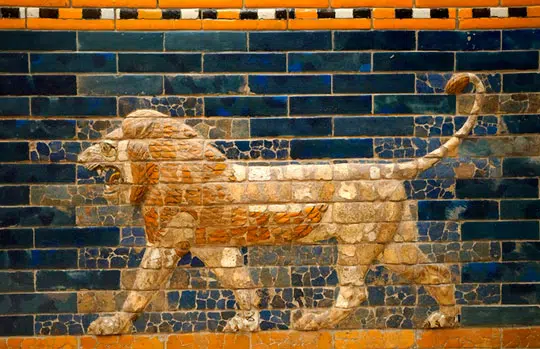
metals represented four real, earthly kingdoms of the future. The first kingdom
was the Babylonian Empire. Each kingdom was defeated by a subsequent one. Each
kingdom had an earthly king. Four of these kingdoms are now past history. The next
kingdom will be an alliance of nations from the same territory that the four prior
kingdoms occupied. When this future empire comes to power, it will seek to destroy
Israel. Scripture teaches that Christ will come and rescue Israel by defeating
this alliance and will then establish an earthly kingdom which will exist for 1,000
years. Those who believe this are called premillennialists. There are others who
believe that we are living in that kingdom now. They are called amillennialists
and postmillennialists. You may know someone who believes that there is no future
kingdom of 1,000 years on this earth. Consequently, we want to examine these other
views. We pray the Holy Spirit will use this to guide you into truth.
Three
Views.
There have been three different, major views about the future kingdom since the
time of Jesus and the apostles. These views are called premillennialism, amillennialism,
and postmillennialism. The common portion of these terms is the word “millennium” which
refers to a 1,000 year kingdom.
Premillennialists
believe in a future, literal, earthly 1,000 year kingdom on this earth with Jesus
Christ reigning as king. Amillennialists and postmillennialists believe only in a
spiritual kingdom which exists now. Postmillennialists believe that Jesus will not
come until the world has morally improved or has been Christianized. Consequently,
this encourages them to motivate governments to pass laws which require “Christian” conduct.
As the world improves morally, they teach that Jesus will finally come. We will look
at the differences between these views later.
Now
let’s ask, “What has the Christian church believed about the future
from the time of the apostles?” The answer is actually rather simple. There
has been only one view that the apostles taught. It is premillennialism. There
is an older form called Historic
Premillennialism and an updated form called Dispensational Premillennialism. They
are almost the same. Dispensational Premillennialism adds a rapture, or the removal
of all Christians, before the tribulation period begins. Historic Premillennialism
does not. That is the major difference. Today the most common views are premillennialism
and amillennialism. Amillennialism was the dominant view under the Roman Catholic
Church prior to the reformation. Premillennialism is now the most commonly accepted
view among Protestants. It is a return to the New Testament view. This concludes
the overview of the history of these views. But history cannot prove that premillennialism,
amillennialism, and postmillennialism are biblically correct. As a result, we will
look at what scripture says about each one.
 |
|
|